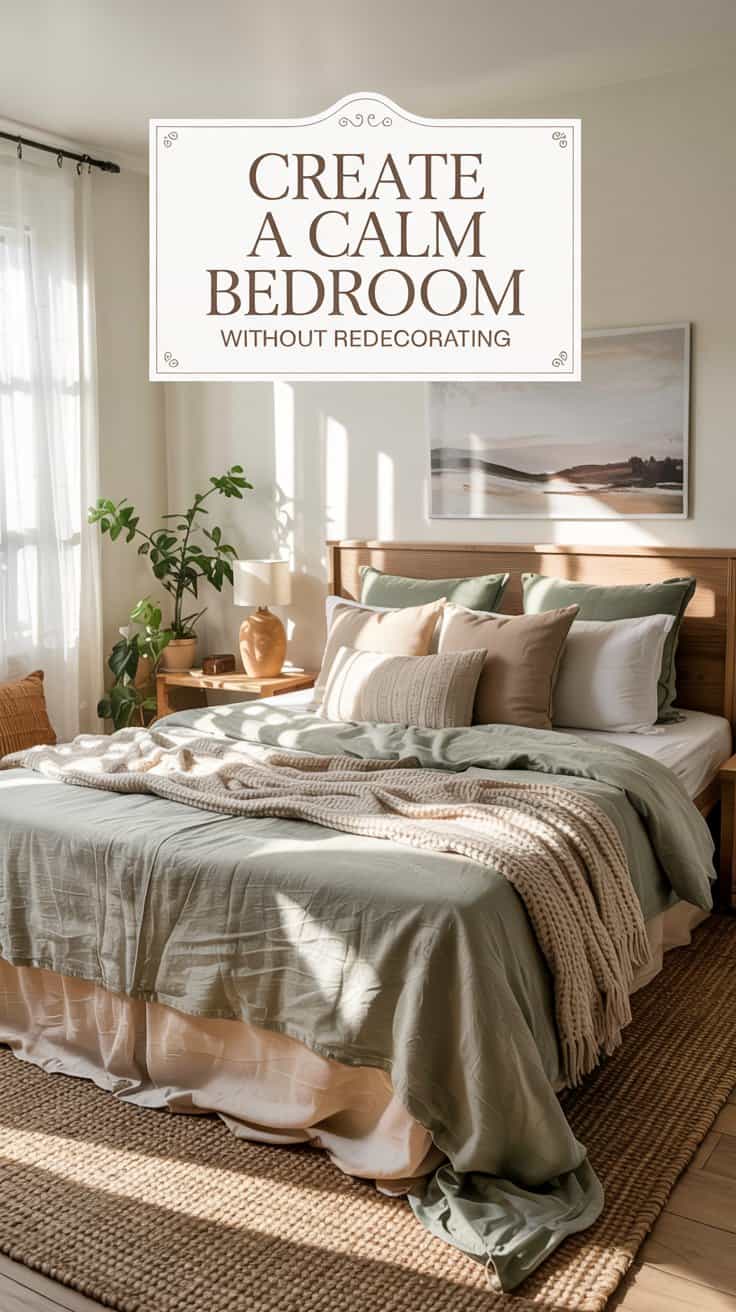
Calm Bedrooms: How to Create a Space That Helps You Truly Rest
When life feels overwhelming, sleep is often the first thing to suffer.
Not because you’re doing anything wrong — but because your mind and body never fully get the message that it’s okay to slow down. Even when the house is quiet and the lights are off, it can feel hard to fully relax.
I’ve noticed that when I’m working too much or thinking too much, my bedroom starts to feel different. Not messy. Not “bad.” Just less supportive. Almost like it’s still asking something from me when all I want is rest.
Here’s the simple truth:
Your bedroom can either help you unwind — or quietly keep you on edge.
And the good news is, it doesn’t take a full makeover to change how it feels.
This article is about creating a calm bedroom in a very realistic way. No trends to chase. No big projects. Just small, thoughtful shifts that make it easier to rest when life already feels like a lot.
We’ll Cover:
- Why your bedroom affects how well you rest
- Small changes that make a noticeable difference
- How to make your bedroom feel calmer without redecorating
- What actually matters when everything feels overwhelming
- Where to start if your bedroom feels “off” right now
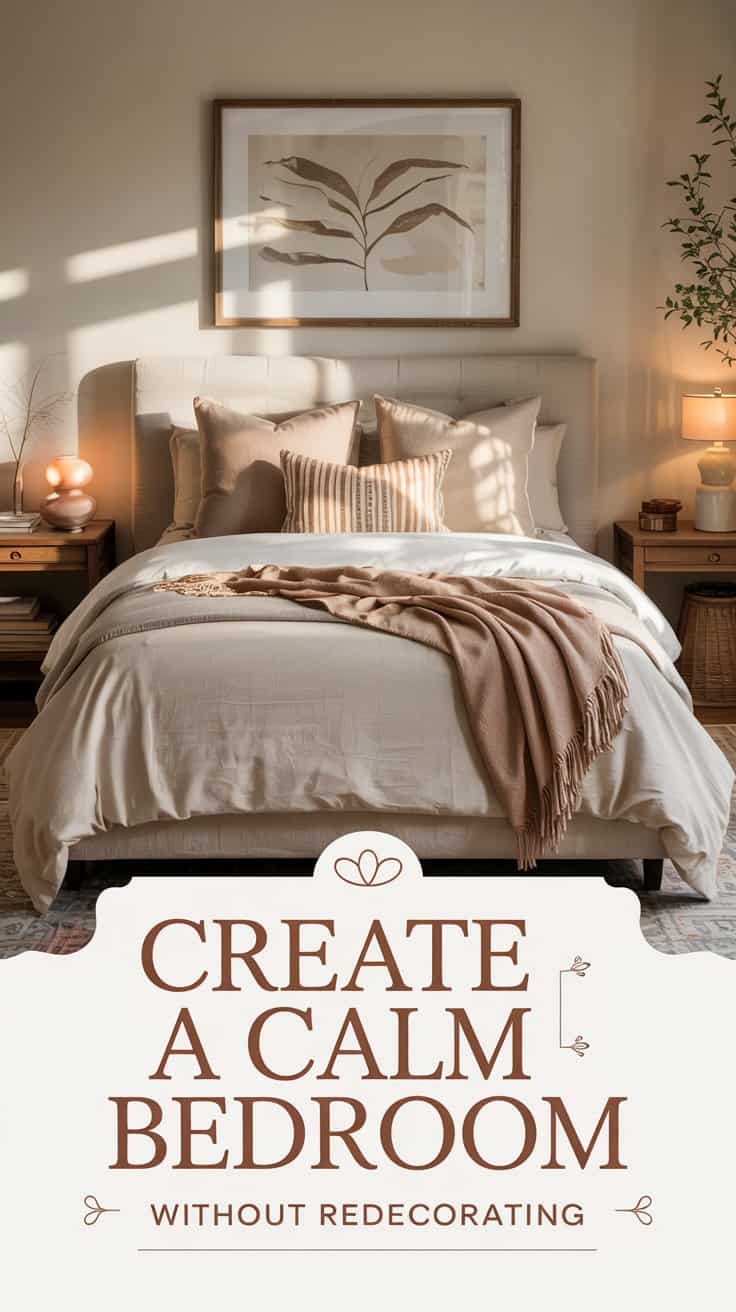
Why a Calm Bedroom Matters So Much
Your bedroom is the one place where your body is supposed to let go.
When the space feels busy, harsh, or unfinished, it’s harder to do that — even if you’re exhausted. Your mind stays slightly alert. Your thoughts keep going. Rest feels shallow instead of settling.
A calm bedroom doesn’t force sleep.
It simply makes rest feel more possible.
Start With What You See
One of the easiest ways to make a bedroom feel calmer is to reduce what your eyes have to take in — especially at night.
This doesn’t mean getting rid of everything. It means choosing what doesn’t need your attention.
A good place to start:
- Your nightstand
- The dresser you see from bed
- The area directly across from you
Clearing just one of these surfaces can soften the whole room.
Make the Bed Feel Like a Place You Want to Land
Your bed sets the tone for the entire room.
Calm bedrooms tend to have:
- Simple, neutral colors
- Soft, comfortable fabrics
- Fewer decorative elements competing for attention
I’ve found that when my bed feels inviting instead of styled, my whole body relaxes faster. Comfort matters more than how it looks in a photo.
Change the Lighting Before You Change Anything Else
If your bedroom feels restless at night, lighting is often the reason.
Bright overhead lights signal “stay alert,” even when you’re tired.
Small changes that help:
- Use lamps instead of overhead lighting in the evening
- Choose warm bulbs
- Keep light levels low and soft at night
This one shift alone can make the room feel noticeably calmer.
Reduce Visual Noise (Without Decluttering Everything)
You don’t need a minimalist bedroom to feel calm.
What helps most is reducing visual noise:
- Too many colors competing
- Too many patterns in one space
- Too many things left out “for later”
A more consistent, neutral look helps your eyes — and your mind — settle more easily.
Add Texture for Comfort

Texture makes a space feel softer and more supportive.
A few simple additions can change the feel of the room:
- Linen or cotton bedding
- A soft throw at the end of the bed
- A textured rug underfoot
- Wood or ceramic accents
These small details make the room feel warmer and less rigid.
Create One Gentle Nighttime Anchor
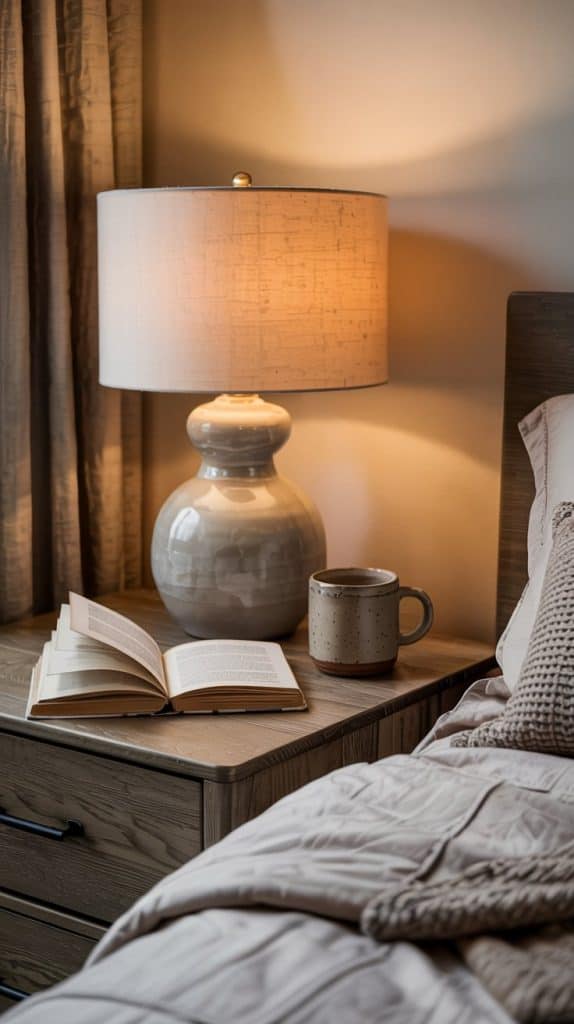
A calm bedroom often has one familiar, grounding element that signals the end of the day.
It might be:
- A book you keep by the bed
- A lamp you turn on each evening
- A candle you light before winding down
It doesn’t need to be a routine. Just something your body starts to recognize as “it’s time to rest.”
Let Your Bedroom Be About You
A calm bedroom isn’t about meeting expectations.
It’s about how the space feels when you’re in it — especially on hard days.
You’re allowed to choose comfort over trends.
You’re allowed to keep it simple.
You’re allowed to create a space that supports you as you are.
When You Can Only Do One Thing
If everything feels overwhelming, start small.
Clear one surface.
Change the lighting.
Simplify the bed.
That’s enough.
Even small changes can make a real difference when you’re already tired.
A Gentle Reminder
You don’t need a perfect bedroom to rest better.
You don’t need to fix everything.
You just need a space that feels calm enough to let go.
Your bedroom can be a place to exhale — even when life feels heavy.
Frequently Asked Questions
What if my bedroom is small?
Calm isn’t about size. A small room can feel incredibly restful with simple lighting and fewer visual distractions.
Can renters still create a calm bedroom?
Absolutely. Bedding, lighting, and texture matter far more than permanent changes.
Does this actually help with sleep?
Yes. When your space feels calmer, it’s easier to unwind — and that supports better rest.
What if I share a bedroom?
Focus on what you can control. Even small changes on your side of the room can help.
You may also like:
- Quiet Morning Rituals That Make Ordinary Days Feel Special
- How to Make Your Home Feel Calm When Life Feels Overwhelming
- Simple Ways to Release Emotional Clutter at the End of the Day
- Creating Calm Corners: Small Home Spaces That Help You Unwind (coming soon!)