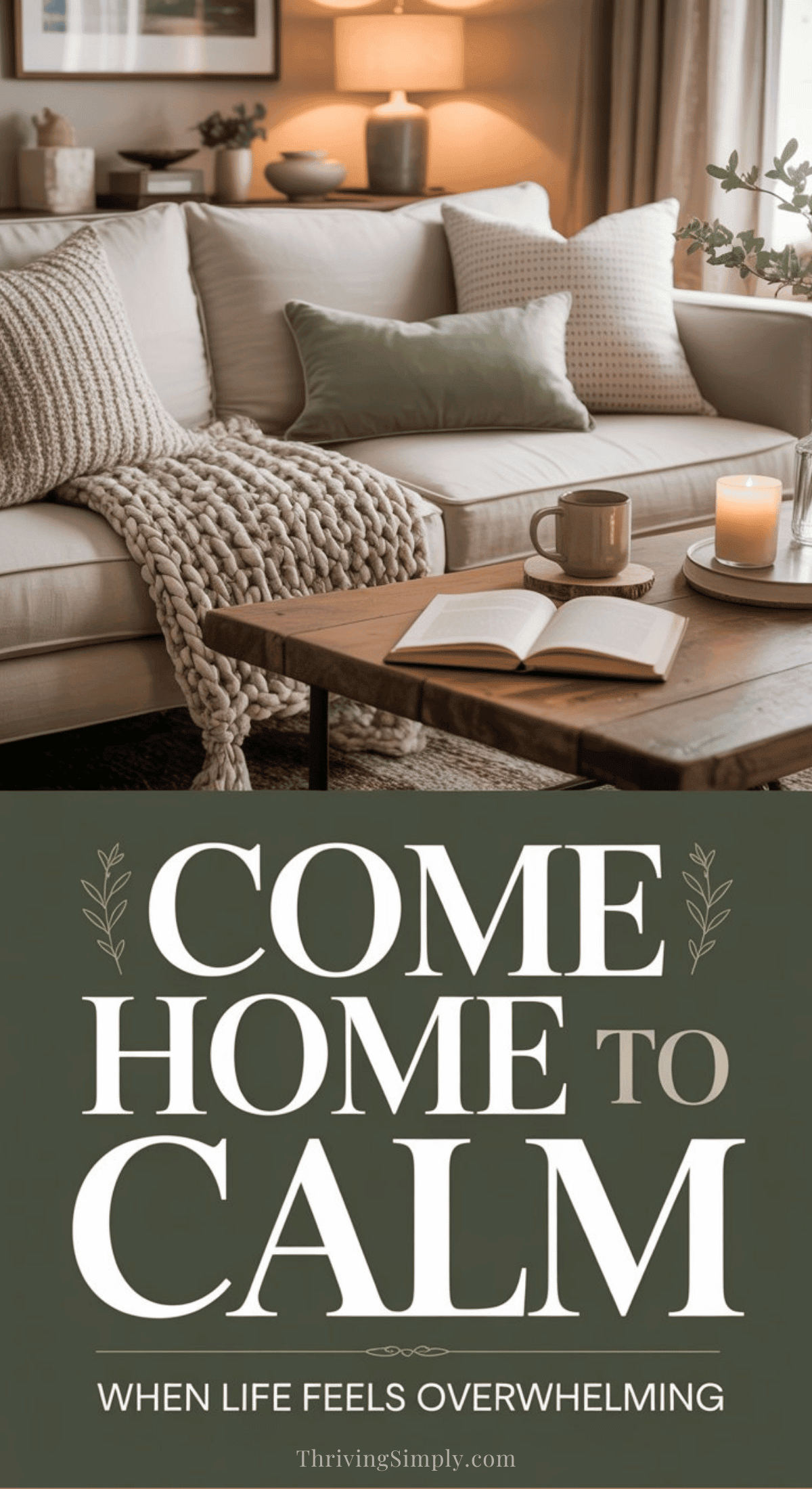
How to Make Your Home Feel Calm When Life Feels Overwhelming
When life feels overwhelming, it’s rarely just one big thing.
It’s usually a hundred small things — thoughts you’re carrying, conversations you haven’t let go of, work that bleeds into everything, and a nervous system that never quite gets a chance to rest.
I know for me, when I’m working too much or overthinking everything, the first place I feel it isn’t in my schedule — it’s in my space. Suddenly my home feels louder. More cluttered. Less supportive. Even when nothing has technically changed.
Here’s the simple truth I’ve learned:
When your life feels overwhelming, your home becomes more important — not less.
Not because it needs to look perfect.
Not because you need to redecorate.
But because your brain and body are constantly looking for signals that say, you’re safe here.
This article isn’t about creating a Pinterest-perfect home. It’s about making small, realistic changes that help your space feel calmer — especially during seasons when life feels heavy.
What We’ll COVER:
- Why your home environment affects how calm you feel
- Small changes that make a REAL emotional difference
- How to create calm without redecorating everything
- Simple ways your home can support your nervous system
- Where to start when everything feels like too much
Why Your Home Matters More When You’re Overwhelmed
When life feels overwhelming, your nervous system stays alert.
It’s scanning for threats. For noise. For things that need attention.
And your home — whether you realize it or not — is part of that scan.
When there’s too much to look at, too much noise, or too many unfinished signals, your body never fully relaxes. Even in your own space.
That doesn’t mean you’ve failed at creating a calm home.
It just means your system needs more support right now.
Your home doesn’t need to impress anyone.
It needs to help you feel steady.
Start With What You See: Visual Calm Comes First
When everything feels overwhelming, visual noise adds to the load.
This doesn’t mean decluttering your entire house.
It means reducing what your eyes have to process — even slightly.
Focus on Fewer Visual Signals
One thing I’ve noticed is that clearing just one surface can change how an entire room feels.
A kitchen counter.
A coffee table.
A bedside table.
You don’t need empty. You need intentional.
Choose Soft, Neutral Anchors
Calm spaces tend to share a few things:
- Warm, neutral tones
- Natural materials
- Fewer high-contrast colors
This isn’t about trends. It’s about creating visual quiet.
Bring Calm Into the Spaces You Use the Most
You don’t need to calm every room. Start where your body already spends time.
The Living Area
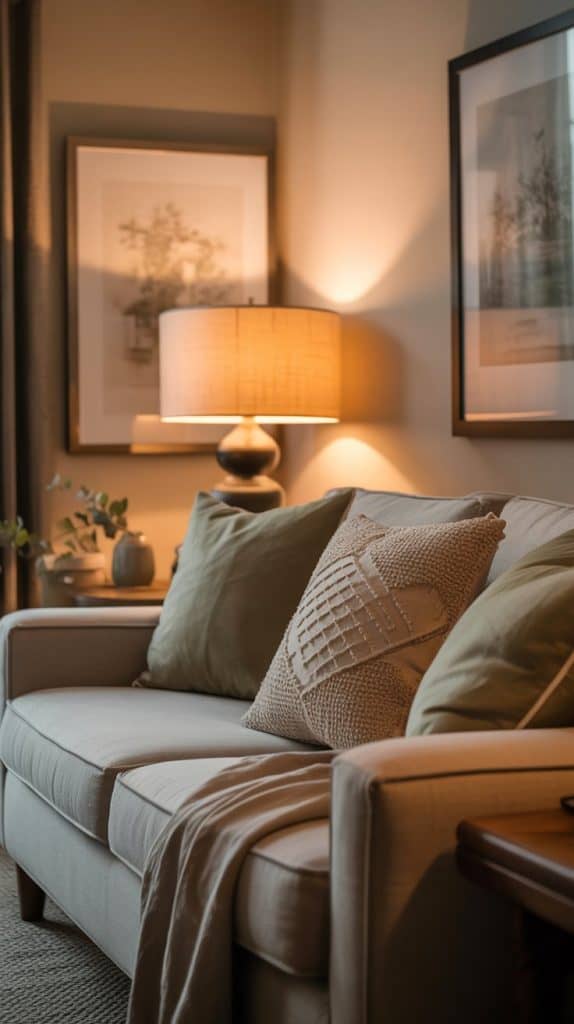
The living area is often where overstimulation builds — even when it doesn’t look messy.
This is the space where life overlaps. Screens are on. Conversations happen. Things get set down “for now.” Over time, your brain starts to associate this room with activity instead of rest. Even small things add up:
- background TV or constant noise
- bright overhead lighting
- visual clutter that never fully clears
Our brains are always taking in information from our surroundings, whether we notice it or not. When there’s a lot happening in one space, it can be harder to fully settle — especially at the end of the day.
That’s why the living area matters so much.
What Helps
You don’t need to change the whole room. Small shifts make a difference:
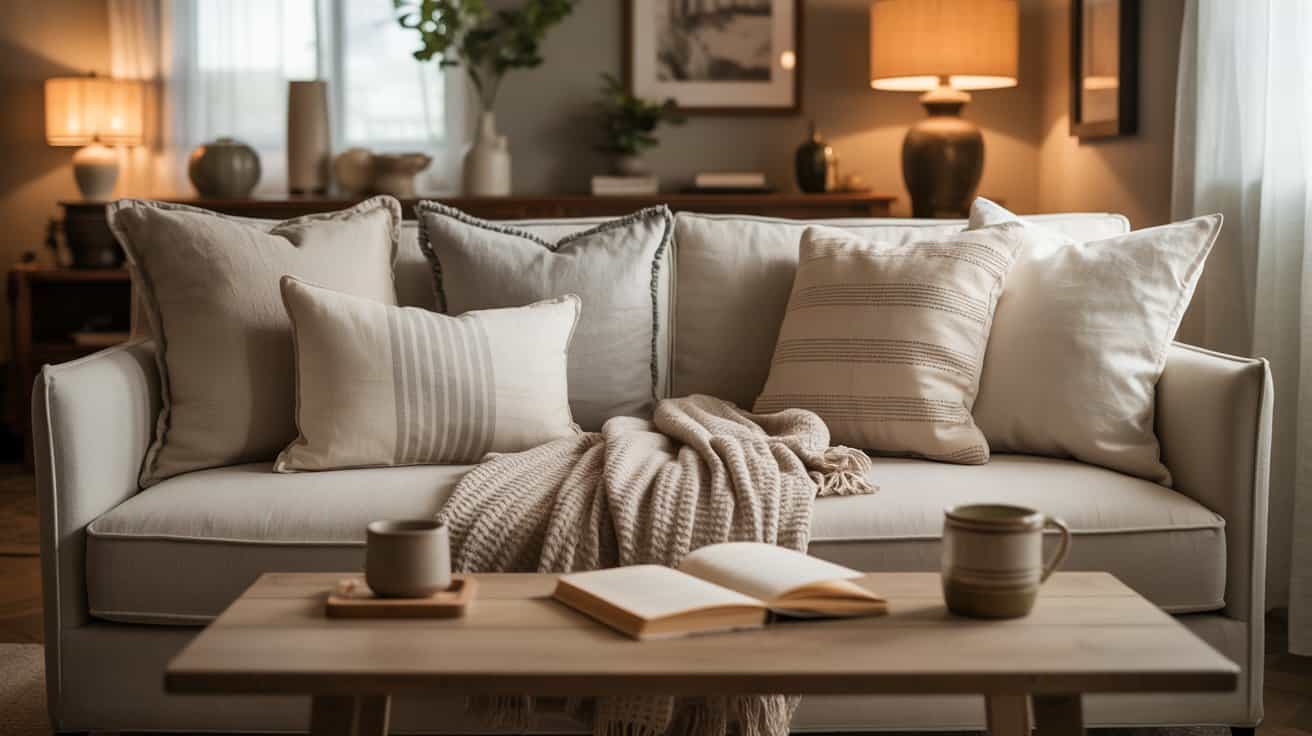
- switch to lamps in the evening
- clear one surface your eyes land on
- create one softer seating spot
The goal isn’t perfection — it’s making the space ask less of you.
The Bedroom
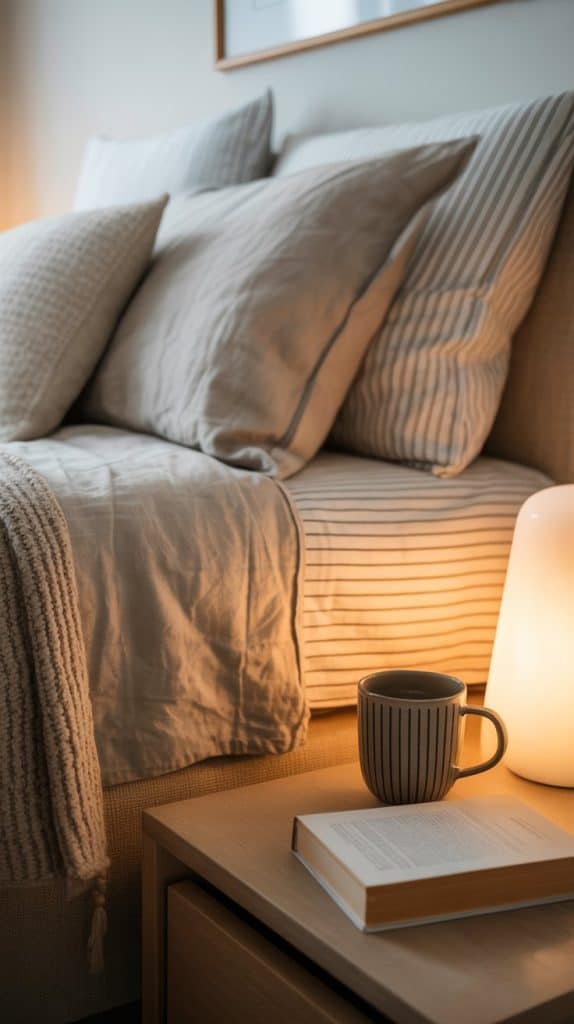
Your bedroom quietly sets the tone for how easily you rest.
I’ve noticed that when my bedroom feels calm, my whole day feels steadier — not because everything is perfect, but because the space isn’t asking anything from me.
This room works best when it’s simple and soft:
- warm, gentle lighting
- clear surfaces near the bed
- comfortable bedding with fewer visual distractions
Your bedroom doesn’t need to look impressive.
It just needs to feel like a place where you can let go.
The Kitchen (Often Overlooked)
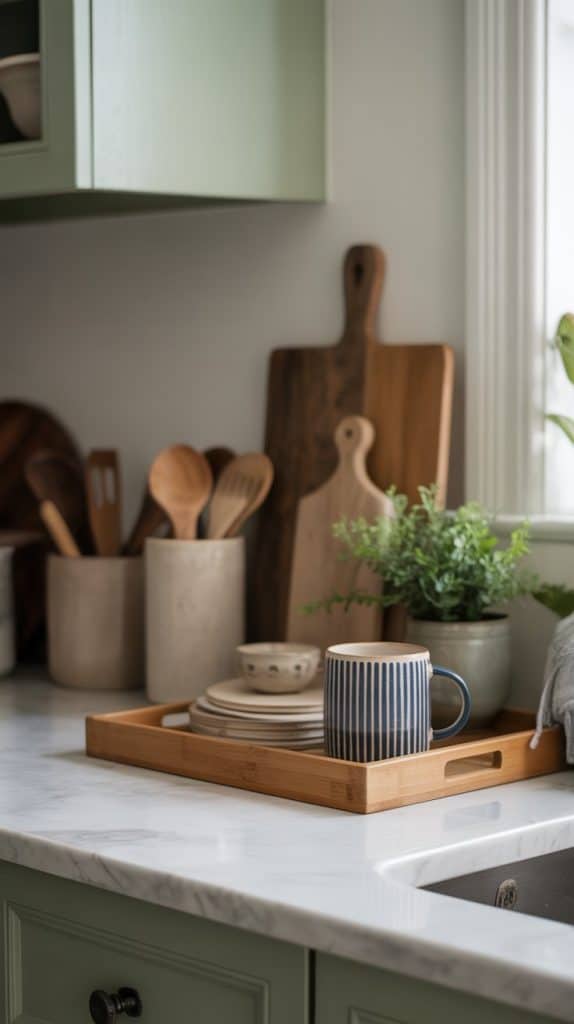
Kitchens are functional — but they don’t have to feel chaotic.
This is one of the most active spaces in the home. It’s where you move quickly, make decisions, and juggle multiple things at once. Because of that, even small amounts of visual clutter or constant activity can create a low level of background stress you don’t always notice.
That’s why one calm spot in the kitchen can make such a difference. It might be:
- a clear section of counter
- a simple tray with everyday items
- fewer things left out “just in case”
You’re not trying to make the kitchen feel quiet all the time. You’re just giving your eyes — and your mind — one place to rest.
Small changes here help the whole space feel a little less demanding.
Use Texture, Not Trends, to Create Calm

Trends come and go. Calm doesn’t.
One reason certain spaces feel more relaxing than others has less to do with style — and more to do with how they feel. Natural textures tend to soften a space because they feel familiar, lived-in, and less visually demanding than shiny or overly polished surfaces.
Textures that often help a room feel calmer include:
- linen and cotton
- warm wood
- ceramic and stone
These materials don’t ask for attention. They quietly support the space instead of competing for it.
You don’t need new furniture to do this.
Even one textured element — a throw, a pillow, a tray, or a lamp — can change how a room feels.
The goal isn’t to decorate.
It’s to make the space feel a little easier to be in. Even one textured element can help soften a space.
Light Changes Everything (More Than We Think)
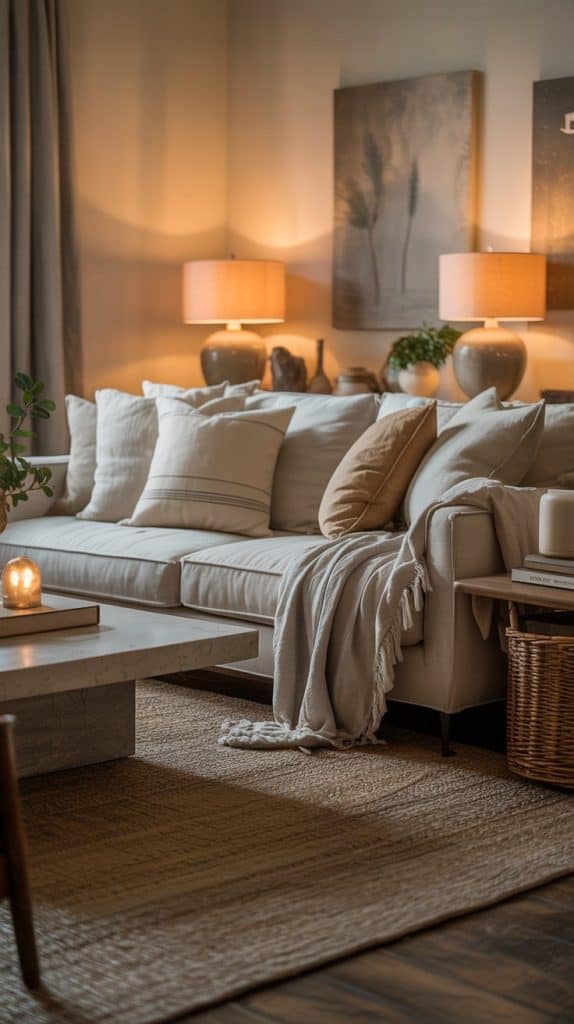
Light has a bigger impact on how we feel than most of us realize.
Bright, cool lighting tells your body it’s time to stay alert — even late in the day. In fact, studies consistently show that exposure to bright or blue-toned light in the evening can make it harder to unwind and settle into rest. That’s one reason evenings can feel restless even when you’re tired.
This is why lighting changes are often one of the fastest ways to make a space feel calmer.
A few simple shifts help:
- use lamps instead of overhead lights
- choose warm bulbs
- add candlelight in the evening
Softer light sends a clear message: it’s okay to slow down now.
You don’t need to change every light or install dimmers in your home.
Even one softer light in the evening can change how the whole space feels.
Create One “Calm Corner”
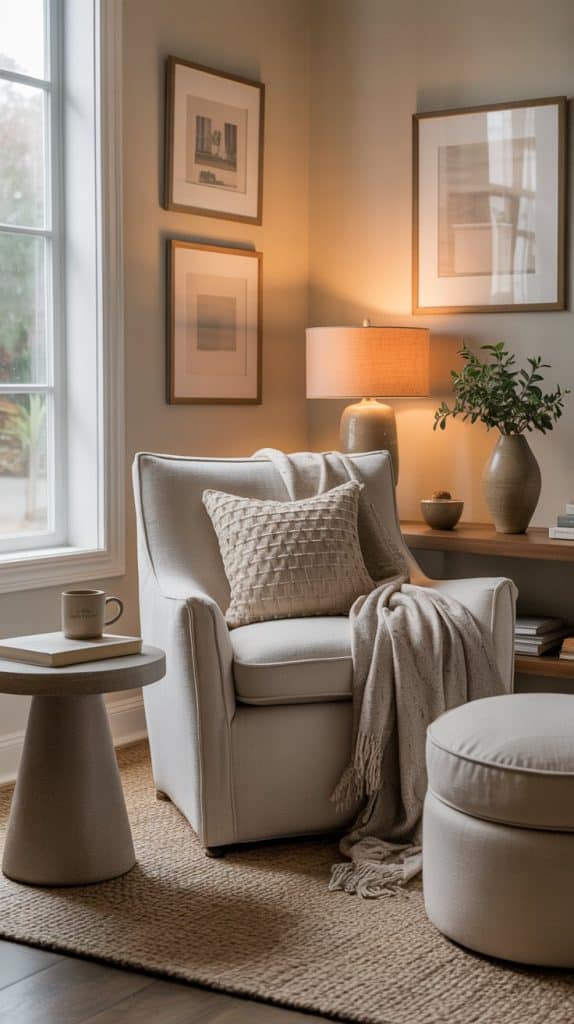
A calm corner is simply a place where your body can soften.
It’s not about how it looks — it’s about how it feels. This is a spot that isn’t tied to productivity, problem-solving, or constant movement. Over time, your mind starts to associate it with pause instead of pressure.
A calm corner might be:
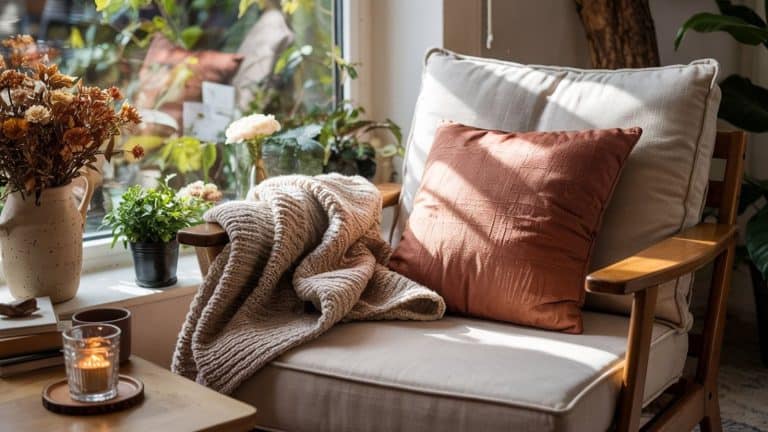
- a chair with a blanket
- a small table with a book and tea
- a quiet spot near a window
It doesn’t need to be large or styled.
It doesn’t even need to be used every day.
It just needs to feel intentional — like a place that exists only to give you a moment to breathe.
Sound, Scent, and Small Sensory Shifts
Calm isn’t only visual. Gentle sensory cues help:
- Soft background music or silence
- Natural scents (used lightly)
- Fewer competing sounds
Less stimulation allows your nervous system to rest.
Let Your Home Support You — Not Impress Anyone
A calm home isn’t about aesthetics.
It’s about permission.
Permission to choose comfort over trends.
Permission to let go of “shoulds.”
Permission to create a space that meets you where you are — not where you think you’re supposed to be.
When a home is designed to impress, it often asks for constant upkeep and attention. When a home is designed to support you, it quietly gives something back.
Your home doesn’t need to be finished to be supportive.
It doesn’t need to look a certain way to be calming.
It just needs to feel like a place where you’re allowed to be human.
When You Can Only Do One Thing
If everything feels overwhelming, choose one small shift.
Clear one surface.
Change one light.
Create one calm corner.
That’s enough.
Small changes still matter — especially when your system is tired.
A Gentle Reminder
You don’t need a new home to feel calmer.
You don’t need to fix everything.
You need cues of safety, softness, and support.
Your home can be a place to exhale — even when life feels heavy.
Frequently Asked Questions
What if my home is small or cluttered?
Calm isn’t about size. It’s about intention. Even one small area can make a difference.
Can renters still create a calm home?
Absolutely. Lighting, texture, and layout matter more than permanent changes.
Does this really help with stress?
Yes. Your environment constantly sends signals to your nervous system. Small shifts can reduce background tension.
What if I live with other people?
Focus on one personal area or shared space you can gently influence.
You may also like…
- Feeling Overwhelmed? How to Reset Your Nervous System and Calm Your Body
- The 15-Minute Decluttering Routine That Will Change Your Home
- How to Plan Your Week Without Overplanning