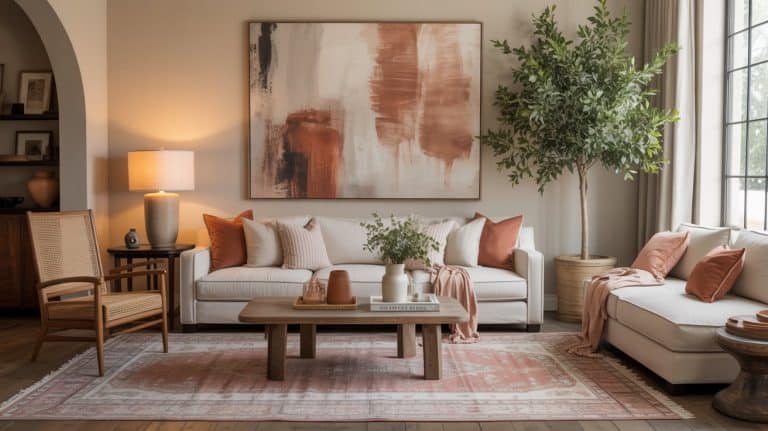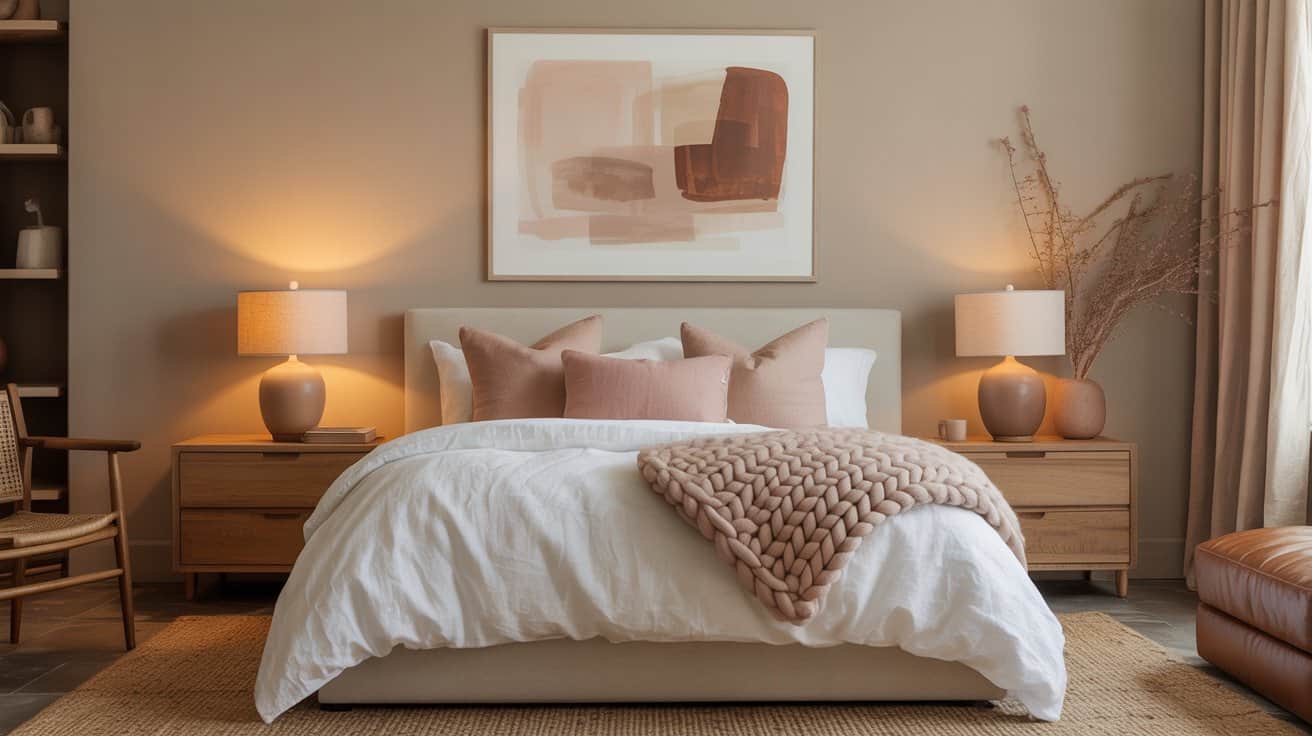
Bedrooms Designed for Relaxation – Not Just Sleep
For a lot of people, the problem isn’t falling asleep — it’s getting to the point where sleep feels possible.
You finally crawl into bed, exhausted… and suddenly your mind turns on. Thoughts pile up. To-do lists reappear. The day replays itself. Even though your body is tired, your nervous system hasn’t caught up yet.
That’s where the bedroom itself matters.
A bedroom designed for rest doesn’t just support sleep — it helps your body and mind slow down before sleep even begins. It gently signals that you’re safe, done for the day, and allowed to let go.
The bedrooms below aren’t about luxury or perfection. They’re about creating environments that feel softer, quieter, and more forgiving — spaces that help you rest even when your mind doesn’t want to cooperate.

1. The Soft Linen Sanctuary
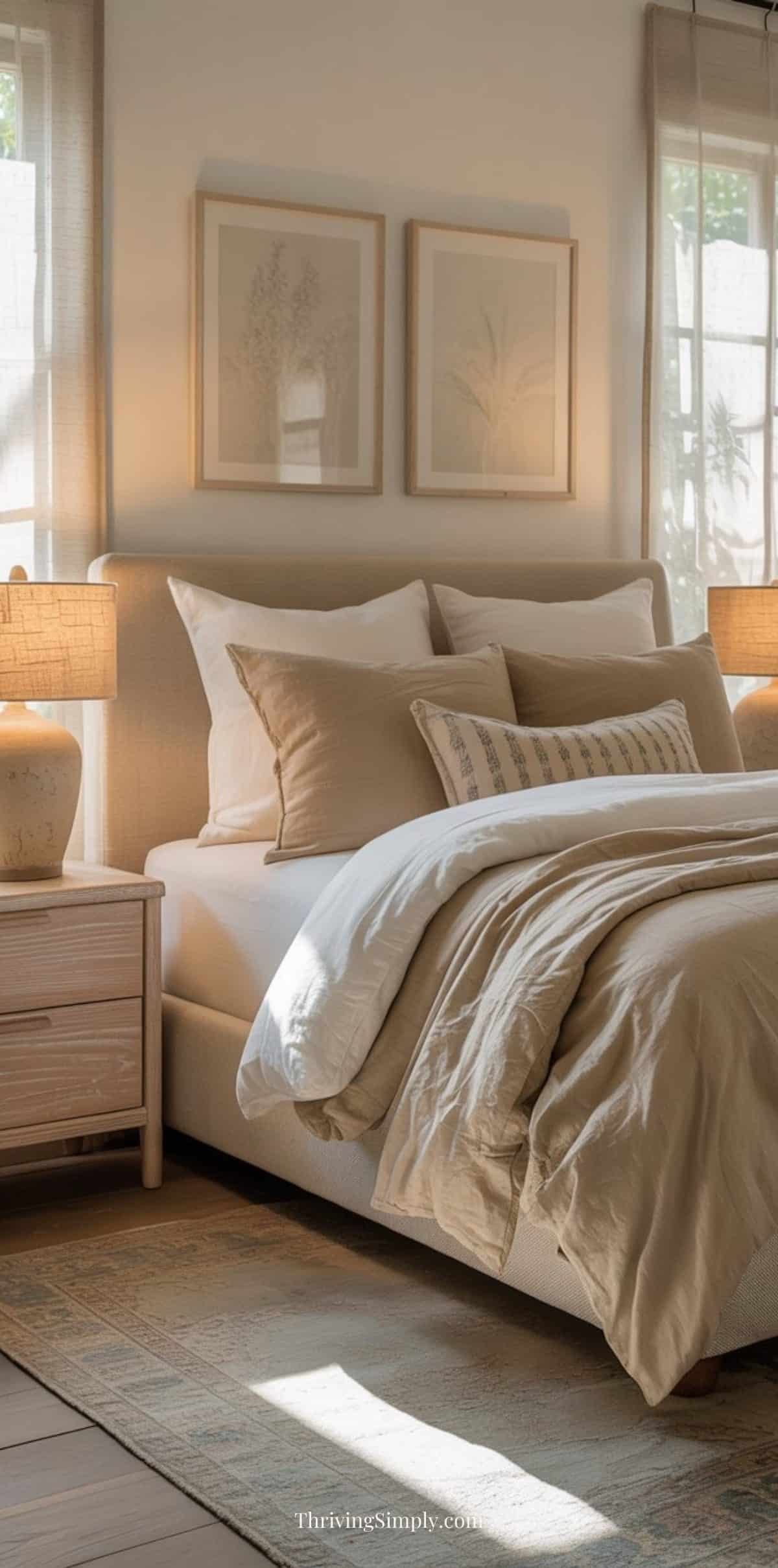
This bedroom feels like permission to stop trying so hard.
Nothing is crisp or overly styled. The bedding looks inviting instead of perfect. The textures are breathable and forgiving — the kind of space where your shoulders drop the moment you walk in.
Why this works:
Linen naturally softens both sound and temperature, which helps your body settle. Visually, it removes sharpness from the room — no tight lines, no visual tension. For people who struggle with racing thoughts at night, this softness sends a quiet signal: you don’t have to be “on” here.
2. The Earth-Toned Cocoon
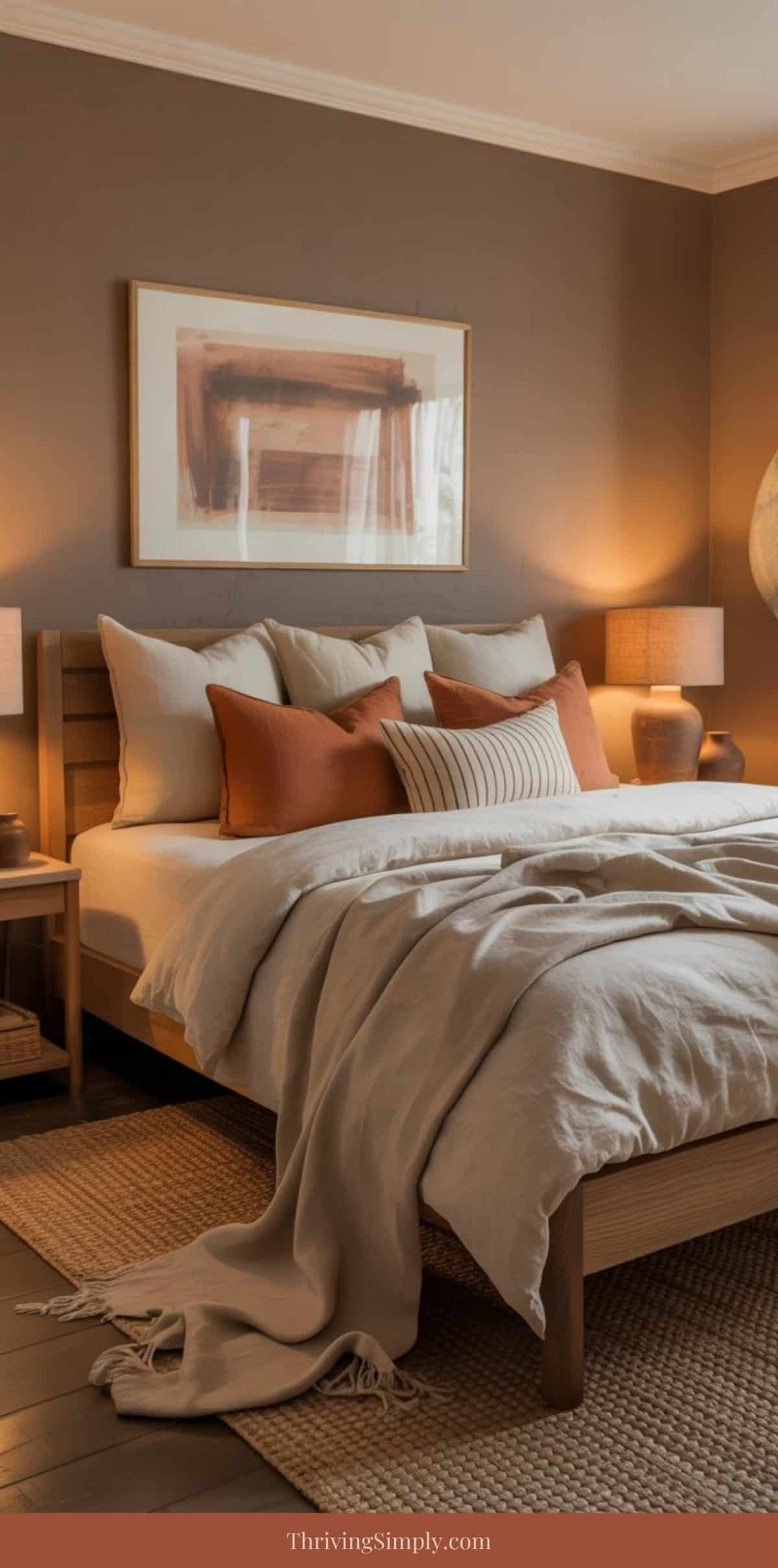
This bedroom feels grounded — like being wrapped in something steady after a long day.
The colors are warm and familiar. Nothing pops or demands attention. The room feels held rather than open and exposed.
Why this works:
Earth tones — taupe, clay, soft brown — are deeply regulating for the nervous system. They mimic colors found in nature and subconsciously communicate safety and stability. For anyone who feels overstimulated or emotionally drained at night, this kind of palette can help the body feel anchored again.
3. The Low-Light Retreat
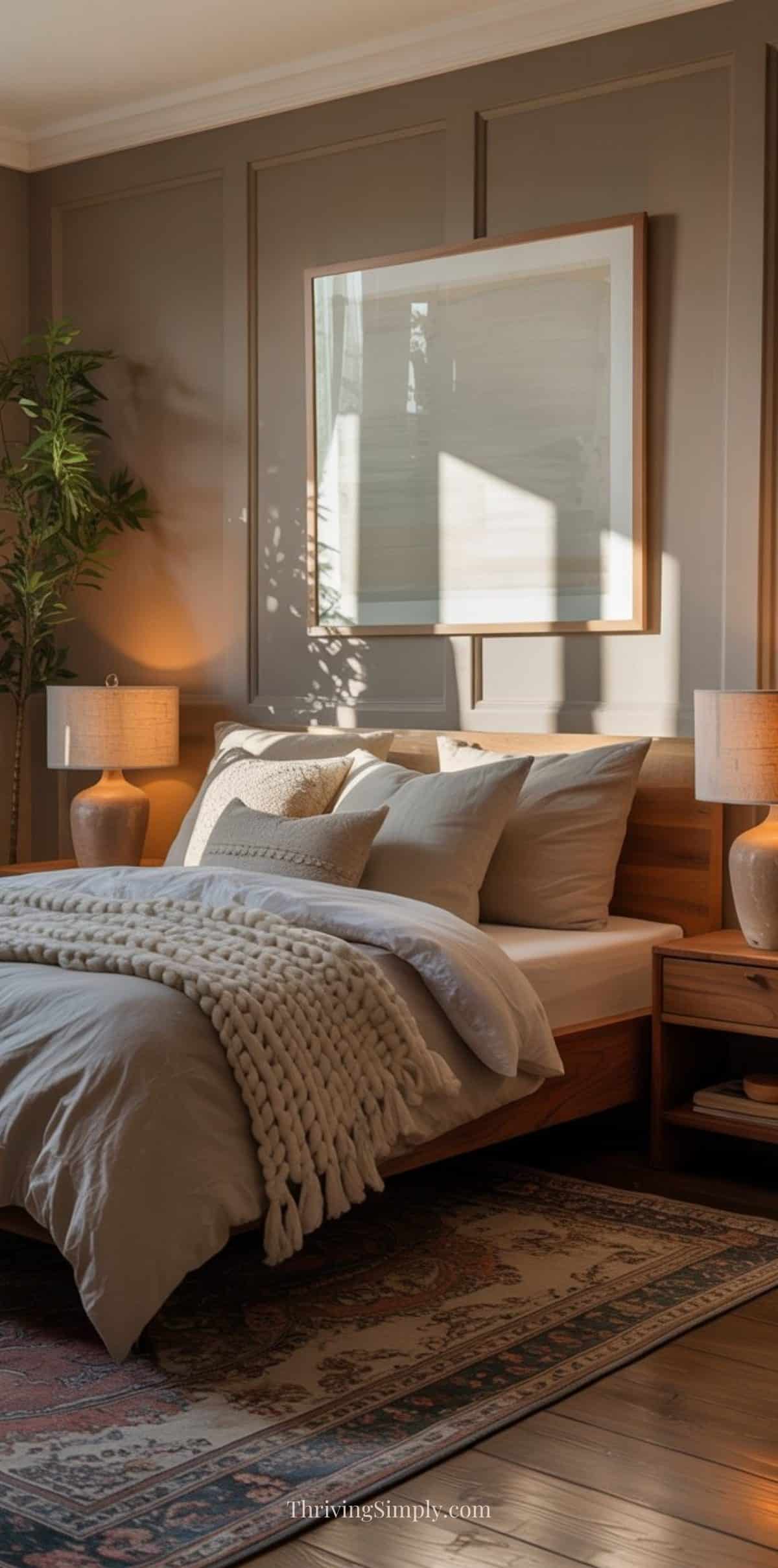
This bedroom is intentionally dim — especially at night.
There’s no harsh overhead lighting. The glow is warm and gentle, like the room is slowly winding down with you.
Why this works:
Bright lighting keeps the brain alert, even when you’re exhausted. Soft, layered lighting helps your body recognize that it’s time to transition out of the day. For people who feel “wired but tired,” reducing visual stimulation at night can make falling asleep feel less like a battle.
If you are loving these relaxing, calming designs and want to expand this into other areas of your home, be sure to check out The Art of a Calm Home: Slow Living Décor Made Easy.
4. The Minimal-But-Warm Bedroom
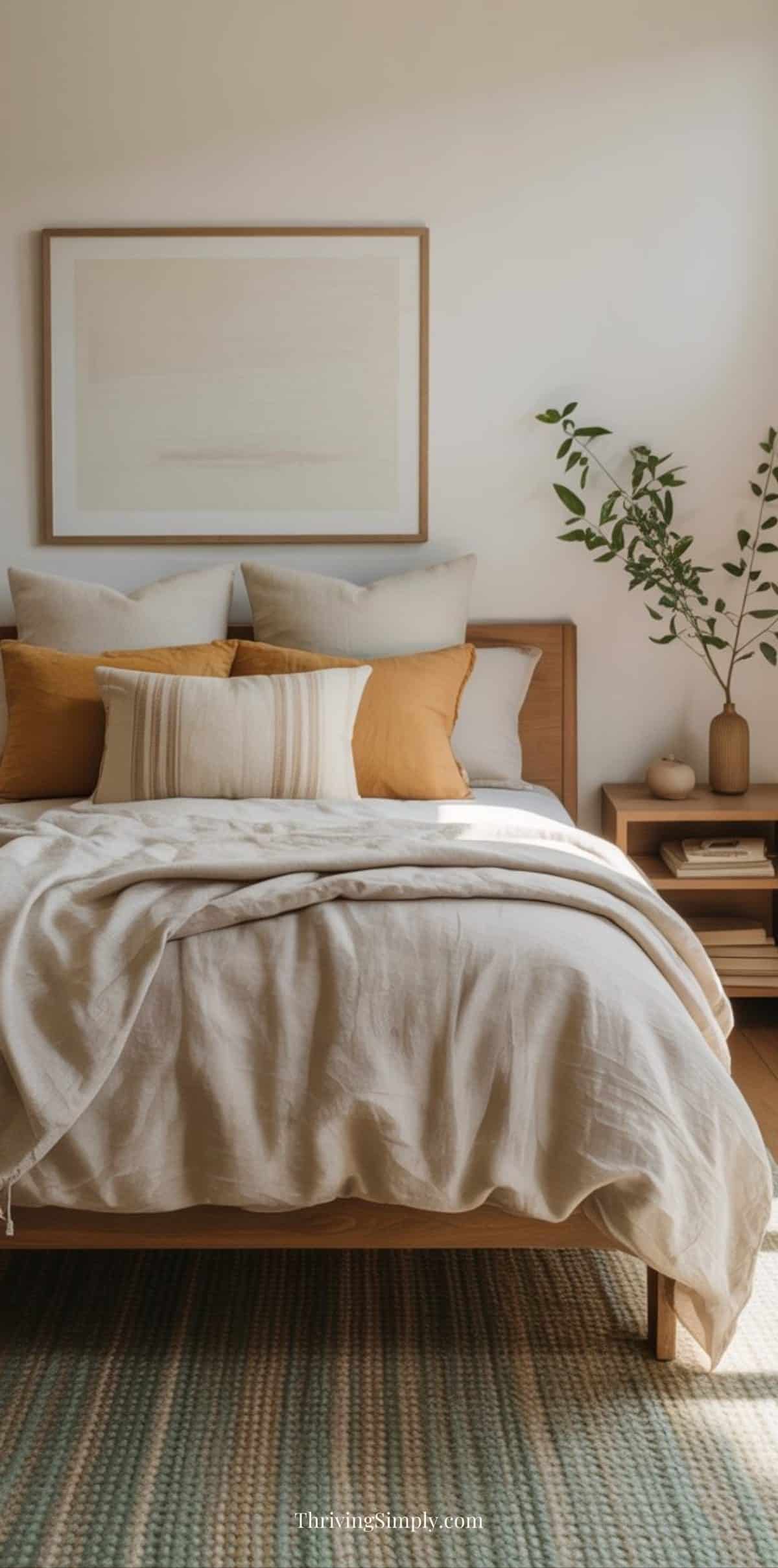
This space isn’t empty — it’s intentional.
There’s room to breathe. Nothing feels crowded. Every piece has a purpose, and nothing feels like it’s asking something of you.
Why this works:
Visual clutter can keep the brain active even when you’re tired. A simpler room reduces the number of things your mind has to process at night. When your environment is calm, your thoughts have an easier time following suit — especially if you struggle with mental overstimulation.
Pro Tip: Don’t be afraid to use a few little pops of color in your minimal, ultra-relaxing bedroom. As you’ll see in the example above, we’ve added some golden mustard and green tones to the bedding and rug. It doesn’t shock the system, they all just work together to create that neutral, earthy calm vibe.
5. The Texture-Rich Rest Space
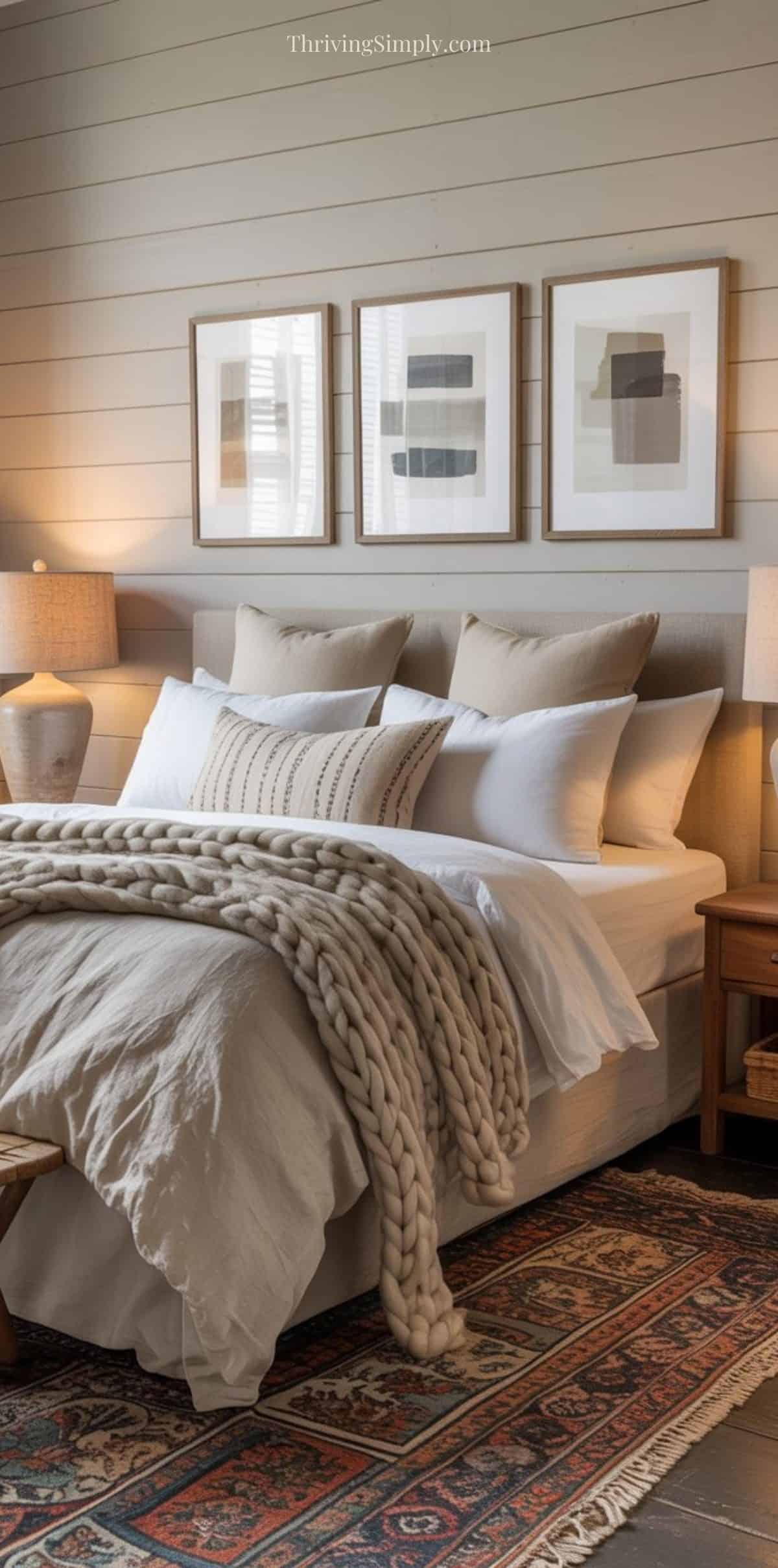
This bedroom uses texture instead of bold color to create comfort.
Soft rugs, layered bedding, woven elements — everything feels touchable and grounding.
Why this cozy bedroom works:
Texture adds warmth without overstimulating the senses. It helps a room feel cozy and protective without being visually loud. For people who feel restless at night, texture creates a sense of containment and comfort that supports relaxation.
6. The Sage Green Reset Bedroom
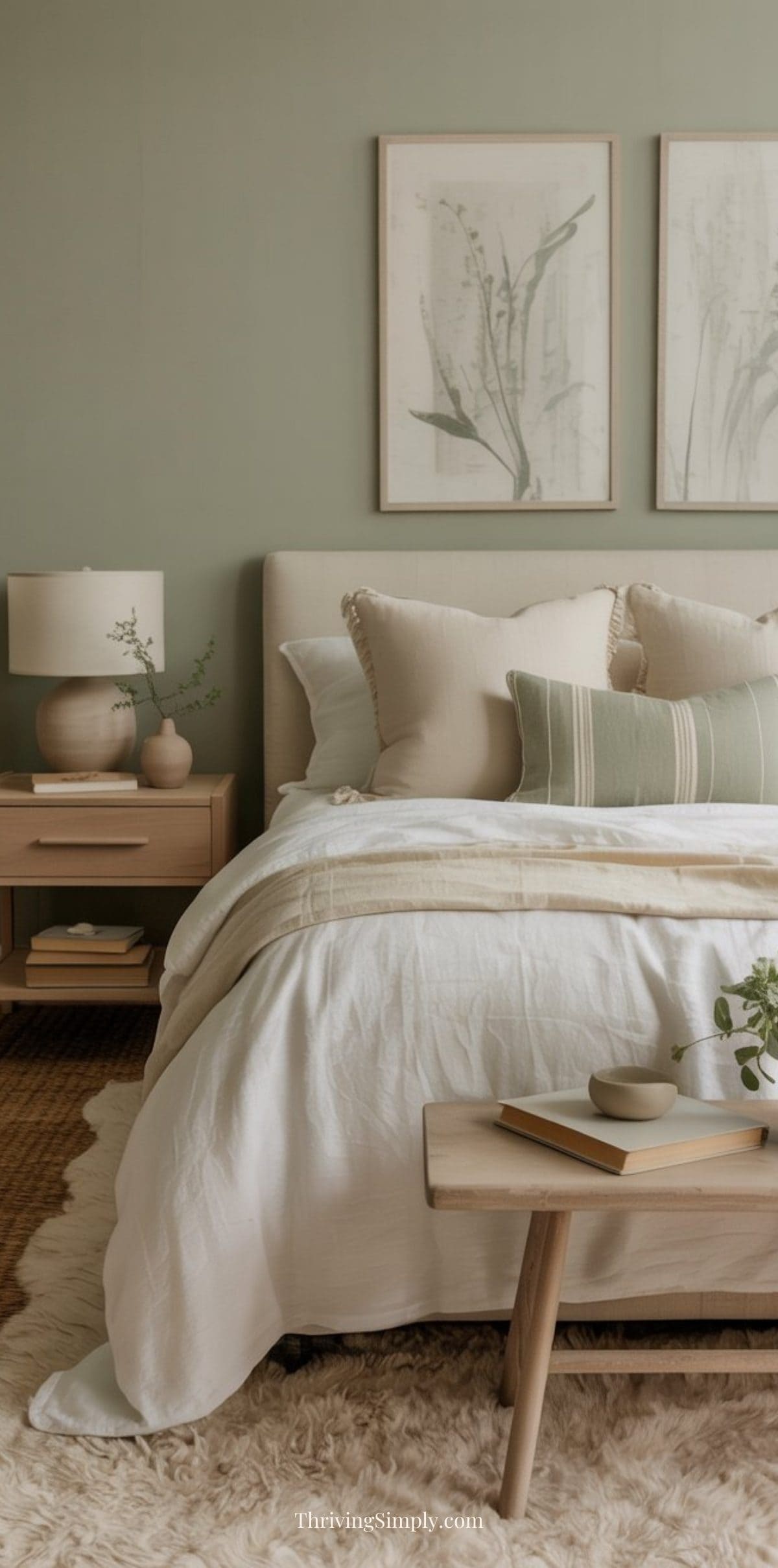
This space feels fresh, calm, and quietly restorative.
Sage green walls soften the room without overpowering it, creating a gentle connection to nature.
Why this works:
Soft greens are known to have a calming effect on the nervous system. They’re especially helpful for people whose minds feel overstimulated or scattered at night. This palette feels like a reset — not energizing, but quietly stabilizing.
7. The Blush-and-Neutral Comfort Room
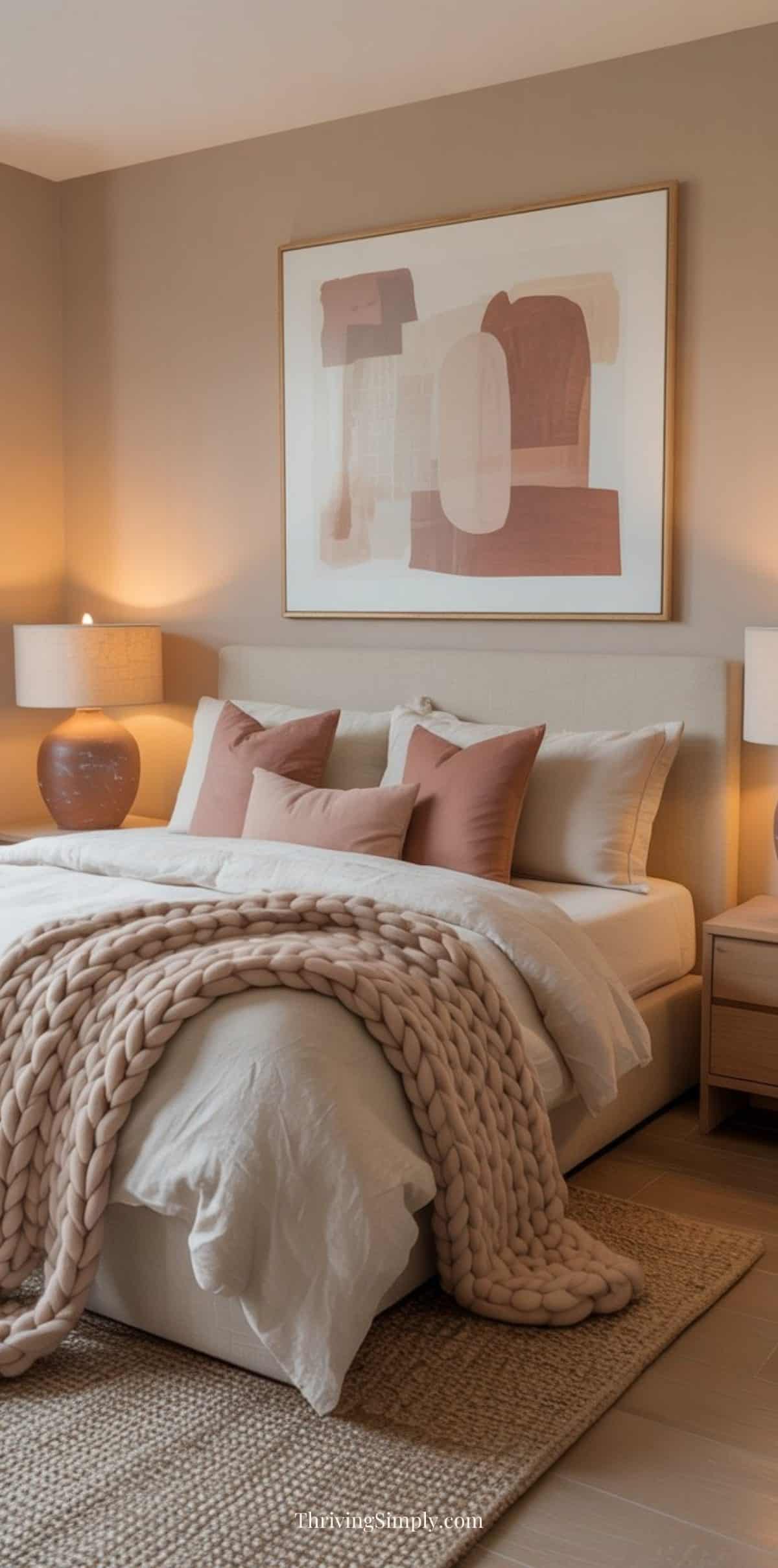
This bedroom feels gentle and emotionally supportive without being overly feminine.
The blush tones are muted and balanced with warm neutrals.
Why this works:
Soft blush adds warmth and comfort without activating the nervous system the way brighter colors can. For people who carry emotional stress into the evening, this palette feels nurturing and safe — like a quiet reassurance at the end of the day.
8. The Dark-and-Cozy Bedroom
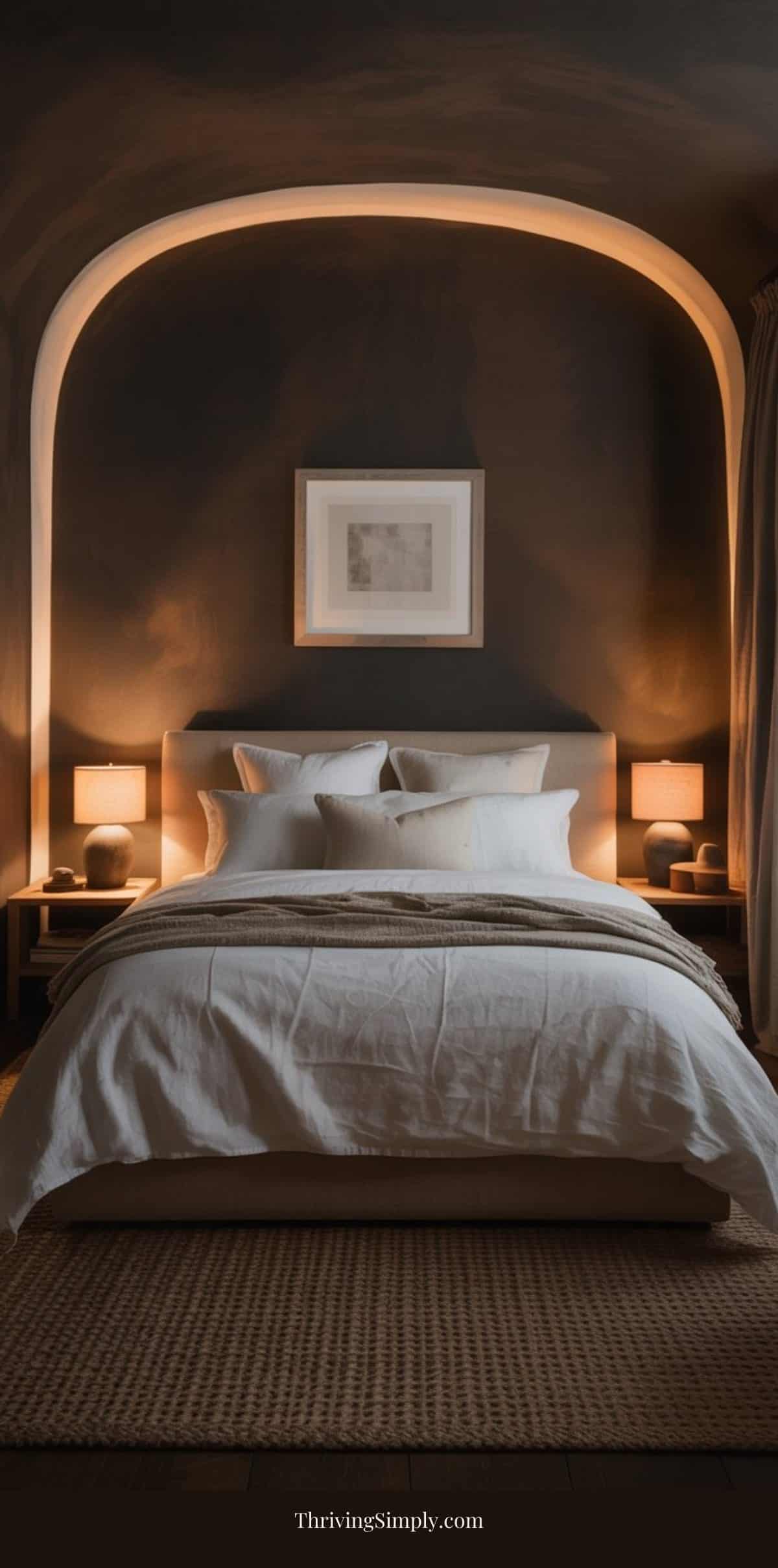
This room feels like a gentle retreat from the world.
The darker tones make the space feel enclosed and protected rather than open and exposed.
Why this works:
For some people, lighter rooms feel overstimulating at night. Darker, muted tones can create a cocoon-like effect that helps the nervous system relax. This is especially helpful if you struggle with feeling “on display” or restless at bedtime.
9. The Scent-Supported Sleep Space
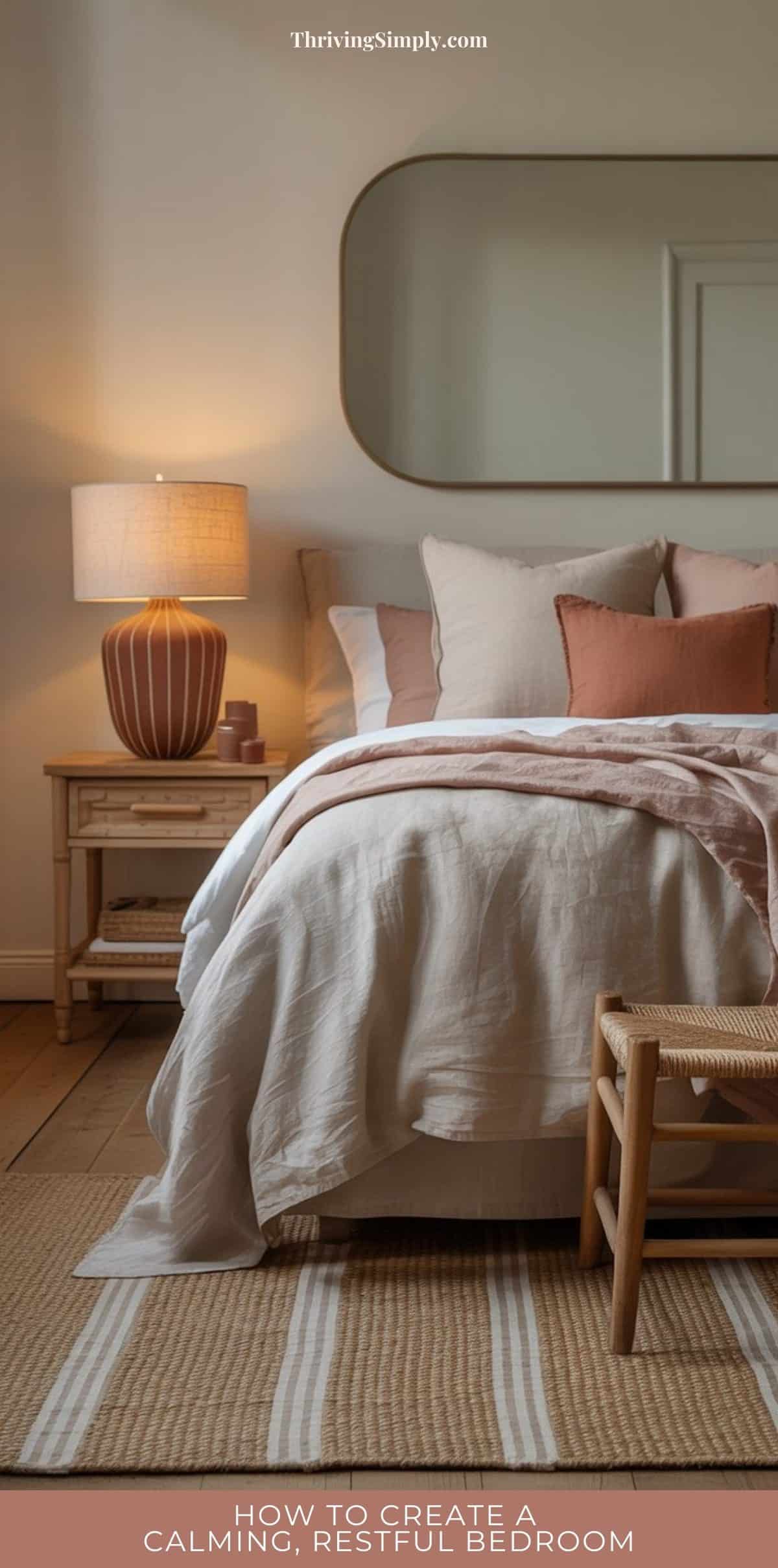
This bedroom subtly engages the senses without overwhelming them.
There’s a quiet, familiar scent — nothing strong, nothing artificial.
Why this works:
Scent is directly tied to the nervous system. Gentle, natural scents can signal safety and relaxation, helping the body unwind more easily. When scent is used intentionally, it becomes a cue for rest.
To create a natural scent for your bedroom, there are a few simple diy options that we LOVE, including:
- Sleep Better Tonight: Soothing DIY Linen Spray
- DIY Natural Odor Absorbers with Essential Oils
- DIY Sleep Candle (A Calming Night Ritual, Not Another Task)
10. The “Nothing Demands You” Bedroom
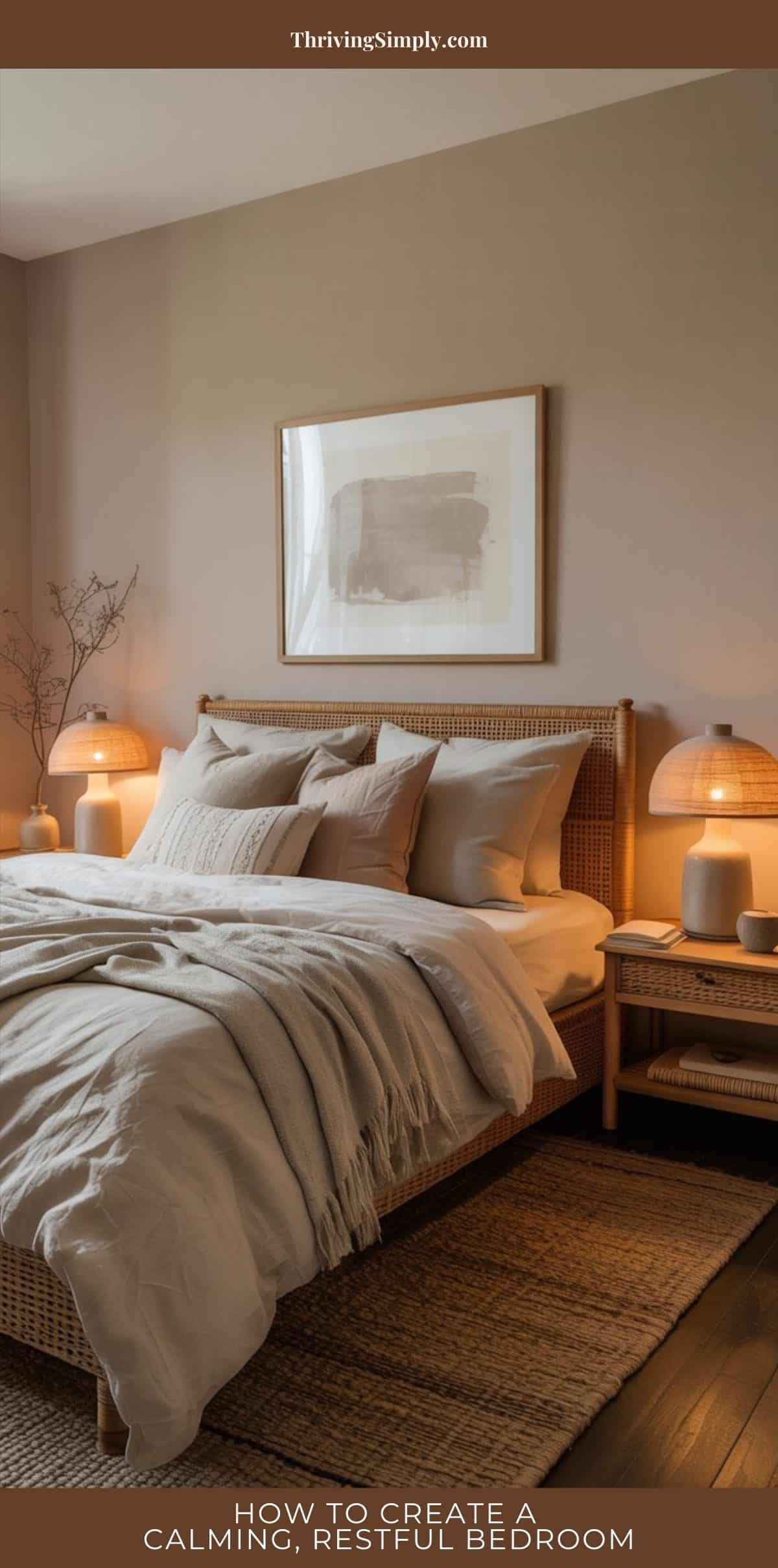
This is the bedroom where nothing needs to be done.
No screens. No reminders. No clutter asking for attention.
Why this works:
When the bedroom stops functioning as a workspace or storage zone, it becomes a true rest space. Removing mental cues helps the brain let go of productivity mode and shift into rest mode — something many people struggle with in modern life.
Final Thoughts
A bedroom designed for rest doesn’t fix sleep overnight — but it does make rest feel more possible.
When your space stops asking things of you, your body and mind finally get the message that it’s okay to slow down. Even one small change — softer lighting, calmer colors, fewer visual distractions — can make nights feel less tense and more supportive.
Rest isn’t just something you do.
It’s something your environment helps you access.