
The Slow Morning Routine for Night Owls (How to Create a Ritual You Actually Enjoy)
We have all heard the standard self-care advice: Wake up at 5:00 AM, meditate before dawn, drink green juice, and conquer the day while the world sleeps.
But what if your brain doesn’t even fully turn on until 10:00 PM? What if your most creative, peaceful hours happen long after the rest of the world has gone to bed?
For a long time, wellness culture has conditioned us to believe that productivity and mindfulness belong exclusively to the early birds. Night owls are often left carrying a heavy dose of subconscious guilt—feeling like sleeping until 8:00 AM or 9:00 AM makes us inherently lazy or disorganized.
Here is the truth: A slow morning isn’t about when you wake up; it’s about how you transition into your day.
You do not need to fight your natural circadian rhythm to experience a beautiful, intentional morning. If you are a late riser who wants to trade a frantic morning rush for a peaceful sanctuary, this guide is for you.
The Night Owl Advantage: Starting the Night Before
The secret weapon of a night owl is your evening energy burst. While early birds are crashing on the couch at 9:00 PM, you are likely feeling a wave of clarity. The easiest way to protect your morning peace is to use the final 15 minutes of your night-owl energy to clear the path for your future self.
Instead of working or scrolling until the moment your eyes close, try this 15-Minute Evening Reset:
- Clear the Visual Noise: Quickly wipe down the kitchen counters and put any stray dishes in the sink. Waking up to a clean physical space instantly lowers cortisol levels.
- Prep Your Morning Beverage: Set your favorite mug out on the counter next to your coffee maker or tea kettle.
- Write a “Brain Dump” List: If your mind racing is what keeps you awake, write down the top three things you need to do tomorrow on a piece of paper, then close the notebook. Tell your brain, “This is safe until tomorrow.”
The “No-Rush” Late Morning Routine
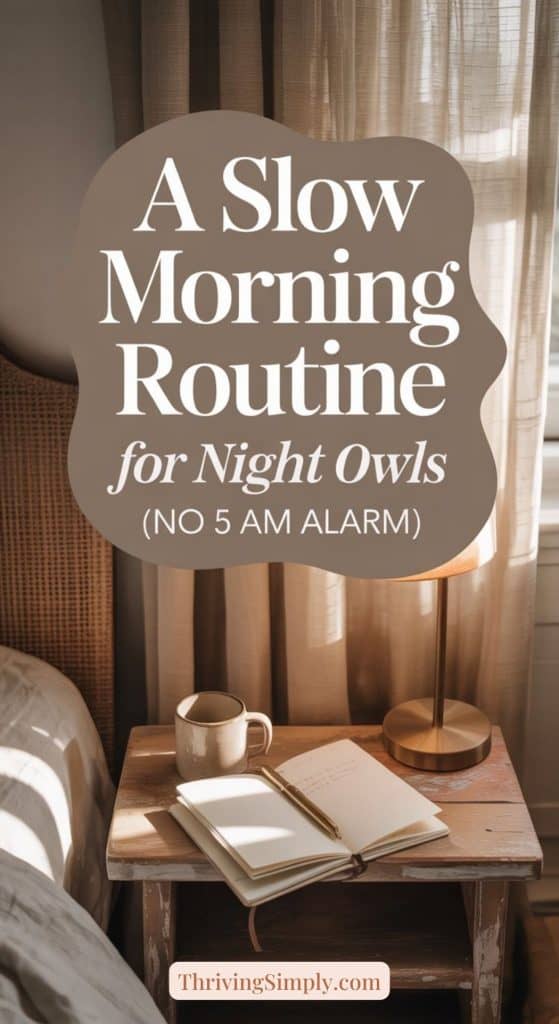
When your alarm goes off, your goal is to transition from sleep to awake as gently as possible. This 3-step routine doesn’t care if it’s 7:00 AM or 9:30 AM—it only cares about your peace.
Step 1: The 20-Minute Digital Buffer
The biggest mistake you can make is picking up your phone within the first 60 seconds of waking up. Flooding your brain with emails, texts, and news alerts immediately spikes your anxiety and hijacks your day.
- The Rule: Leave your phone across the room or on your nightstand for the first 20 minutes. Give your mind time to arrive in the physical room before you step into the digital world.
Step 2: Sensory Grounding
Night owls often suffer from a heavy bout of sleep inertia (that groggy, heavy-headed feeling). Instead of shocking your system with stress, use gentle sensory cues to wake up your body.
- Light: Immediately open your blinds or curtains. Natural morning sunlight triggers your body to stop producing melatonin (the sleep hormone) and naturally boosts alertness.
- Warmth: Brew your morning beverage. Hold the warm mug in both hands. Inhale the aroma of the coffee or herbal tea before you take your first sip. Simply sit in a comfortable chair and look out the window for five minutes.
Step 3: Low-Stimulation Movement
You don’t need an intense workout to shake off morning brain fog. A gentle, low-stimulation transition is much more sustainable.
- Try five minutes of gentle cat-cow stretches on your rug, or sit quietly with a journal.
- Write down three things you are grateful for, or simply write out a stream of consciousness to clear the cobwebs from your mind.
The Night Owl’s Quick-Start Checklist
| Night Before (Using Your Energy) | Morning Routine (Protecting Your Peace) |
| Set out your morning mug and tea/coffee | 20 Minutes of zero screen time upon waking |
| Do a quick 5-minute kitchen counter reset | Open all blinds for natural sunlight |
| Write a 3-item priority list to clear your head | 5 Minutes of silent sitting with your warm drink |
| Fill your water carafe and leave it by the bed | Gentle stretching or light journaling |
Overcoming the “Late Start” Anxiety
If you work from home or have a flexible schedule, the hardest part of a slow morning isn’t the routine itself—it’s the internal narrative. You might find yourself rushing through your slow morning because you feel like you are “already behind” the rest of the world.
Shift your mindset from competing with early birds to honoring your unique biological blueprint. Your day is not shorter just because it starts later; your timeline is simply shifted. By protecting your morning, you ensure that your high-energy evening hours will be focused, creative, and joyful, rather than drained by morning burnout.
Slow Morning Routine: Frequently Asked Questions
Can I have a slow morning if I have a strict 9-to-5 job?
Absolutely. A slow morning doesn’t have to take two hours. You can experience a beautiful, slow morning in just 15 minutes. The key is removing the frenzy. If you wake up 20 minutes before you have to log on or leave, use 5 of those minutes to sit in absolute silence with your eyes closed before touching your laptop or car keys. It’s about the quality of the time, not the quantity.
How do I stop feeling guilty for sleeping in later than others?
Remind yourself that human chronotypes are real and evolutionary. Historically, communities needed night owls to stay awake and guard the camp while early birds slept. Your body is wired differently, not incorrectly. Judge the success of your day by your peace and output, not by the time on the clock.
What is the best way to clear night-owl brain fog quickly?
Hydration and light are your two best friends. Drinking a full glass of filtered water right after waking up rehydrates a brain that has been fasting for 8 hours. Pair that with immediate exposure to bright, natural light, and your body will clear sleep inertia twice as fast without needing a massive adrenaline spike.
Are you an early bird or a proud night owl? How do you protect your peace in the morning? Let us know in the comments below, and save this guide to your intentional living boards for your next slow morning!