Calming Evening Rituals for Better Sleep
Evenings used to be the hardest part of my day. I’d finally sit down, physically exhausted but mentally spinning — replaying conversations, planning tomorrow, worrying about things that didn’t need worrying. I’d tell myself, “Tonight I’m going to fall asleep faster,” and then… I’d do exactly what most of us do: scroll, snack, stress, repeat.
If nights feel overwhelming for you too, you’re not doing anything wrong — your mind and body are simply struggling to downshift out of “go mode.” And you’re not alone in that. Modern life has trained our nervous systems to stay on high alert long after we’re supposed to be at rest.
But here’s the truth: you don’t need a strict nighttime routine or a beautiful spa setup. You don’t need to become a different person.
You just need a few gentle evening rituals that help your mind and body feel safe enough to soften.
These rituals are how I learned to finally sleep without the stress spiral — and I’m sharing them here in the same gentle, realistic way I practice them myself.
What We’ll cover:
- How to create soft, grounding evening rituals to support better sleep
- How to naturally slow your nervous system before bedtime
- Tiny, doable habits that help your mind unwind
- Gentle ways to transition from the day into rest
- A peaceful, practical rhythm you can personalize
Create a Soft Landing at the End of Your Day
Most of us jump straight from stimulation to sleep — screens, multitasking, conversations, chores, noise — then suddenly expect our brains to shut down. I used to do the same, and then wondered why I couldn’t fall asleep.
Now, I give myself a “soft landing.” It’s not a big ritual — just a small transition that tells my brain the day is ending.
I dim lights. I slow my movements. I lower the volume. Sometimes I just take a warm shower and let the steam melt the noise off my skin. That alone changes everything.
Why It Helps
Your nervous system needs a gentle transition, not an abrupt stop, to settle into sleep mode.
Replace Bright Lights With Something Cozy
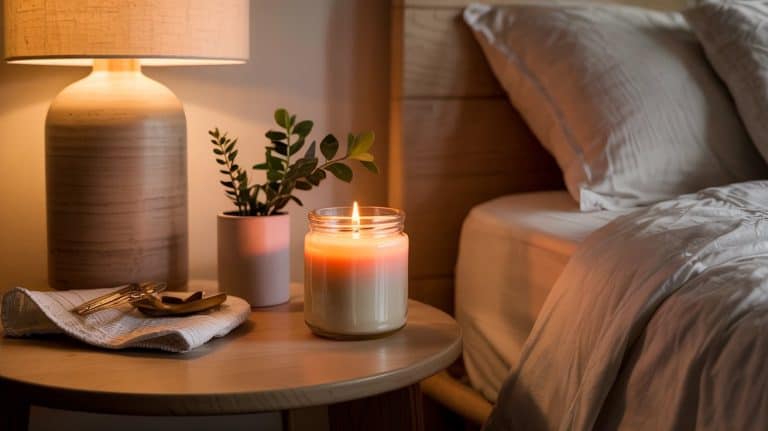
It’s amazing how quickly my mind calms down when I swap overhead lights for warm lamps or even candles. Soft lighting signals to your body that it’s time to wind down.
I like to think of it as preparing the room for my future sleepy self — someone who deserves calm, comfort, and ease.
Why It Helps
Soft lighting supports melatonin production, making sleep come more naturally.
Let Your Mind Exhale on Paper

Sometimes my thoughts feel like they’re all tangled together at night. Instead of trying to sort them in my head, I take two minutes — truly just two — to do a simple “brain dump.”
Not a polished journal entry. Not a gratitude list unless I’m in the mood. Just a few sentences like:
“I’m worried about __.”
“Tomorrow I need to remember __.”
“Right now I feel __.”
It clears space in my mind the way opening a window clears stale air.
Why It Helps
Writing releases mental tension without needing logic, clarity, or solutions.
Release Tension from Your Body
You don’t need yoga pants or a mat. Some nights all I do is stretch my arms overhead, slowly roll my neck, or place a warm compress on my shoulders.
Your body remembers every stress you didn’t process during the day. Giving it two minutes of care helps it let go.
Why It Helps
Physical relaxation supports mental relaxation — they’re deeply connected.
Do One Sensory-Soothing Ritual
This is where your evening becomes yours again — soft, slow, and comforting.
For me, it changes nightly. Sometimes it’s:
- making chamomile or peppermint tea
- massaging in a little lavender body oil
- applying skincare slowly
- sitting by an open window and listening to nighttime sounds
The ritual isn’t about productivity or wellness. It’s about reminding your body, “You’re safe now.”
Why It Helps
Sensory rituals calm your vagus nerve and prepare your body for deep rest.
Reduce Screen Time Little by Little
I’m not going to tell you to eliminate screens — that’s unrealistic for most of us. Instead, I made one tiny rule: screens stay out of the last 20–30 minutes of my night. I’m working towards 60 minutes, but taking baby steps!
If I want to scroll, I scroll earlier. But the last stretch of my evening is reserved for peace.
Why It Helps
Screen-free time stops dopamine spikes that keep your mind alert and restless.
End Your Night With Something Tender

Just like mornings benefit from presence, evenings benefit from tenderness.
It could be:
- telling yourself one kind thing
- feeling grateful for one moment from the day
- whispering, “It’s okay to rest now”
- placing your hand on your heart
- reading a paragraph of a calming book
This is the moment your spirit exhales.
Why It Helps
Kindness toward yourself is one of the most powerful sleep signals.
Build Your Evening Slow, Not Perfect
The most important part of evening rituals is this:
They don’t have to be perfect.
They don’t have to be long.
They don’t have to be the same every night.
They just need to feel supportive.
Start with one ritual.
Let it become a habit.
Add another if it feels nourishing.
Your nervous system will begin to recognize these rituals as cues for safety.
And sleep will come easier — not because you forced it, but because you finally created space for it.
You deserve nights that restore you.
You deserve rest that softens the edges of your day.
You deserve rituals that feel like coming home to yourself.
Sweet dreams!
FAQs
How long should an evening ritual take?
Not long at all — truly. Even five minutes can make a real difference. A holistic evening routine isn’t about the length; it’s about creating a gentle transition. One small ritual (like dimming the lights or sipping tea) is enough to help your nervous system start slowing down.
What if I’m too tired or busy for a full routine?
You don’t need a full routine. Pick one soft ritual that feels doable on your busiest nights. Even loosening your shoulders or drinking something warm can shift your body out of “go mode” and into rest mode. Tiny habits > perfect habits.
Do I need to avoid screens completely before bed?
No — most of us live in the real world, not a monastery. Instead of eliminating screens, try reducing them. Start with 10–20 minutes of screen-free time before bed. That small window alone helps your mind unwind and fall asleep more naturally.
Why does relaxing feel so hard at night?
Because your mind is finally quiet enough to process the day — and all the thoughts you pushed aside come rushing in. Evening rituals help create a “landing pad” for those thoughts, so your body doesn’t carry the entire day into your night.
What if I still have trouble falling asleep?
Be gentle with yourself. Sleep takes time to reset, especially if your stress levels have been high. Keep practicing soft rituals, try breathing slowly, and avoid judging the process. If sleep troubles persist long-term, it may help to talk with a healthcare provider.
Do I need special products or tools?
Not at all. A holistic evening ritual is about how you wind down, not what you buy. A warm shower, soft lighting, a quiet moment, or mindful breathing are completely free — and incredibly powerful.
Can evening rituals really help reduce stress?
Yes. Evening rituals help calm your nervous system, lower cortisol, and create predictability — all of which reduce stress. Think of them as little soft spaces in your night where you return to yourself.
What if my evenings are chaotic because of kids or work?
Then you need even more softness, not longer routines. Try weaving mini-rituals into what already exists — dim the lights during dinner, drink tea while helping with homework, stretch in the hallway, or journal for 30 seconds before bed. Rituals don’t have to be quiet to be meaningful.