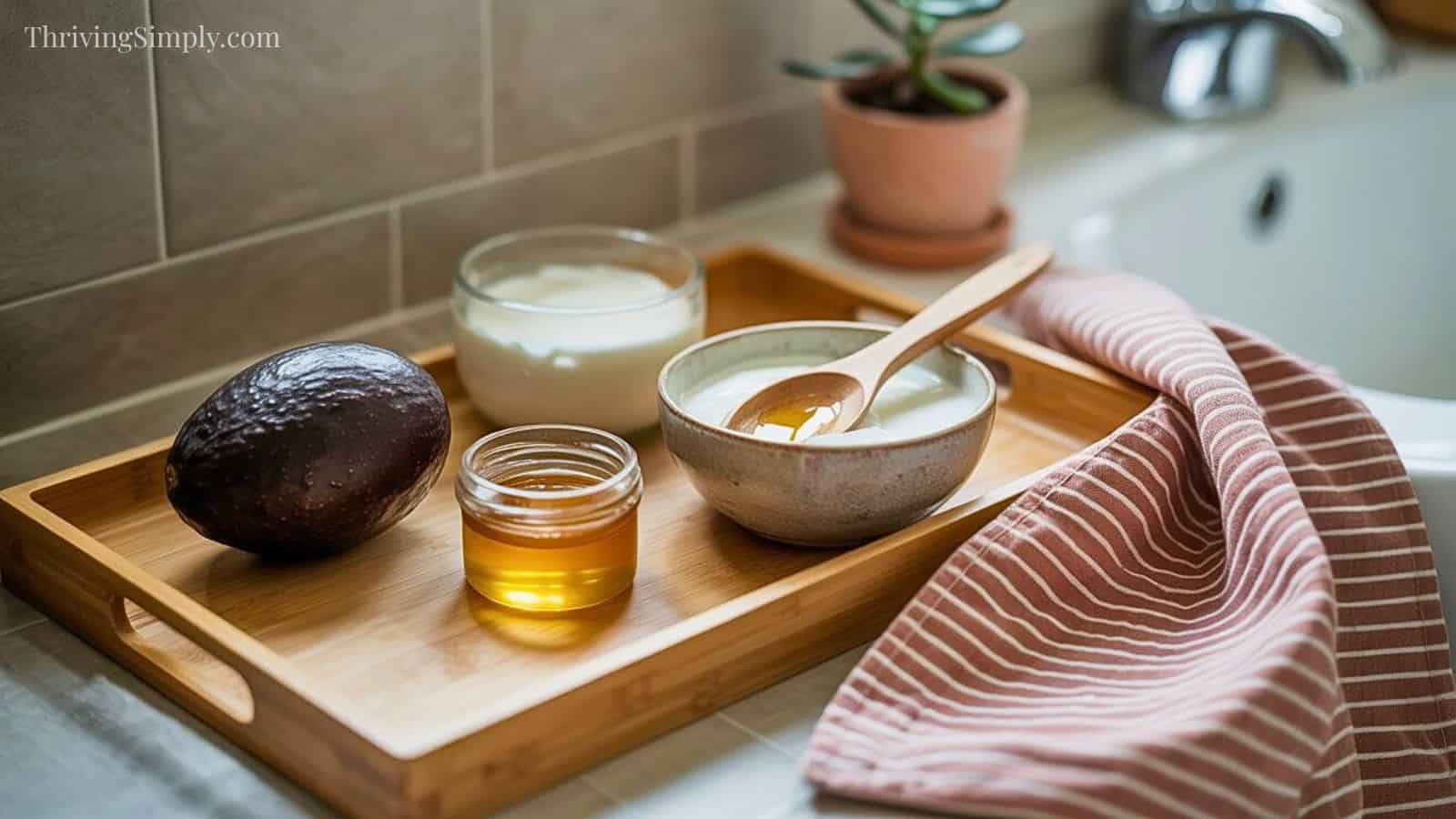
DIY Hair Masks for Dry, Dull, or Overworked Hair
There was a season where my hair felt like it had completely given up on me.
Dry at the ends, dull no matter what I used, and constantly pulled into a messy bun because I just didn’t have the energy to deal with it. Sound familiar??
What helped most wasn’t another expensive product — it was slowing down and giving my hair the same kind of care I was learning to give myself. These DIY hair masks are simple, gentle, and made with ingredients you may already have.
They’re not about perfection or salon-level results. They’re about nourishment, patience, and letting things soften again.
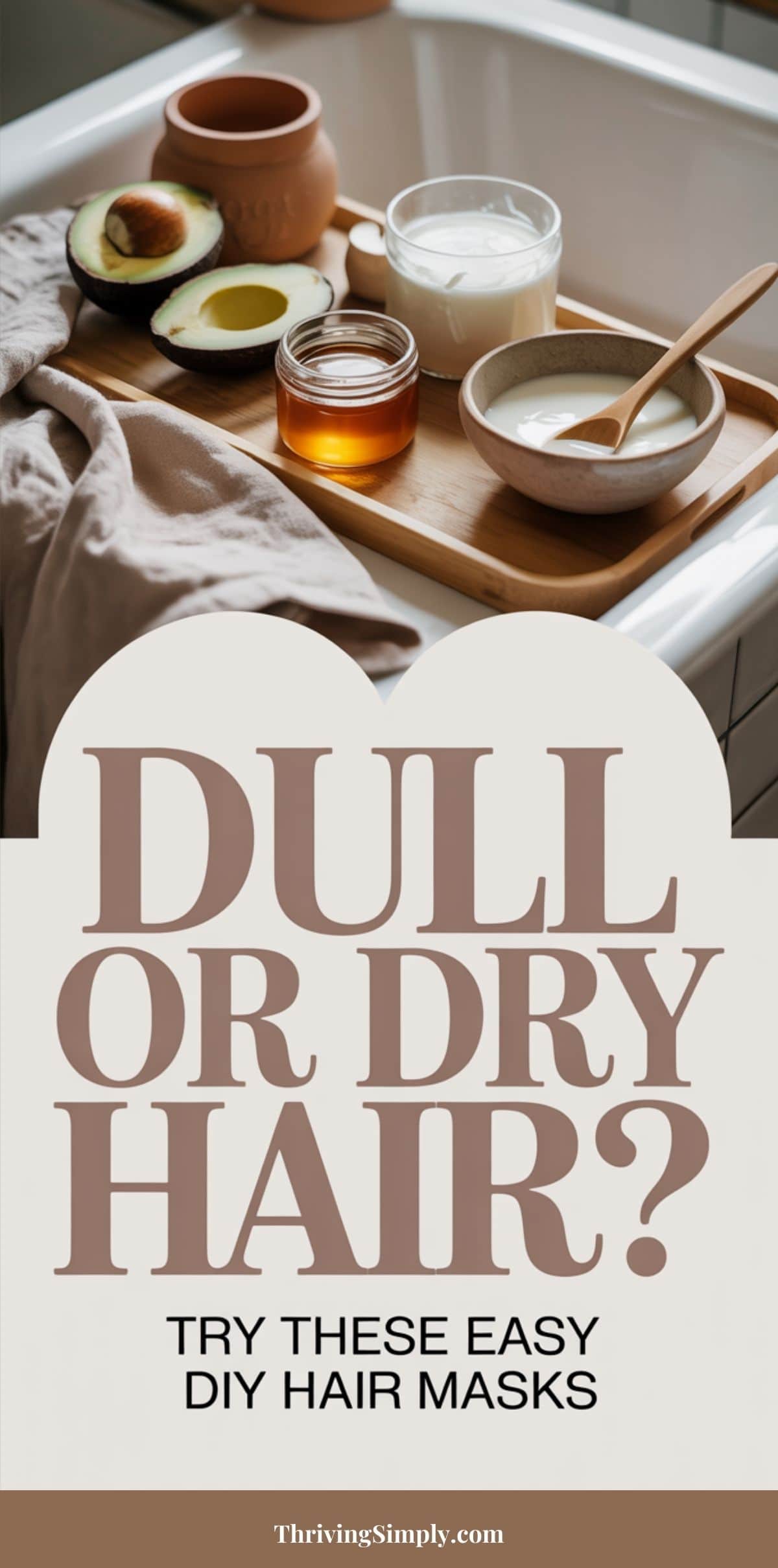
What You’ll Learn
- Why hair becomes dry, dull, or overworked
- How DIY hair masks can restore moisture and shine
- Simple hair mask recipes for different hair needs
- How to apply hair masks without making a mess
- Tips for building hair care into a calm self-care routine
Why Hair Gets Dry, Dull, or Overworked
Hair doesn’t just respond to products — it responds to life. Stress, heat styling, color treatments, tight ponytails, weather changes, and even poor sleep can all take a toll.
For me, the biggest culprits were:
- Heat tools used on autopilot
- Skipping regular conditioning
- Stress that showed up everywhere — including my scalp
DIY hair masks work because they slow things down. They invite moisture back in and give your hair time to recover instead of pushing it to “perform.”
DIY Hair Masks That Gently Restore Moisture and Shine
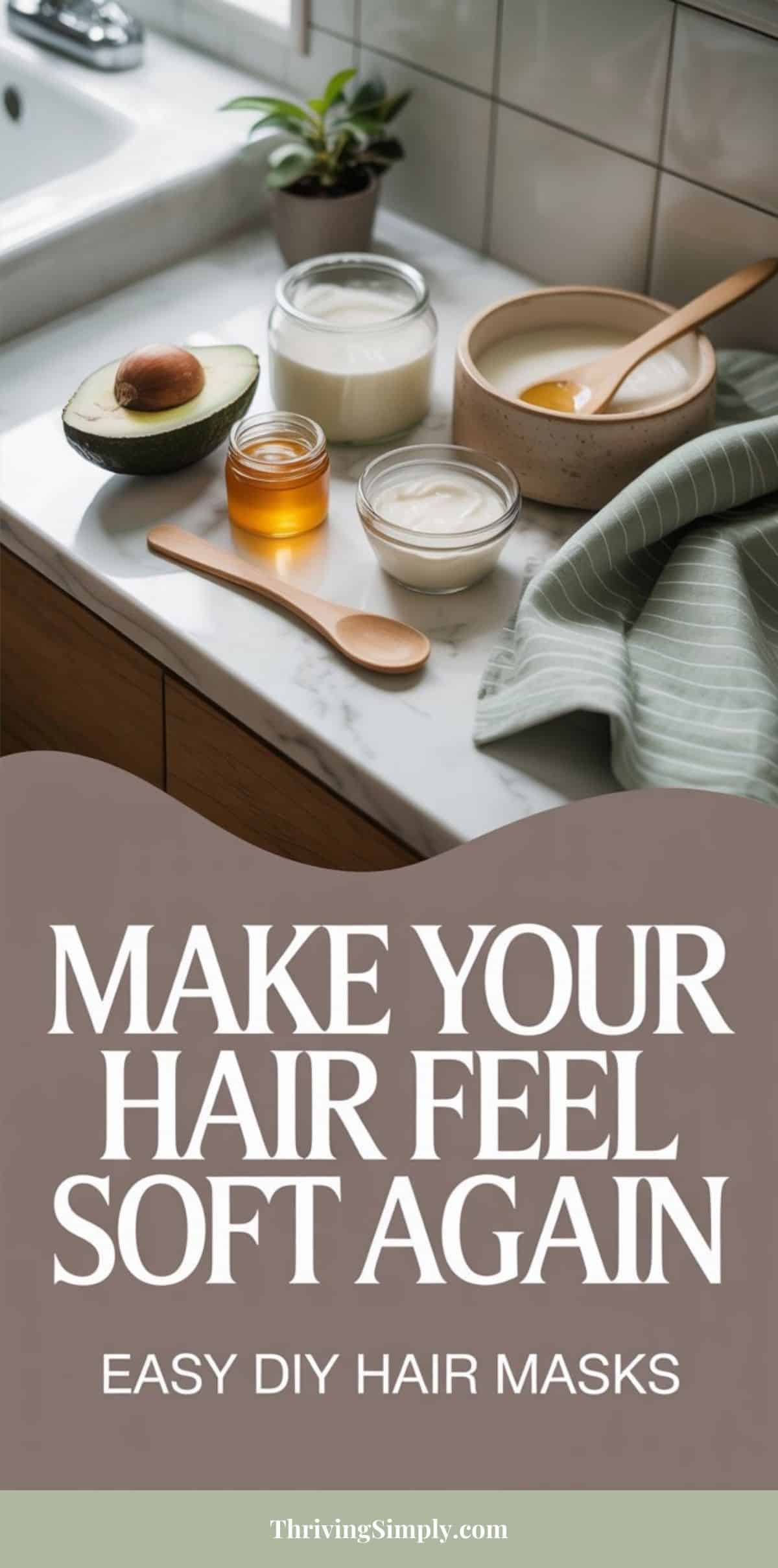
Hydrating Avocado + Olive Oil Mask
Best for: very dry, brittle, or stressed hair
Why it helps:
Avocado is rich in healthy fats and vitamins that help soften dry strands, while olive oil seals in moisture and adds shine.
What you’ll need:
- ½ ripe avocado
- 1–2 tablespoons olive oil
How to use:
Mash until smooth. Apply to damp hair from mid-length to ends. Leave on for 20–30 minutes, then rinse and shampoo.
Gentle tip:
Wrap hair in a towel while the mask sits — warmth helps it absorb better.
Coconut Oil + Honey Repair Mask
Best for: dull hair that feels rough or lifeless
Why it helps:
Coconut oil penetrates the hair shaft, while honey attracts moisture and helps hair feel softer and smoother.
What you’ll need:
- 1–2 tablespoons coconut oil (melted)
- 1 tablespoon raw honey
How to use:
Mix well and apply to damp hair. Leave on for 15–25 minutes, then shampoo thoroughly.
Personal note:
This is my go-to mask after weeks of ponytails and dry winter air.
Banana + Yogurt Softening Mask
Best for: frizzy, coarse, or easily tangled hair
Why it helps:
Banana adds softness and elasticity, while yogurt provides gentle protein and moisture balance.
What you’ll need:
- 1 ripe banana
- 2 tablespoons plain yogurt
How to use:
Blend until completely smooth (this matters!). Apply evenly and leave on for 20 minutes before rinsing and shampooing.
Aloe + Almond Oil Scalp-Soothing Mask
Best for: dry scalp, itchiness, or tightness
Why it helps:
Aloe calms irritation and hydrates the scalp, while almond oil nourishes without heaviness.
What you’ll need:
- 2 tablespoons aloe vera gel
- 1 tablespoon sweet almond oil
How to use:
Massage gently into scalp and work through ends. Leave on for 15–20 minutes, then shampoo.
How Often Should You Use a Hair Mask?
- Dry or damaged hair: once a week
- Normal hair needing a boost: every 2–3 weeks
- Oily hair: focus on ends only
There’s no gold star for overdoing it. Hair responds best to consistency, not intensity.
Making Hair Care Feel Like Self-Care (Not Another Task)
I like to pair hair masks with something comforting — a warm shower, a podcast I love, or just quiet time in the bathroom without rushing. It’s less about fixing your hair and more about giving yourself permission to pause.
Sometimes the ritual matters just as much as the result.
FAQs
Do DIY hair masks really work?
Yes — especially for moisture and softness. They won’t replace professional treatments, but they can dramatically improve how your hair feels.
Will these make my hair greasy?
If applied mostly to mid-lengths and ends and rinsed well, they shouldn’t. Start with small amounts.
Can I use these on color-treated hair?
Generally yes, but avoid overusing coconut oil if your hair is very fine or prone to buildup.
Do I need to shampoo after a hair mask?
Yes — most masks work best when followed by shampoo to remove residue.
A Gentle Closing Thought
Hair doesn’t need to be perfect to be cared for. Sometimes it just needs softness, nourishment, and a little patience — just like we do. These DIY hair masks are one small way to reconnect with yourself and give your body something kind, without pressure or perfection.