Standard magnesium sprays can often feel itchy or drying. By whipping magnesium oil into nutrient-dense, grass-fed tallow, we’ve created a luxurious, calming cream that moisturizes your skin while deeply relaxing your muscles.
At Thriving Simply, we believe the best rituals are the ones that return us to nature.

Why Magnesium + Tallow?
- Magnesium: Helps regulate neurotransmitters that quiet the nervous system.
- Tallow: Acts as a “carrier” that mimics your skin’s natural oils, allowing the magnesium to absorb more effectively without the typical “sting” of saltwater sprays.
- The Ritual: Massaging your feet before bed signals to your body that it is safe to rest, making this the ultimate Digital Minimalism habit.
The Recipe: Magnesium Tallow Sleep Cream
Prep time: 20 minutes | Yields: 8 oz
Ingredients
- 1/2 Cup Purified Grass-Fed Tallow: (Melted and slightly cooled).
- 1/4 Cup Magnesium Oil: (You can buy this or make it by dissolving magnesium flakes in boiling water).
- 1 Tbsp Beeswax Pellets: (Optional, helps keep the emulsion stable so the oil doesn’t separate).
- 10 drops Lavender Essential Oil: (The gold standard for sleep).
- 5 drops Roman Chamomile: (For deep nervous system support).
Step-by-Step Instructions
1. The Emulsion Base Melt your tallow (and beeswax, if using) in a double boiler over low heat. Once liquid, remove from heat and let it cool until it starts to look slightly cloudy but is still liquid.
2. The “Slow Pour” This is the most important step! Using a hand mixer or stand mixer, start whipping the tallow on medium speed. Very slowly drizzle in the magnesium oil—one teaspoon at a time.
Think of this like making mayonnaise; you are emulsifying oil and water.
3. Add the Botanicals Once all the magnesium oil is incorporated, add your essential oils.
4. The Final Whip Turn the mixer to high and whip for 5–7 minutes until it looks like thick, marshmallow fluff. It should be airy and hold its shape.
5. Storage Transfer to a glass jar and store in a cool, dark place. This will stay fresh for 6 months.
How to Use for Maximum Sleep
Apply a pea-sized amount to the arches of your feet and your calves 30 minutes before bed. Put on a pair of clean cotton socks to lock in the moisture and prevent the cream from getting on your sheets.
Frequently Asked Questions
Why use magnesium on the skin instead of taking a supplement?
Topical magnesium allows your body to absorb it through the skin, which can feel gentler for many people — especially those who experience digestive upset from oral supplements. Applying it as part of a bedtime ritual also helps signal the body to slow down and prepare for rest.
Will this magnesium tallow cream sting or feel itchy?
Most people find this formula much more comfortable than traditional magnesium sprays. The tallow acts as a nourishing buffer, helping reduce the tingling or dryness that magnesium oil can sometimes cause. If you’re new to topical magnesium, start with a small amount and see how your skin responds.
Can I use this every night?
Yes. This cream is designed for regular use and works best when applied consistently as part of your evening wind-down routine. Many people use it nightly, especially during stressful seasons or when sleep feels disrupted.
Why apply it to the feet instead of other areas?
The feet have large pores and strong absorption potential, making them ideal for topical magnesium. Massaging the arches and calves before bed also helps release physical tension and reinforces a calming bedtime cue for the nervous system.
Is this safe for sensitive skin?
This recipe is generally well tolerated, especially when made with high-quality, grass-fed tallow and pure magnesium oil. If you have very sensitive skin, consider leaving out essential oils at first and always patch-test before full use.
What if my cream separates or feels too thin?
Separation can happen if the emulsion breaks or the mixture cools too quickly. Simply re-melt gently, add a small amount of beeswax if needed, and re-whip slowly as it cools. Texture can vary slightly depending on room temperature — that’s normal for natural products.
Will this cream make me sleepy right away?
This isn’t a sedative. Instead, it supports relaxation by calming the nervous system and easing muscle tension. Over time, your body may begin to associate this ritual with rest, making it easier to unwind naturally at night.
Final Thoughts…
Rest doesn’t begin the moment your head hits the pillow — it begins with the signals you send your body beforehand.
This magnesium tallow sleep cream isn’t about forcing sleep or fixing yourself. It’s about creating a gentle pause at the end of the day. A few quiet minutes. Warm hands. Slow breath. A reminder to your nervous system that it’s safe to soften.
When you return to simple, nourishing rituals like this, sleep becomes less of a struggle and more of a natural transition. And even on the nights when rest comes slowly, your body still benefits from the care, the consistency, and the calm you’ve created.
Sometimes, the most powerful way to unwind is to stop trying — and simply allow.

You finally crawl into bed, exhausted… and suddenly your mind turns on. Thoughts pile up. To-do lists reappear. The day replays itself. Even though your body is tired, your nervous system hasn’t caught up yet.
That’s where the bedroom itself matters.
A bedroom designed for rest doesn’t just support sleep — it helps your body and mind slow down before sleep even begins. It gently signals that you’re safe, done for the day, and allowed to let go.
The bedrooms below aren’t about luxury or perfection. They’re about creating environments that feel softer, quieter, and more forgiving — spaces that help you rest even when your mind doesn’t want to cooperate.

1. The Soft Linen Sanctuary

This bedroom feels like permission to stop trying so hard.
Nothing is crisp or overly styled. The bedding looks inviting instead of perfect. The textures are breathable and forgiving — the kind of space where your shoulders drop the moment you walk in.
Why this works:
Linen naturally softens both sound and temperature, which helps your body settle. Visually, it removes sharpness from the room — no tight lines, no visual tension. For people who struggle with racing thoughts at night, this softness sends a quiet signal: you don’t have to be “on” here.
2. The Earth-Toned Cocoon

This bedroom feels grounded — like being wrapped in something steady after a long day.
The colors are warm and familiar. Nothing pops or demands attention. The room feels held rather than open and exposed.
Why this works:
Earth tones — taupe, clay, soft brown — are deeply regulating for the nervous system. They mimic colors found in nature and subconsciously communicate safety and stability. For anyone who feels overstimulated or emotionally drained at night, this kind of palette can help the body feel anchored again.
3. The Low-Light Retreat

This bedroom is intentionally dim — especially at night.
There’s no harsh overhead lighting. The glow is warm and gentle, like the room is slowly winding down with you.
Why this works:
Bright lighting keeps the brain alert, even when you’re exhausted. Soft, layered lighting helps your body recognize that it’s time to transition out of the day. For people who feel “wired but tired,” reducing visual stimulation at night can make falling asleep feel less like a battle.
If you are loving these relaxing, calming designs and want to expand this into other areas of your home, be sure to check out The Art of a Calm Home: Slow Living Décor Made Easy.
4. The Minimal-But-Warm Bedroom

This space isn’t empty — it’s intentional.
There’s room to breathe. Nothing feels crowded. Every piece has a purpose, and nothing feels like it’s asking something of you.
Why this works:
Visual clutter can keep the brain active even when you’re tired. A simpler room reduces the number of things your mind has to process at night. When your environment is calm, your thoughts have an easier time following suit — especially if you struggle with mental overstimulation.
Pro Tip: Don’t be afraid to use a few little pops of color in your minimal, ultra-relaxing bedroom. As you’ll see in the example above, we’ve added some golden mustard and green tones to the bedding and rug. It doesn’t shock the system, they all just work together to create that neutral, earthy calm vibe.
5. The Texture-Rich Rest Space

This bedroom uses texture instead of bold color to create comfort.
Soft rugs, layered bedding, woven elements — everything feels touchable and grounding.
Why this cozy bedroom works:
Texture adds warmth without overstimulating the senses. It helps a room feel cozy and protective without being visually loud. For people who feel restless at night, texture creates a sense of containment and comfort that supports relaxation.
6. The Sage Green Reset Bedroom
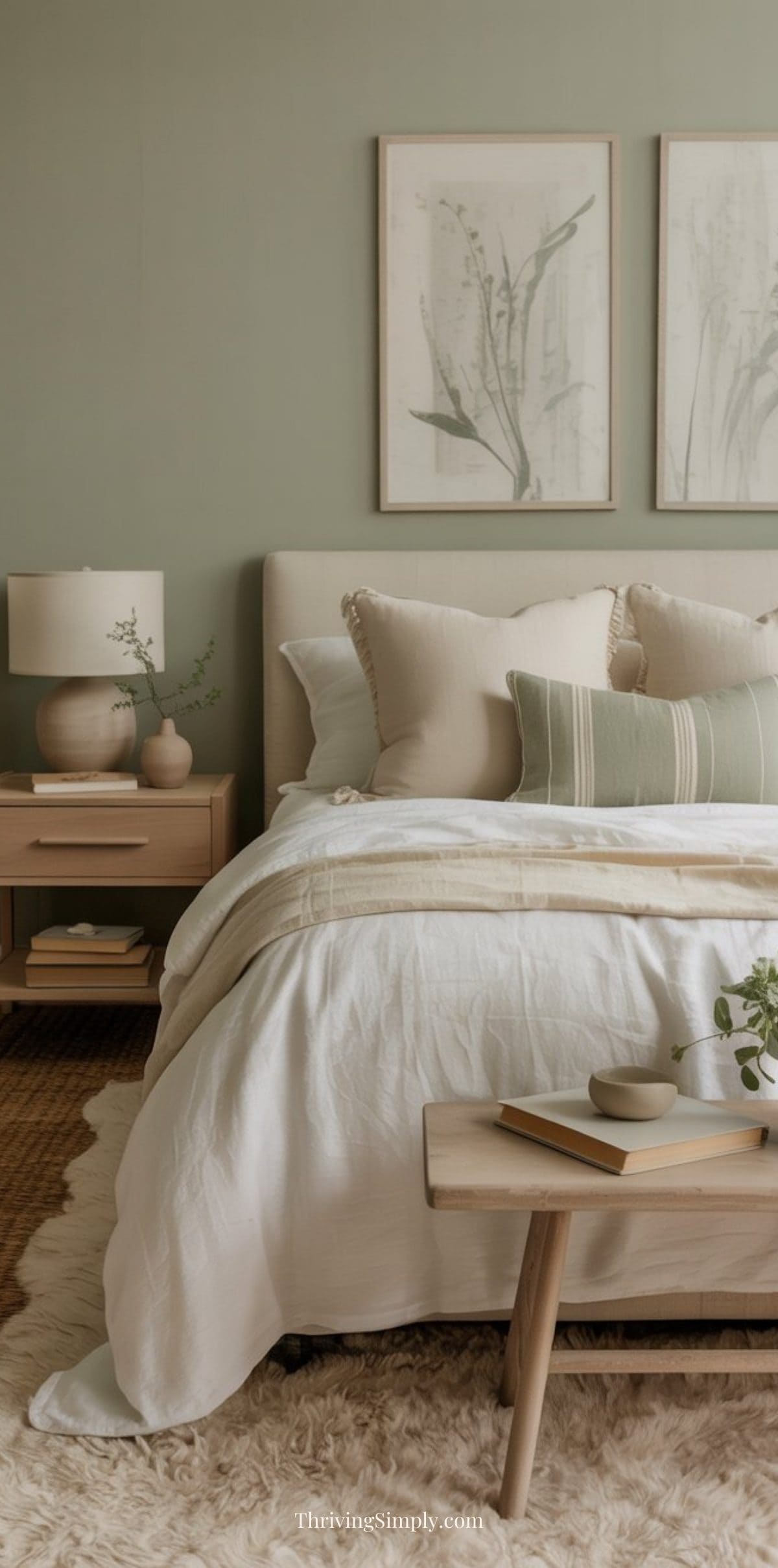
This space feels fresh, calm, and quietly restorative.
Sage green walls soften the room without overpowering it, creating a gentle connection to nature.
Why this works:
Soft greens are known to have a calming effect on the nervous system. They’re especially helpful for people whose minds feel overstimulated or scattered at night. This palette feels like a reset — not energizing, but quietly stabilizing.
7. The Blush-and-Neutral Comfort Room

This bedroom feels gentle and emotionally supportive without being overly feminine.
The blush tones are muted and balanced with warm neutrals.
Why this works:
Soft blush adds warmth and comfort without activating the nervous system the way brighter colors can. For people who carry emotional stress into the evening, this palette feels nurturing and safe — like a quiet reassurance at the end of the day.
8. The Dark-and-Cozy Bedroom

This room feels like a gentle retreat from the world.
The darker tones make the space feel enclosed and protected rather than open and exposed.
Why this works:
For some people, lighter rooms feel overstimulating at night. Darker, muted tones can create a cocoon-like effect that helps the nervous system relax. This is especially helpful if you struggle with feeling “on display” or restless at bedtime.
9. The Scent-Supported Sleep Space
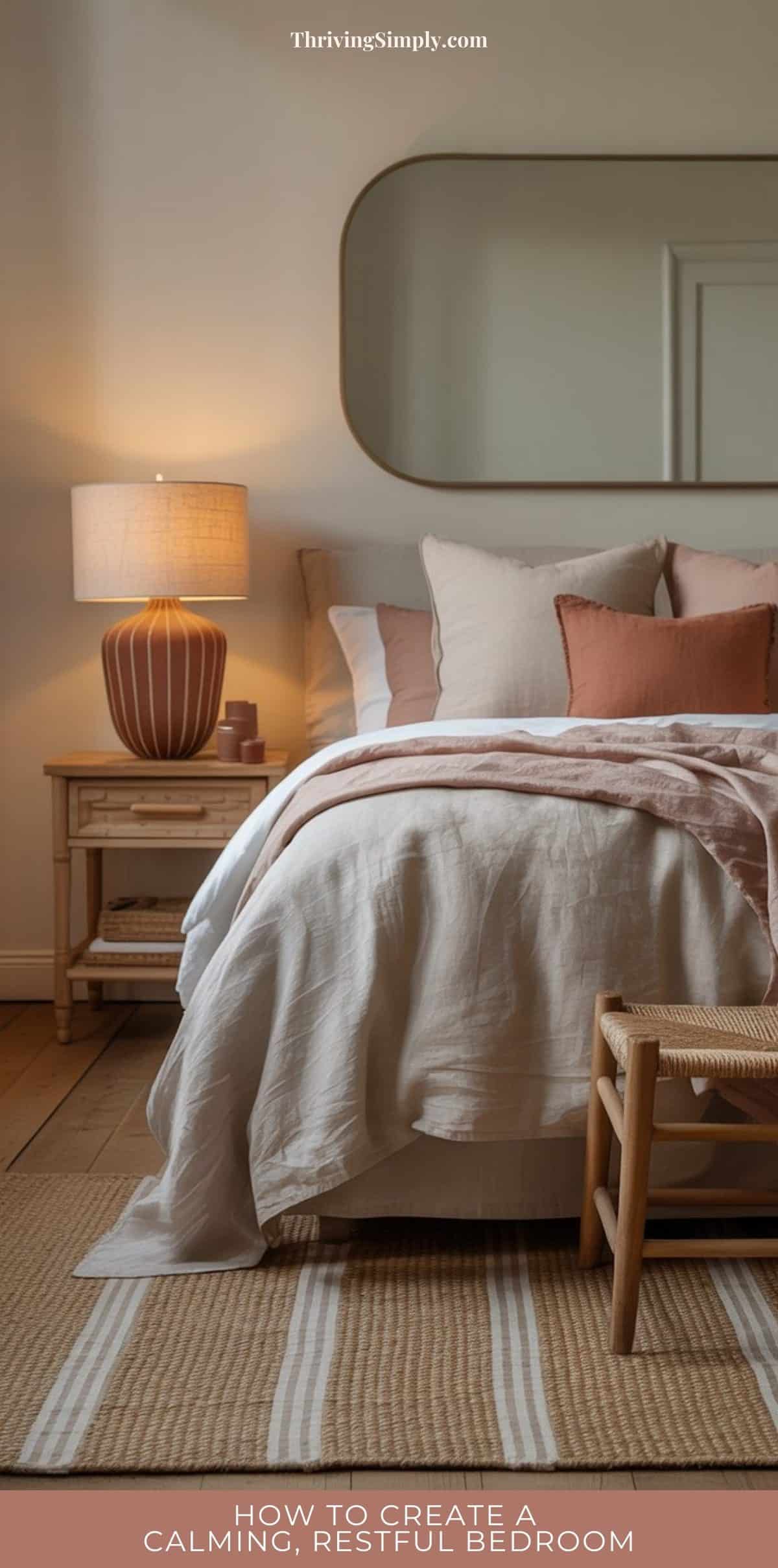
This bedroom subtly engages the senses without overwhelming them.
There’s a quiet, familiar scent — nothing strong, nothing artificial.
Why this works:
Scent is directly tied to the nervous system. Gentle, natural scents can signal safety and relaxation, helping the body unwind more easily. When scent is used intentionally, it becomes a cue for rest.
To create a natural scent for your bedroom, there are a few simple diy options that we LOVE, including:
- Sleep Better Tonight: Soothing DIY Linen Spray
- DIY Natural Odor Absorbers with Essential Oils
- DIY Sleep Candle (A Calming Night Ritual, Not Another Task)
10. The “Nothing Demands You” Bedroom
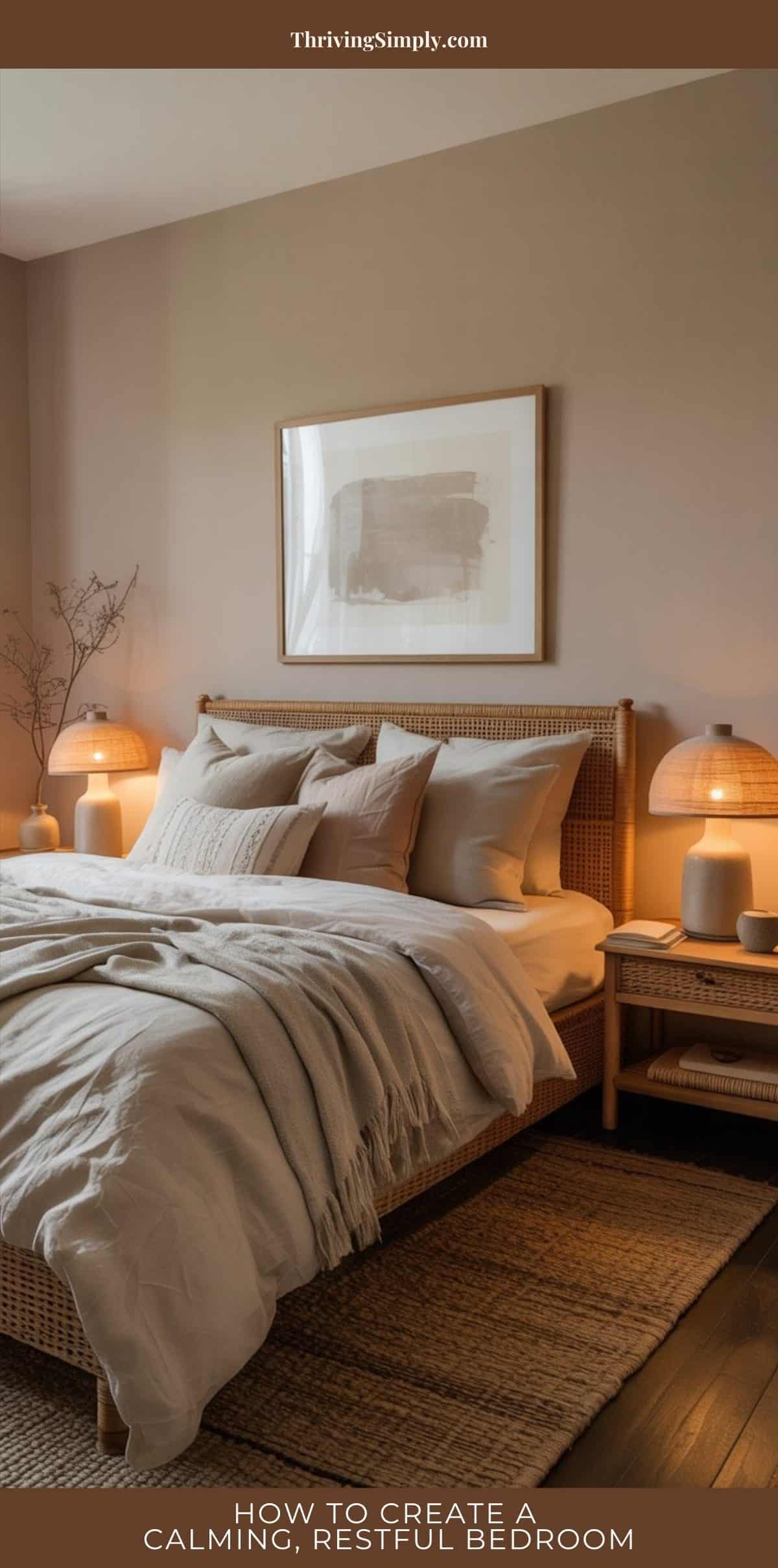
This is the bedroom where nothing needs to be done.
No screens. No reminders. No clutter asking for attention.
Why this works:
When the bedroom stops functioning as a workspace or storage zone, it becomes a true rest space. Removing mental cues helps the brain let go of productivity mode and shift into rest mode — something many people struggle with in modern life.
Final Thoughts
A bedroom designed for rest doesn’t fix sleep overnight — but it does make rest feel more possible.
When your space stops asking things of you, your body and mind finally get the message that it’s okay to slow down. Even one small change — softer lighting, calmer colors, fewer visual distractions — can make nights feel less tense and more supportive.
Rest isn’t just something you do.
It’s something your environment helps you access.

Not because you’re doing anything wrong — but because your mind and body never fully get the message that it’s okay to slow down. Even when the house is quiet and the lights are off, it can feel hard to fully relax.
I’ve noticed that when I’m working too much or thinking too much, my bedroom starts to feel different. Not messy. Not “bad.” Just less supportive. Almost like it’s still asking something from me when all I want is rest.
Here’s the simple truth:
Your bedroom can either help you unwind — or quietly keep you on edge.
And the good news is, it doesn’t take a full makeover to change how it feels.
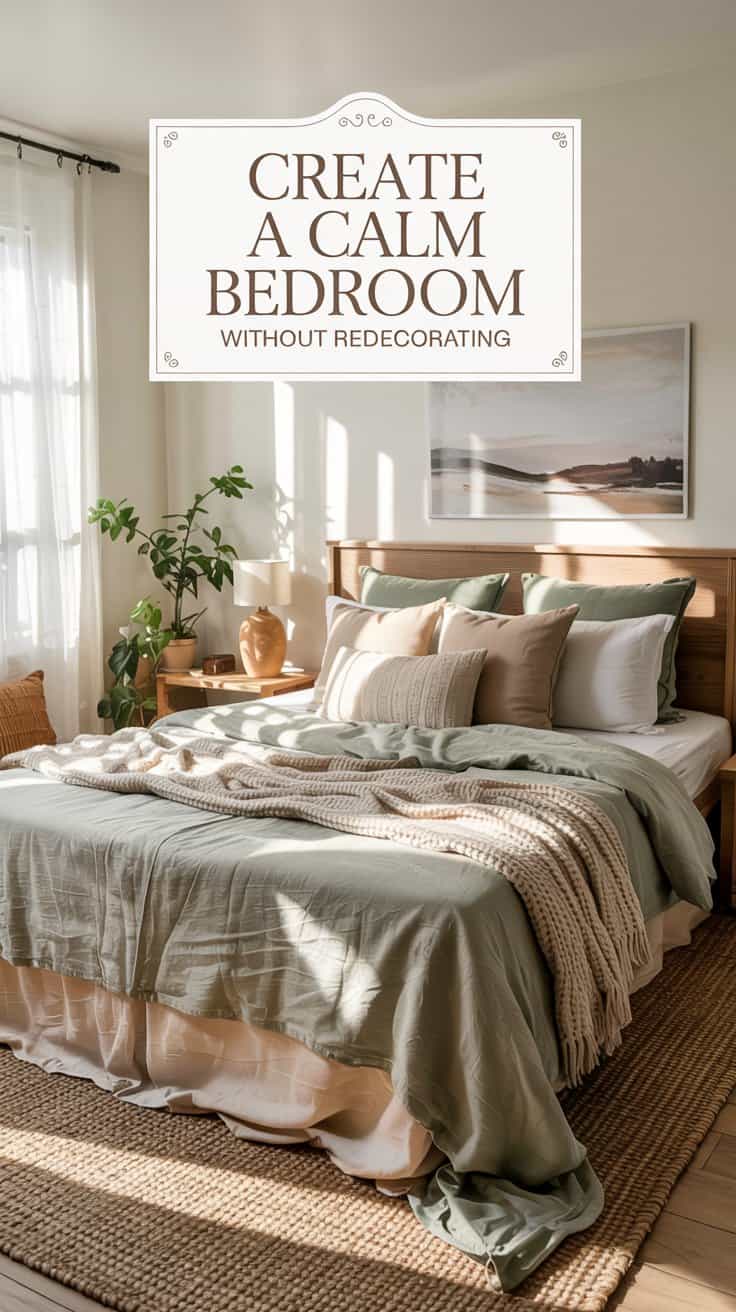
This article is about creating a calm bedroom in a very realistic way. No trends to chase. No big projects. Just small, thoughtful shifts that make it easier to rest when life already feels like a lot.
We’ll Cover:
- Why your bedroom affects how well you rest
- Small changes that make a noticeable difference
- How to make your bedroom feel calmer without redecorating
- What actually matters when everything feels overwhelming
- Where to start if your bedroom feels “off” right now
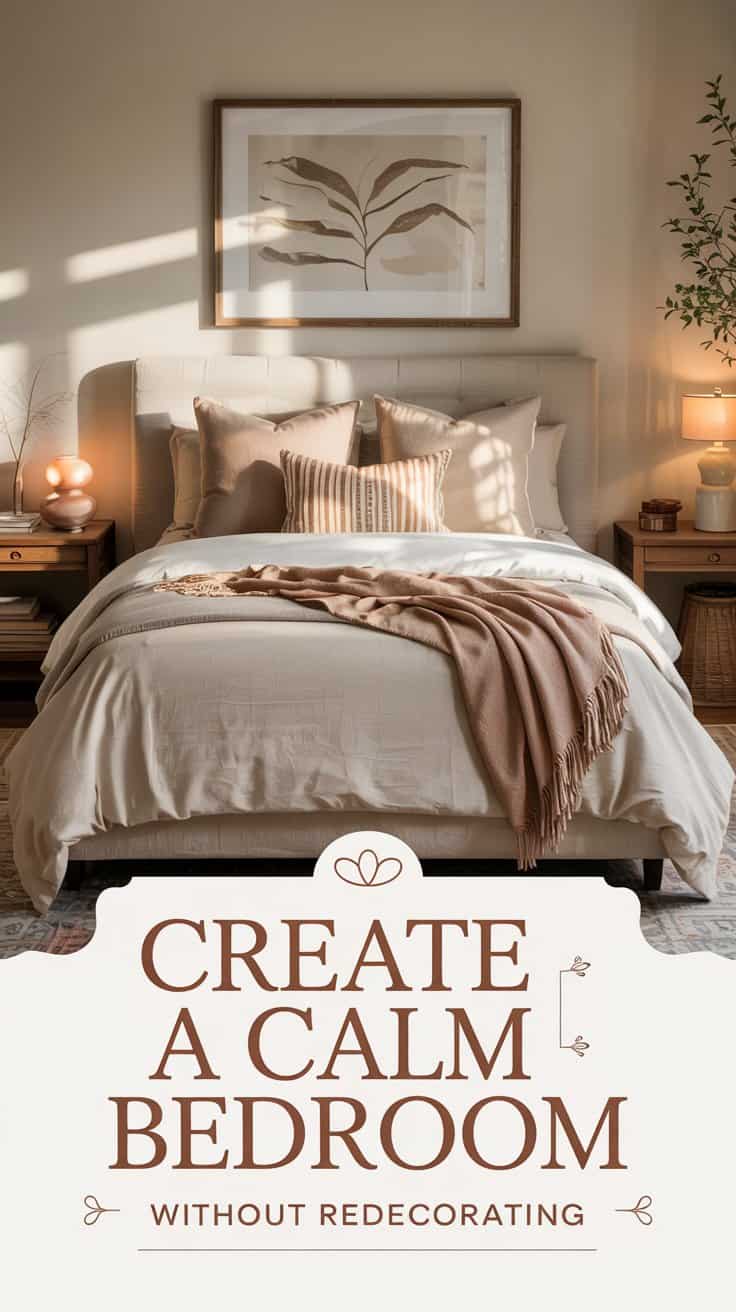
Why a Calm Bedroom Matters So Much
Your bedroom is the one place where your body is supposed to let go.
When the space feels busy, harsh, or unfinished, it’s harder to do that — even if you’re exhausted. Your mind stays slightly alert. Your thoughts keep going. Rest feels shallow instead of settling.
A calm bedroom doesn’t force sleep.
It simply makes rest feel more possible.
Start With What You See
One of the easiest ways to make a bedroom feel calmer is to reduce what your eyes have to take in — especially at night.
This doesn’t mean getting rid of everything. It means choosing what doesn’t need your attention.
A good place to start:
- Your nightstand
- The dresser you see from bed
- The area directly across from you
Clearing just one of these surfaces can soften the whole room.
Make the Bed Feel Like a Place You Want to Land
Your bed sets the tone for the entire room.
Calm bedrooms tend to have:
- Simple, neutral colors
- Soft, comfortable fabrics
- Fewer decorative elements competing for attention
I’ve found that when my bed feels inviting instead of styled, my whole body relaxes faster. Comfort matters more than how it looks in a photo.
Change the Lighting Before You Change Anything Else
If your bedroom feels restless at night, lighting is often the reason.
Bright overhead lights signal “stay alert,” even when you’re tired.
Small changes that help:
- Use lamps instead of overhead lighting in the evening
- Choose warm bulbs
- Keep light levels low and soft at night
This one shift alone can make the room feel noticeably calmer.
Reduce Visual Noise (Without Decluttering Everything)
You don’t need a minimalist bedroom to feel calm.
What helps most is reducing visual noise:
- Too many colors competing
- Too many patterns in one space
- Too many things left out “for later”
A more consistent, neutral look helps your eyes — and your mind — settle more easily.
Add Texture for Comfort

Texture makes a space feel softer and more supportive.
A few simple additions can change the feel of the room:
- Linen or cotton bedding
- A soft throw at the end of the bed
- A textured rug underfoot
- Wood or ceramic accents
These small details make the room feel warmer and less rigid.
Create One Gentle Nighttime Anchor

A calm bedroom often has one familiar, grounding element that signals the end of the day.
It might be:
- A book you keep by the bed
- A lamp you turn on each evening
- A candle you light before winding down
It doesn’t need to be a routine. Just something your body starts to recognize as “it’s time to rest.”
Let Your Bedroom Be About You
A calm bedroom isn’t about meeting expectations.
It’s about how the space feels when you’re in it — especially on hard days.
You’re allowed to choose comfort over trends.
You’re allowed to keep it simple.
You’re allowed to create a space that supports you as you are.
When You Can Only Do One Thing
If everything feels overwhelming, start small.
Clear one surface.
Change the lighting.
Simplify the bed.
That’s enough.
Even small changes can make a real difference when you’re already tired.
A Gentle Reminder
You don’t need a perfect bedroom to rest better.
You don’t need to fix everything.
You just need a space that feels calm enough to let go.
Your bedroom can be a place to exhale — even when life feels heavy.
Frequently Asked Questions
What if my bedroom is small?
Calm isn’t about size. A small room can feel incredibly restful with simple lighting and fewer visual distractions.
Can renters still create a calm bedroom?
Absolutely. Bedding, lighting, and texture matter far more than permanent changes.
Does this actually help with sleep?
Yes. When your space feels calmer, it’s easier to unwind — and that supports better rest.
What if I share a bedroom?
Focus on what you can control. Even small changes on your side of the room can help.
You may also like:
- Quiet Morning Rituals That Make Ordinary Days Feel Special
- How to Make Your Home Feel Calm When Life Feels Overwhelming
- Simple Ways to Release Emotional Clutter at the End of the Day
- Creating Calm Corners: Small Home Spaces That Help You Unwind (coming soon!)
I don’t need rules or steps or something else to “do correctly.”
I just want a small signal to my body that it’s okay to slow down.
For me, that often looks like lighting a candle — not for productivity or ambiance — but as a quiet transition. Something steady. Something warm. Something that says, we’re done for today.
This DIY sleep candle isn’t about perfect sleep or elaborate rituals. It’s simply a soft, intentional way to create a calmer evening atmosphere — especially on nights when your mind feels a little louder than you’d like.
What You’ll Learn
- Why simple evening cues can help your body wind down
- How to make a gentle DIY sleep candle using calming scents
- Which essential oils are commonly used for nighttime routines
- How to use a candle as a signal, not a solution
- Safety tips and realistic expectations for evening candle use

Why a Sleep Candle Can Feel So Comforting
I don’t think it’s the candle itself that matters most.
It’s what it represents.
Lighting a candle can act as a pause point — a small moment where you stop scrolling, stop pushing, and let the day end without needing to “fix” anything.
For many people, warm light and familiar scents create a sense of consistency. Over time, that consistency becomes comforting. It’s not about forcing sleep. It’s about inviting calm.
A Gentle Reminder Before We Begin
This candle isn’t meant to:
- Cure insomnia
- Replace medical care
- Guarantee sleep
Think of it instead as a supportive ritual — something that makes evenings feel softer and more grounded, even if sleep still comes slowly.
DIY Sleep Candle: Simple & Beginner-Friendly
This recipe keeps things intentionally uncomplicated.
What You’ll Need
- Soy wax flakes (or beeswax if preferred)
- Cotton or wooden wick
- Heat-safe glass jar or ceramic container
- Essential oils (see suggestions below)
- Double boiler or heat-safe bowl
- Wick sticker or a small drop of melted wax
How to Make It
- Melt the wax slowly using a double boiler.
- Secure the wick in the center of your container.
- Let the wax cool slightly before adding essential oils.
- Pour the wax into the container and let it set fully.
- Trim the wick once cooled.
That’s it. No rush. No perfection required.
Commonly Used Essential Oils for Evening Calm
These oils are often associated with nighttime routines because they’re gentle and familiar.
- Lavender
- Chamomile
- Cedarwood
- Bergamot (used lightly)
- Sandalwood
You don’t need many drops. Subtlety matters more than strength here.
How I Like to Use a Sleep Candle
I don’t light it right before bed.
Instead, I light it earlier in the evening — while reading, stretching, or just sitting quietly. Sometimes I don’t even notice it’s burning anymore, and that’s kind of the point.
When it’s time to sleep, I blow it out and let the room stay dim. The ritual has already done its job.
Candle Safety (Because Calm Should Feel Safe)
- Never leave a candle unattended
- Keep away from pets, kids, and fabrics
- Burn for short periods (30–60 minutes)
- Always extinguish before sleeping
If flame-free feels better for you, that’s completely okay. Calm comes in many forms.
If Candles Aren’t Your Thing
This is worth saying:
You don’t have to use a candle to create a calming evening.
Some people prefer:
- A dim lamp
- Soft music
- A warm shower
- A scent sachet or diffuser stone
The goal isn’t the candle.
It’s the permission to slow down.
FAQs
Is a sleep candle supposed to make you fall asleep faster?
Not necessarily. It’s meant to support relaxation, not force sleep.
How strong should the scent be?
Very light. If you smell it across the room, it’s probably too strong.
Can I use this every night?
Yes — as long as you’re practicing safe candle habits.
Is this safe for sensitive sleepers?
Many people prefer subtle scents, but everyone is different. Start with minimal oil.
What if candles feel overstimulating to me?
Then this ritual may not be for you — and that’s okay. Choose what feels grounding.
Final Thoughts
A calm evening doesn’t need to be earned.
Sometimes it starts with one small, familiar cue — something steady that reminds you the day doesn’t need anything more from you.
This DIY sleep candle isn’t about doing bedtime right.
It’s about creating a moment that feels kind.

I know this feeling well. I have a tendency to work too much, think too much, and mentally revisit things long after the day is technically over. Even on calm days, my mind can feel busy — replaying conversations, running through tomorrow’s plans, or quietly overthinking things that don’t actually need attention right now.
And when that emotional clutter builds up, it doesn’t always show up loudly. Sometimes it’s just a subtle heaviness. A restless evening. A feeling that I can’t quite settle, even when everything around me is quiet.
Over time, I’ve learned that I don’t need long routines or deep processing at night. What helps most are small, intentional ways to release emotional clutter — gently — so the day can actually end.
Here are simple ways to release emotional clutter at the end of the day, especially if you tend to carry a lot in your mind and heart.

What You’ll Learn
- What emotional clutter really is (and why it builds up so easily)
- Gentle ways to release emotional weight without overprocessing
- End-of-day rituals that help your nervous system unwind
- How to mentally close the day without fixing everything
- Simple habits that make evenings feel calmer and lighter
What Emotional Clutter Looks Like (Even When You Can’t Name It)
The clutter isn’t always dramatic or obvious.
For me, it often shows up as continuing to think long after I’ve stopped working — mentally reviewing the day, planning ahead, or replaying things I wish I’d handled differently. Even when nothing is “wrong,” my mind doesn’t always know how to fully power down.
It can look like:
- Feeling tired but wired at night
- Replaying conversations or decisions
- A vague sense of emotional heaviness
- Trouble fully relaxing, even during quiet moments
- Feeling mentally full without knowing why
It often comes from emotions we didn’t have time — or space — to acknowledge during the day.
Why Releasing Emotional Clutter Matters
When emotional clutter accumulates, your nervous system doesn’t get a clear signal that the day is complete.
I’ve noticed that on evenings when I don’t intentionally release mental and emotional buildup, my body stays slightly alert — like it’s waiting for something else to happen. Sleep feels lighter. Rest feels incomplete.
Releasing emotional clutter isn’t about solving anything.
It’s about letting your system know it’s safe to rest now.
Simple Ways to Release Emotional Clutter at the End of the Day
These practices are intentionally gentle. You don’t need to do all of them. I usually choose one or two — and that’s more than enough.
Name What You’re Carrying (Without Judging It)
This is one of the simplest things I do — and surprisingly effective.
At the end of the day, I quietly acknowledge what I’m still holding:
- “I thought about work a lot today.”
- “That conversation stayed with me.”
- “I’m mentally tired even though the day wasn’t busy.”
Naming it helps my nervous system feel seen. Once it’s acknowledged, it often loosens its grip.
Try a Gentle Emotional Brain Dump
When my thoughts feel crowded, I write — but not in a structured way.
Instead of listing tasks, I write how the day felt:
- “I’m tired of thinking about this.”
- “This kept coming up in my head.”
- “I don’t need to solve this tonight.”
I don’t reread it. I don’t organize it. The act of putting it somewhere other than my mind is the relief.
Create a Simple “Day Is Done” Ritual
Because I work a lot — and often from home — I’ve learned that my nervous system needs a clear signal that the workday is over.
Some evenings, that looks like:
- Changing into comfortable clothes
- Turning off overhead lights
- Washing my hands with warm water
- Making a cup of herbal tea
The ritual doesn’t need to be special. It just needs to be consistent.
Let Go of One Thing on Purpose
This practice has been especially helpful for my tendency to overthink.
I ask myself:
“What can I release for tonight?”
Sometimes it’s:
- The need to figure something out
- The pressure to be productive
- A conversation that didn’t land the way I wanted
I remind myself I’m not letting it go forever — just until tomorrow.
Ground Your Body Back Into the Present
When my mind feels busy, grounding my body helps interrupt the loop.
I’ll often:
- Take a few slow breaths
- Stretch my shoulders and neck
- Place my feet on the floor and notice the sensation
This brings me out of thinking mode and back into the present moment.
Close the Day With One Gentle Thought
Instead of mentally reviewing everything that didn’t get done, I end the day with one simple phrase:
- “I did enough today.”
- “It’s okay to rest now.”
- “Tomorrow doesn’t need my attention yet.”
That small shift makes it easier to settle into rest.
What Releasing Emotional Clutter Is Not
This is important.
Releasing emotional clutter does not mean:
- Forcing positivity
- Suppressing feelings
- Fixing everything before bed
- Being emotionally “done” with the day
It’s simply about creating enough space to breathe and rest.
When Emotional Clutter Feels Heavier Than Usual
There are days when emotional clutter feels heavier — especially during busy or emotionally demanding seasons.
On those days, I’ve learned that doing less is often more supportive than trying to do more. Choosing comfort, quiet, and rest is not avoidance — it’s care.
Even small releases matter.
A Gentle Reminder Before You Rest
You don’t need to process everything tonight.
You don’t need closure on every thought.
You don’t need to carry today into tomorrow.
Sometimes the most supportive thing you can do is let the day end — softly.
Frequently Asked Questions
How long does this take?
Most of these practices take less than five minutes. The goal is relief, not routine.
What if I don’t know what I’m feeling?
That’s okay. Body-based practices like breathing or stretching still help release emotional buildup.
Should I do this every night?
Only if it feels supportive. Even a few nights a week can make a difference.
Can this help with sleep?
Many people find that releasing emotional clutter helps their body relax more fully at night.
You may also like…
- How to Plan Your Week Without Overplanning
- How to Make Your Home Feel Calm When Life Feels Overwhelming
- How to Calm Your Nervous System on Overwhelming Days
- How to Move Past Wellness Roadblocks | Tips for Real Life

This spray has become one of my favorite nightly rituals. It supports deeper sleep, helps ease muscle tension, and feels like a tiny act of self-kindness at the end of a stressful day. And the best part? It takes less than 10 minutes to make.
Let me walk you through how to create this simple, calming blend at home.
We’ll Cover:
- What magnesium spray is and how it works
- Simple ingredients you need for a clean, effective DIY
- Step-by-step instructions
- Ways to customize your spray
- Tips for sensitive skin
- How to use it for sleep, stress, and muscle tension
- Answers to common questions about magnesium spray

What Is Magnesium Spray?
Magnesium spray (sometimes called “magnesium oil”) is made by dissolving magnesium chloride flakes in warm water. It absorbs quickly through the skin and can support:
- relaxation
- muscle recovery
- reduced stress
- ease for restless legs
- deeper, more restful sleep
It feels a bit silky, but there’s no actual oil — just magnesium and water doing their thing.
Why Magnesium Spray Helps With Sleep & Stress
It Calms the Nervous System
Topical magnesium helps your body shift from “go mode” into a more relaxed, grounded state.
It Helps Muscles Release Tension
If you carry stress in your shoulders, back, legs, or jaw, magnesium can help those tight areas soften.
It Supports Melatonin Production
Magnesium plays a key role in the hormones that regulate your sleep cycle.
It Absorbs Quickly
Many people feel topical magnesium faster than they feel magnesium from supplements.
DIY Magnesium Spray Recipe
What You’ll Need
- ½ cup magnesium chloride flakes
- ½ cup filtered or distilled water
- Glass spray bottle
- Optional:
- 2–4 drops lavender essential oil
- 1–2 drops chamomile essential oil
- ½ teaspoon aloe vera (for sensitive skin)
How to Make It
Step 1: Warm the Water
Heat your water until warm but not boiling.
Step 2: Dissolve the Magnesium
Place the magnesium flakes in a glass bowl and pour the warm water over them. Stir until completely dissolved.
Step 3: Let It Cool
Allow the mixture to cool to room temperature.
Step 4: Add Optional Ingredients
Lavender, chamomile, aloe — choose what you love.
Step 5: Transfer to a Spray Bottle
Pour into a glass bottle and store at room temperature. Shake gently before each use.
How to Use Magnesium Spray

For Better Sleep
Spray onto:
- calves
- thighs
- stomach
- tops of feet
- back of shoulders
Do this 20–30 minutes before bed.
For Stress Relief
Spray onto your chest, wrists, or lower back. Take a few deep breaths while it absorbs.
For Muscle Tension
Spray onto tight or sore areas and massage gently.
For Restless Legs
Apply before bed to help calm leg discomfort.
Tips for Sensitive Skin
Start With a Lower Dose
3–4 sprays at first, then increase over time.
Add Aloe or Dilute
Aloe vera softens the tingling.
More water makes it gentler.
Avoid Open Skin
Don’t apply to broken skin, freshly shaved areas, or irritated spots.
Customize Your Magnesium Spray
For Nighttime Relaxation
- Lavender
- Chamomile
- Vanilla (just a tiny drop)
For Sore Muscles
- Peppermint
- Eucalyptus
(Use sparingly — these are potent.)
For Sensitive Skin
- Aloe
- Rosewater (replace a few tablespoons of water)
FAQs
Does magnesium spray really work?
Many people feel noticeable relaxation, improved sleep quality, or reduced muscle tension after using it regularly.
Why does it tingle on my skin?
Tingling is normal — especially if your magnesium levels are low or if your skin is dry.
How often can I use it?
1–2 times per day is typical.
Can I use it on my face?
No — it’s too strong for facial skin.
How long does it last?
Up to 6 months if stored in a cool place.
Is it safe for kids?
Check with a pediatrician first. Many parents use a diluted version.
A Soft, Encouraging Conclusion
If you’ve been craving deeper rest or gentler evenings, this little bottle of homemade magnesium spray might be exactly what your body has been asking for. It’s simple, affordable, and beautifully soothing — a small ritual that can shift your whole night.
One spray at a time, this is how we soften.
This is how we unwind.
This is how we nurture ourselves back into calm.
You deserve rest. Truly.

Magnesium is often called the relaxation mineral because it supports your muscles, your nervous system, your stress response, and even the hormones that help you wind down at night.
The best part? You don’t need special ingredients, supplements, or complicated meal plans. Just simple, clean-eating foods that naturally help your body feel calmer and more grounded.
Let’s walk through the foods that actually make a difference — and how to weave them gently into your day.
What We’ll Cover:
- Magnesium benefits: why its’s so important for sleep and stress
- Which foods contain the most magnesium
- How to add magnesium-rich foods into everyday meals
- Magnesium meal ideas for better energy and calmer nights
- A sample “magnesium-rich day”
- FAQs about magnesium and sleep

Why Magnesium Helps You Sleep Better
Magnesium Calms the Nervous System
Magnesium regulates your parasympathetic nervous system — the part responsible for helping you relax. It reduces the release of stress hormones, supports neurotransmitters that promote calm, and helps your body shift from “go mode” to “rest mode.”
It Helps Your Muscles Relax
If you carry tension in your shoulders, jaw, or legs at night, magnesium helps your muscles unwind so your whole body can settle into deeper rest.
It Supports Melatonin Production
Magnesium plays a key role in how your body produces melatonin — the hormone responsible for sleep timing and sleep quality.
It Steadies Blood Sugar
Even small blood sugar swings can disrupt sleep. Magnesium helps stabilize glucose levels, which can reduce nighttime wake-ups.
Magnesium-Rich Foods to Support Better Sleep
Below are the most accessible, easy-to-use foods with naturally high magnesium levels — perfect for clean eating.
Leafy Greens (Spinach, Swiss Chard, Kale)
Why They Help
Leafy greens are among the highest natural sources of magnesium, and their nutrients absorb quickly. They also contain chlorophyll, antioxidants, and fiber, which help regulate digestion and overall stress response. Their combination of minerals supports steady energy during the day and relaxation at night.
How to Add Them
- Blend spinach or kale into smoothies
- Toss greens into soups, omelets, or pasta
- Sauté with olive oil, salt, and garlic
- Mix baby kale into salads for an easy magnesium boost
- Add a handful to grain bowls or tacos
Even one cup can make a big difference.
Nuts & Seeds (Almonds, Cashews, Pumpkin Seeds)

Why They Help
Nuts and seeds provide magnesium along with healthy fats and protein — a powerful trio for building balanced, calming meals. Pumpkin seeds are especially high, and almonds offer a steady release of energy that prevents evening crashes or cravings.
How to Add Them
- Add pumpkin seeds to salads or roasted veggies
- Snack on almonds or cashews midday
- Make a simple nut-and-seed trail mix
- Add chopped seeds into oatmeal
- Sprinkle nuts over yogurt with berries
Keep a small jar of pumpkin seeds nearby — they’re tiny but mighty.
Legumes (Black Beans, Chickpeas, Lentils)
Why They Help
Legumes are full of magnesium, plant protein, and slow-digesting fiber. They help stabilize blood sugar, keep you full longer, and offer nutrients that support hormone balance and sleep regulation. They’re also inexpensive and incredibly versatile.
How to Add Them
- Add chickpeas to salads or grain bowls
- Make a simple lentil soup for dinner
- Blend chickpeas into hummus
- Add black beans to tacos or burrito bowls
- Roast chickpeas for a crunchy snack
Perfect for plant-based meals or anyone trying to eat cleaner.
Whole Grains (Quinoa, Brown Rice, Oats)
Why They Help
Whole grains are rich in magnesium and they support your sleep indirectly by promoting steady blood sugar and long-lasting energy. They also contain B vitamins, which help regulate mood and stress.
How to Add Them
- Swap white rice for brown rice
- Start your day with oatmeal topped with nuts
- Build dinner bowls with quinoa + veggies + protein
- Add oats into smoothies for thickness
- Make overnight oats for an easy breakfast
Slow energy, calm evenings.
Dark Chocolate (70% or Higher)

Dark chocolate is a surprisingly rich source of magnesium — and a small amount can reduce cravings, ease stress, and support relaxation. The antioxidants also help reduce inflammation and improve circulation.
How to Add It
- Have one square after dinner
- Add a spoonful of cocoa powder to smoothies
- Make hot cocoa using unsweetened cocoa + almond milk
- Sprinkle dark chocolate shavings onto oatmeal
Yes, chocolate can be part of your sleep routine — thanks to magnesium.
Avocados

Avocados contain magnesium, potassium, and heart-healthy fats that support your nervous system and promote steady energy. Their creamy texture also makes meals more satisfying, preventing late-night snacking.
How to Add Them
- Spread mashed avocado onto toast
- Add slices to salads or bowls
- Blend into smoothies for creaminess
- Make simple guacamole
- Add to tacos or burritos
A nutrient-dense food that your sleep will appreciate.
Bananas
Bananas offer magnesium, potassium, and vitamin B6 — all of which help relax muscles and support melatonin production. They’re also gentle on digestion, making them a perfect evening-friendly food.
How to Add Them TO YOUR DIET
- Slice over oatmeal
- Blend into smoothies
- Freeze and blend into banana “nice cream”
- Pair with almond butter for a calming snack
A sweet, nourishing way to wind down.
Salmon
Salmon combines magnesium with omega-3s and protein — nutrients that regulate hormones, support brain health, and reduce inflammation. Balanced evening meals with protein + healthy fats can naturally improve sleep quality.
How to Add It
- Bake with lemon + herbs
- Add to rice bowls with veggies
- Make salmon patties
- Add cold salmon to salads
- Enjoy smoked salmon with avocado toast
Grounding, nourishing, deeply satisfying.
How to Build a Magnesium-Rich Day
Here’s how to gently weave magnesium-rich foods into your day without stress or complicated recipes.
Morning
Option 1: Spinach Smoothie
Just blend spinach, banana, almond butter, oats and almond milk. Not only will you get magnesium from 4 different sources, it’s also quite filling!
Option 2: Oatmeal Bowl
Just top your warm oats with pumpkin seeds, almonds, banana and/or dark chocolate shavings. It’s so comforting and nutrient-dense.
Afternoon
Balanced Lunch
There are so many ways to get your magnesium in throughout the day. Just adding a few of the following to your lunch will make a big difference in the weeks to come.
- Brown rice or quinoa
- Chickpeas or black beans
- Baby kale or spinach
- Avocado
- Olive oil + lemon dressing
Simple Snacks
- A handful of almonds
- A banana with almond butter
- Trail mix with pumpkin seeds
Evening
Magnesium-Rich Dinner
A perfect calming plate could be some baked salmon, quinoa, sautéed spinach and a squeeze of lemon.
Before Bed
Supportive nighttime options:
- Warm “magnesium cocoa” (cocoa powder + almond milk + touch of honey)
- A banana
- A few squares of dark chocolate
- Chamomile tea, which pairs well with magnesium foods
Magnesium FAQs
How long does it take to notice better sleep from magnesium-rich foods?
Most people notice improvements in 1–2 weeks, especially if they also reduce caffeine and add calming nighttime habits.
Do I need a supplement?
Not always. Many people feel better just by increasing food sources. If symptoms persist, a professional can guide you on dosing.
Can I eat magnesium-rich foods at night?
Yes — they’re gentle and help relaxation.
What drains magnesium in the body?
Stress, caffeine, alcohol, sugar, dehydration, and ultra-processed foods.
Are magnesium-rich foods safe for kids?
Yes — these are simply whole foods, but avoid dark chocolate close to bedtime.
Can I overdo magnesium from food?
No. Your body naturally regulates magnesium from food sources.
What’s the easiest way to start?
Begin with one meal a day: oatmeal with nuts, a salad with chickpeas, or a dinner with salmon + greens.
Final Thoughts
Supporting your sleep through food doesn’t have to be complicated — or strict. It’s simply about weaving more nourishing, magnesium-rich foods into your day in a way that feels gentle and doable. A handful of nuts here, a banana there, a few leafy greens tossed into dinner… these tiny choices support your nervous system in the background of your life.
Think of it as feeding yourself calm. Feeding yourself steadiness. Feeding yourself rest.
Your body wants to sleep well — and with a little magnesium-rich nourishment, it can.

]]>
If nights feel overwhelming for you too, you’re not doing anything wrong — your mind and body are simply struggling to downshift out of “go mode.” And you’re not alone in that. Modern life has trained our nervous systems to stay on high alert long after we’re supposed to be at rest.
But here’s the truth: you don’t need a strict nighttime routine or a beautiful spa setup. You don’t need to become a different person.
You just need a few gentle evening rituals that help your mind and body feel safe enough to soften.
These rituals are how I learned to finally sleep without the stress spiral — and I’m sharing them here in the same gentle, realistic way I practice them myself.
What We’ll cover:
- How to create soft, grounding evening rituals to support better sleep
- How to naturally slow your nervous system before bedtime
- Tiny, doable habits that help your mind unwind
- Gentle ways to transition from the day into rest
- A peaceful, practical rhythm you can personalize

Create a Soft Landing at the End of Your Day
Most of us jump straight from stimulation to sleep — screens, multitasking, conversations, chores, noise — then suddenly expect our brains to shut down. I used to do the same, and then wondered why I couldn’t fall asleep.
Now, I give myself a “soft landing.” It’s not a big ritual — just a small transition that tells my brain the day is ending.
I dim lights. I slow my movements. I lower the volume. Sometimes I just take a warm shower and let the steam melt the noise off my skin. That alone changes everything.
Why It Helps
Your nervous system needs a gentle transition, not an abrupt stop, to settle into sleep mode.
Replace Bright Lights With Something Cozy
It’s amazing how quickly my mind calms down when I swap overhead lights for warm lamps or even candles. Soft lighting signals to your body that it’s time to wind down.
I like to think of it as preparing the room for my future sleepy self — someone who deserves calm, comfort, and ease.
Why It Helps
Soft lighting supports melatonin production, making sleep come more naturally.
Let Your Mind Exhale on Paper

Sometimes my thoughts feel like they’re all tangled together at night. Instead of trying to sort them in my head, I take two minutes — truly just two — to do a simple “brain dump.”
Not a polished journal entry. Not a gratitude list unless I’m in the mood. Just a few sentences like:
“I’m worried about __.”
“Tomorrow I need to remember __.”
“Right now I feel __.”
It clears space in my mind the way opening a window clears stale air.
Why It Helps
Writing releases mental tension without needing logic, clarity, or solutions.
Release Tension from Your Body
You don’t need yoga pants or a mat. Some nights all I do is stretch my arms overhead, slowly roll my neck, or place a warm compress on my shoulders.
Your body remembers every stress you didn’t process during the day. Giving it two minutes of care helps it let go.
Why It Helps
Physical relaxation supports mental relaxation — they’re deeply connected.
Do One Sensory-Soothing Ritual
This is where your evening becomes yours again — soft, slow, and comforting.
For me, it changes nightly. Sometimes it’s:
- making chamomile or peppermint tea
- massaging in a little lavender body oil
- applying skincare slowly
- sitting by an open window and listening to nighttime sounds
The ritual isn’t about productivity or wellness. It’s about reminding your body, “You’re safe now.”
Why It Helps
Sensory rituals calm your vagus nerve and prepare your body for deep rest.
Reduce Screen Time Little by Little
I’m not going to tell you to eliminate screens — that’s unrealistic for most of us. Instead, I made one tiny rule: screens stay out of the last 20–30 minutes of my night. I’m working towards 60 minutes, but taking baby steps!
If I want to scroll, I scroll earlier. But the last stretch of my evening is reserved for peace.
Why It Helps
Screen-free time stops dopamine spikes that keep your mind alert and restless.
End Your Night With Something Tender

Just like mornings benefit from presence, evenings benefit from tenderness.
It could be:
- telling yourself one kind thing
- feeling grateful for one moment from the day
- whispering, “It’s okay to rest now”
- placing your hand on your heart
- reading a paragraph of a calming book
This is the moment your spirit exhales.
Why It Helps
Kindness toward yourself is one of the most powerful sleep signals.
Build Your Evening Slow, Not Perfect
The most important part of evening rituals is this:
They don’t have to be perfect.
They don’t have to be long.
They don’t have to be the same every night.
They just need to feel supportive.
Start with one ritual.
Let it become a habit.
Add another if it feels nourishing.
Your nervous system will begin to recognize these rituals as cues for safety.
And sleep will come easier — not because you forced it, but because you finally created space for it.
You deserve nights that restore you.
You deserve rest that softens the edges of your day.
You deserve rituals that feel like coming home to yourself.
Sweet dreams!
FAQs
How long should an evening ritual take?
Not long at all — truly. Even five minutes can make a real difference. A holistic evening routine isn’t about the length; it’s about creating a gentle transition. One small ritual (like dimming the lights or sipping tea) is enough to help your nervous system start slowing down.
What if I’m too tired or busy for a full routine?
You don’t need a full routine. Pick one soft ritual that feels doable on your busiest nights. Even loosening your shoulders or drinking something warm can shift your body out of “go mode” and into rest mode. Tiny habits > perfect habits.
Do I need to avoid screens completely before bed?
No — most of us live in the real world, not a monastery. Instead of eliminating screens, try reducing them. Start with 10–20 minutes of screen-free time before bed. That small window alone helps your mind unwind and fall asleep more naturally.
Why does relaxing feel so hard at night?
Because your mind is finally quiet enough to process the day — and all the thoughts you pushed aside come rushing in. Evening rituals help create a “landing pad” for those thoughts, so your body doesn’t carry the entire day into your night.
What if I still have trouble falling asleep?
Be gentle with yourself. Sleep takes time to reset, especially if your stress levels have been high. Keep practicing soft rituals, try breathing slowly, and avoid judging the process. If sleep troubles persist long-term, it may help to talk with a healthcare provider.
Do I need special products or tools?
Not at all. A holistic evening ritual is about how you wind down, not what you buy. A warm shower, soft lighting, a quiet moment, or mindful breathing are completely free — and incredibly powerful.
Can evening rituals really help reduce stress?
Yes. Evening rituals help calm your nervous system, lower cortisol, and create predictability — all of which reduce stress. Think of them as little soft spaces in your night where you return to yourself.
What if my evenings are chaotic because of kids or work?
Then you need even more softness, not longer routines. Try weaving mini-rituals into what already exists — dim the lights during dinner, drink tea while helping with homework, stretch in the hallway, or journal for 30 seconds before bed. Rituals don’t have to be quiet to be meaningful.

]]>