How to Keep Your Home Smelling Fresh Naturally
There’s a certain kind of freshness that feels comforting instead of overwhelming. Not the kind that hits you the moment you walk in, but the kind that quietly lingers — clean, soft, and calming.
For a long time, I thought a fresh-smelling home meant constant sprays, plug-ins, or candles burning all day. But over time, I realized those options didn’t actually make my home feel better. They just masked things temporarily and often left the air feeling heavy.
What I’ve learned instead is this: a naturally fresh home is less about covering smells and more about adding gentle layers of freshness and scent in thoughtful, intentional ways.
And the best part? These methods are simple, natural, and easy to build on over time.

What You’ll Learn
- What “naturally fresh” really means (and what it doesn’t)
- Natural deodorizers that quietly eliminate odors
- Creative, non-toxic ways to scent your home
- Essential oil blends that feel clean and calming
- Room-by-room ideas for a lighter, more welcoming home
- How to build a gentle scent routine that feels supportive
What a Naturally Fresh Home Really Feels Like
A naturally fresh home doesn’t smell strong — it smells clean. The air feels breathable. The scent is subtle. Nothing lingers too long or competes for attention.
To me, natural freshness means:
- light, barely-there scent
- clean air without heaviness
- fewer artificial fragrances
- calm, grounded spaces
It’s less about intensity and more about intention.
Natural Deodorizers That Actually Work (Quietly)
Before adding scent, it helps to neutralize odors naturally. These options don’t add fragrance — they simply absorb or remove smells in a very low-effort way.
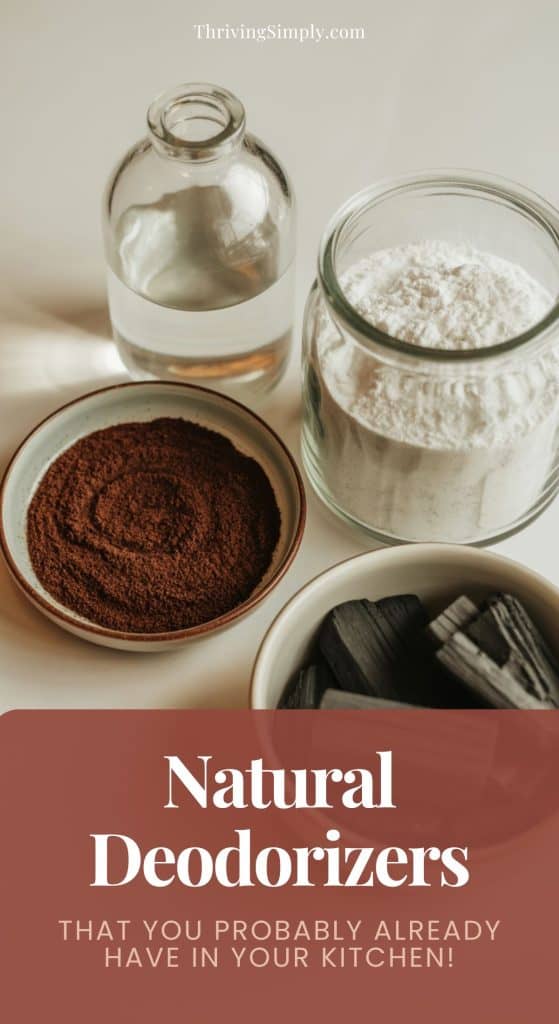
Coffee Grounds
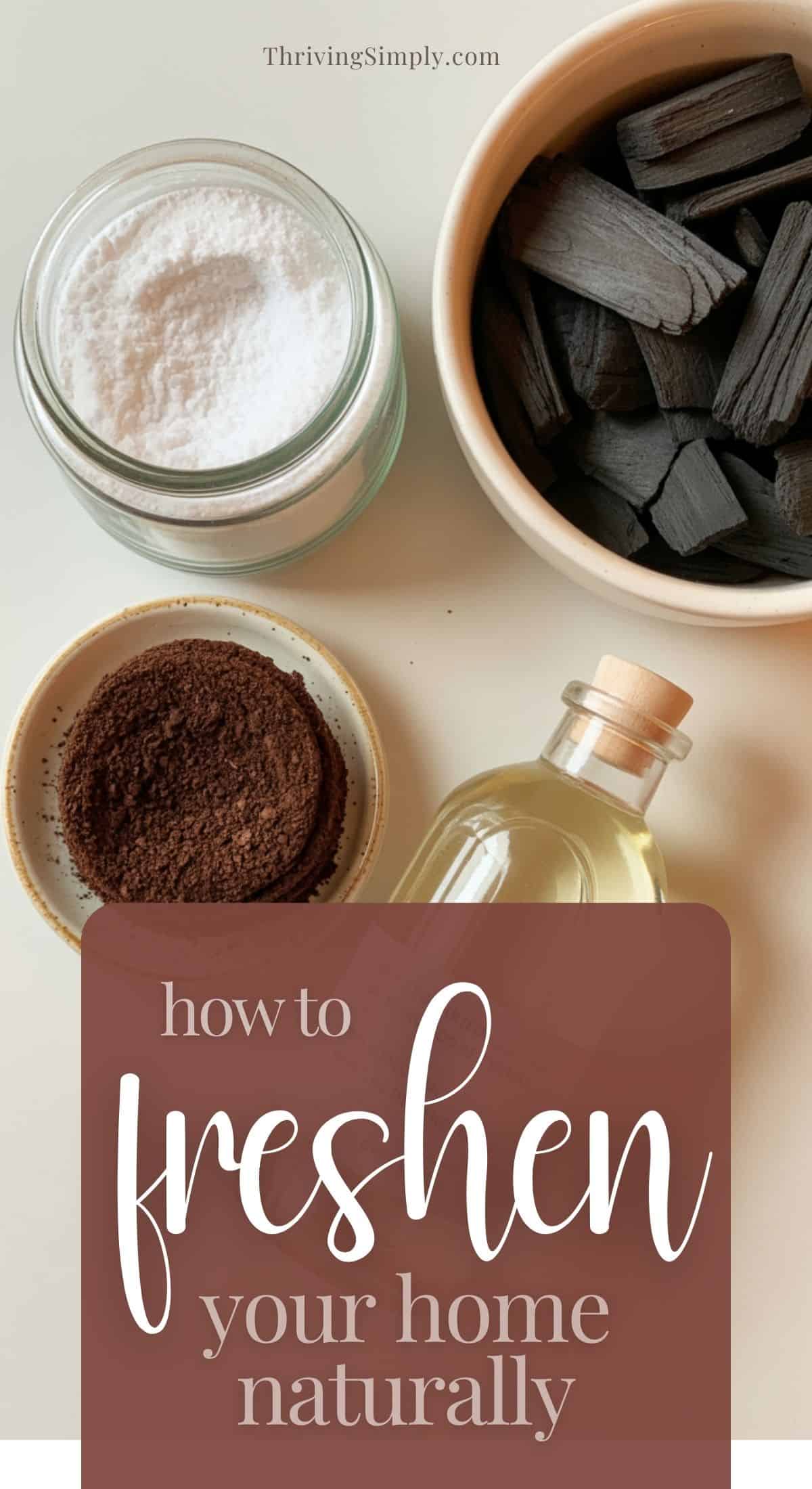
Used coffee grounds are surprisingly effective at absorbing odors. I’ll place them in a small open dish inside the fridge, pantry, or near areas that need a little refresh. They work quietly and don’t add scent to the space.
If you do like the coffee scent, just use some (very) fresh whole beans. I even put them in the car after a long trip with the dogs!
White Vinegar
White vinegar neutralizes odors rather than covering them. A small bowl left out briefly can help clear stale air, and diluted vinegar works beautifully for wiping surfaces that tend to hold smells.
Baking Soda
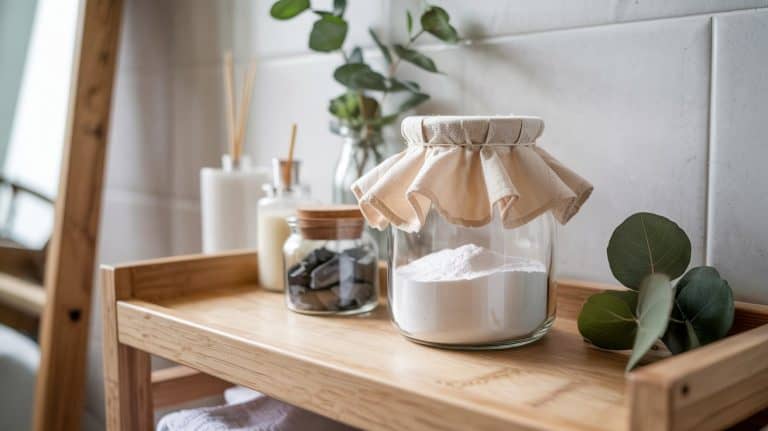
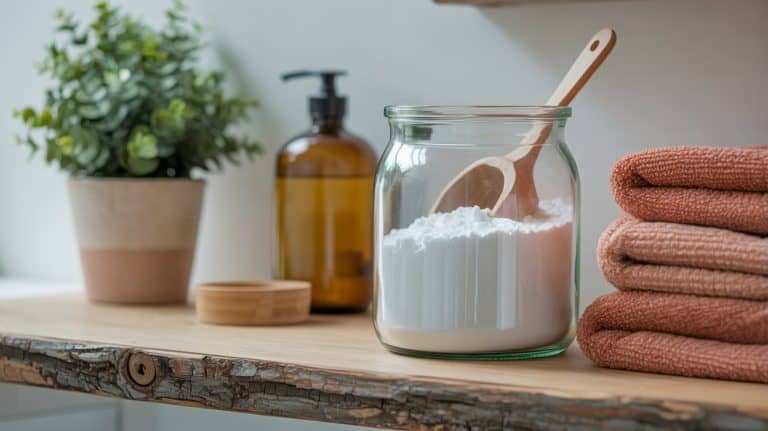
This one is classic for a reason. Baking soda absorbs odors naturally and works well in drawers, closets, bathrooms, or tucked into baskets. I like placing it in a small open jar so it stays discreet.
Here’s a quick recipe that’s been working like a charm in my often-musty 100 year old home.
Activated Charcoal
Charcoal is one of my favorite no-scent options. It absorbs odors and moisture and works especially well in bathrooms, closets, and entryways. It’s completely passive and requires almost no maintenance.
These options are perfect if you want freshness without fragrance.
Gentle Ways to Add Natural Scent to Your Home
Once odors are neutralized, adding scent becomes about enhancing the space — not overpowering it.
Creative Natural Scent Options (Thoughtful & Non-Toxic)
Air-Dry Clay Diffusers
Small clay diffusers absorb essential oils and release scent slowly over time. I love placing them on shelves, nightstands, or entry tables. A few drops last for days, and they double as decor.
Drawer & Closet Scent Sachets
Natural sachets filled with dried lavender, herbs, or citrus peels add a soft, clean scent to drawers and closets. They’re subtle, long-lasting, and easy to refresh seasonally.
Learn how to make “no sew” DIY natural drawer and closet sachets.
DIY Linen Spray (Used Intentionally)
A simple linen spray made with water, a bit of alcohol or witch hazel, and essential oils is one of my favorite ways to refresh bedding, curtains, and throws.
I use linen spray sparingly — a light mist goes a long way. It’s meant to feel fresh, not linger heavily.
Here’s my go-to recipe for homemade linen spray.
Essential Oil Blends That Feel Clean (Not Heavy)
When it comes to essential oils, less really is more. I prefer simple blends with one or two oils that feel fresh and grounding.
Some gentle combinations:
- Lavender + lemon for clean and calming
- Eucalyptus + mint for fresh and airy
- Orange + clove for warm, cozy spaces
- Cedarwood + bergamot for grounding living areas
These work well in clay diffusers, linen sprays, or simmer pots. You can also add them to your baking soda odor absorber jars.
Natural Simmer Pots
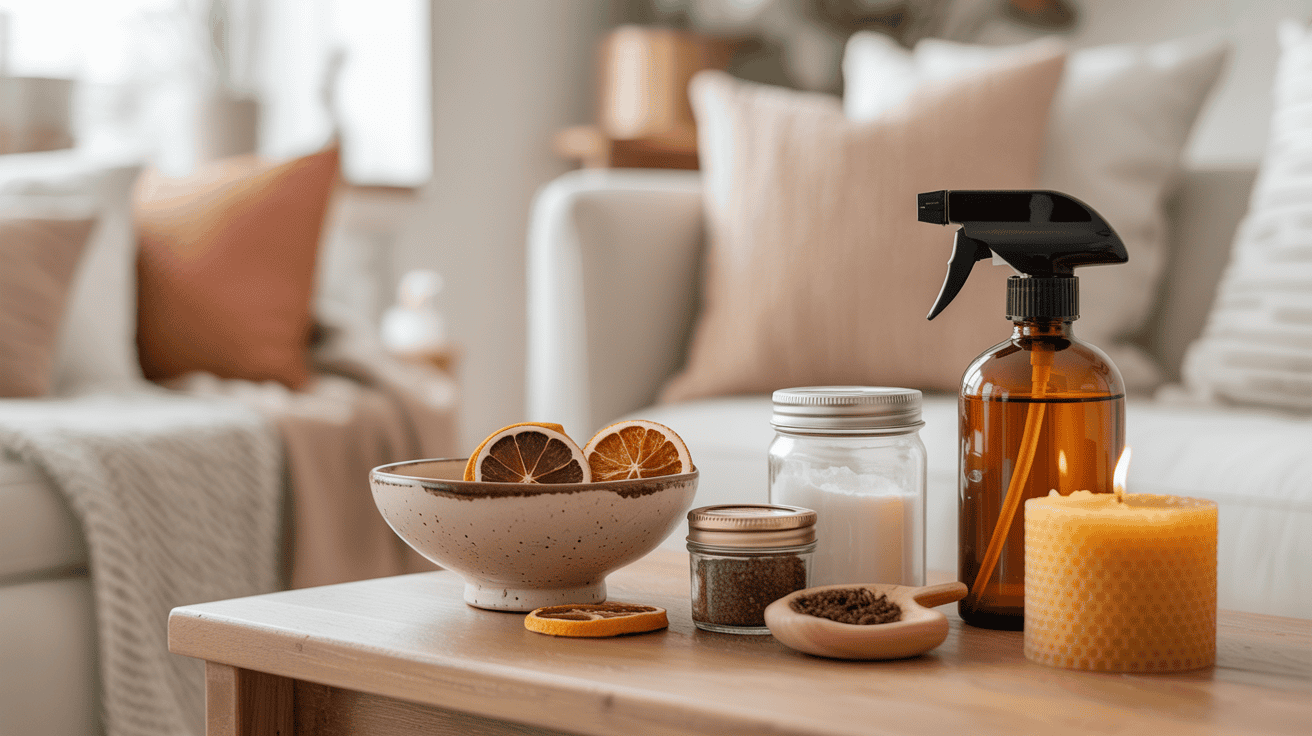
Simmer pots are wonderful for days when you want the whole home to feel inviting. Citrus slices, herbs, and spices gently scent the air and fade naturally once you turn off the heat.
Here’s an easy recipe to get started: Spiced Chai Simmer Pot DIY Recipe
Beeswax Candles
Beeswax candles add warmth and a soft honey-like scent without synthetic fragrance. I like lighting them intentionally — during quiet evenings or slow mornings — rather than all day.
Room-by-Room Freshness Tips (Gentle & Intentional)
Instead of making your whole home smell the same, it often feels better to let each space have its own subtle character.
Entryway
A clay diffuser with a light citrus or herbal scent creates a welcoming first impression.
Living Spaces
Warm, grounding scents like beeswax candles or subtle woodsy blends work beautifully where people gather.
Bedrooms
Calming, barely-there scents like lavender or chamomile feel supportive for rest. Sachets in drawers work well here.
Bathrooms
Charcoal or baking soda quietly neutralizes odors, while a small diffuser or sachet adds a spa-like touch.
Closets & Laundry Areas
Sachets or charcoal tucked into corners keep fabrics smelling clean without artificial fragrance.
Scent Zoning: Let Different Spaces Smell Different
Your home doesn’t need one signature scent. Letting each space carry a slightly different note makes everything feel more intentional and balanced.
Fresh scents near entrances, calming scents in bedrooms, warm scents where people gather.
It’s not a rule — just an option.
Building a Gentle Home Scent Routine
This doesn’t need to be complicated.
- Refresh clay diffusers weekly
- Switch sachets seasonally
- Use simmer pots occasionally
- Mist linen spray lightly as needed
Small habits create consistency without pressure.
What to Skip (Kindly)
I’ve learned to gently avoid:
- overly strong artificial air fresheners
- layering too many competing scents
- trying to “fix” smells instead of neutralizing them
Natural freshness works best when it’s subtle and intentional.
Keep Your Home Smelling Fresh Naturally: FAQs
Do natural deodorizers really work?
Yes — especially coffee grounds, vinegar, charcoal, and baking soda. They remove odors rather than masking them.
Is it safe to use essential oils at home?
When used lightly and properly diluted, yes. Subtle use is always best.
What if I don’t want my home to smell scented at all?
Charcoal, baking soda, and vinegar offer freshness without fragrance.
How many scent sources should I use?
One or two gentle options per room is usually enough.
A Gentle Closing Thought
A fresh-smelling home doesn’t come from overpowering sprays or constant effort. It comes from small, thoughtful choices that support how you want your space to feel.
Start with one idea that feels right — a sachet, a diffuser, a simple deodorizer. Over time, those quiet layers add up to a home that feels calm, cared for, and welcoming.
And that kind of freshness?
It’s something you feel — not just something you smell.