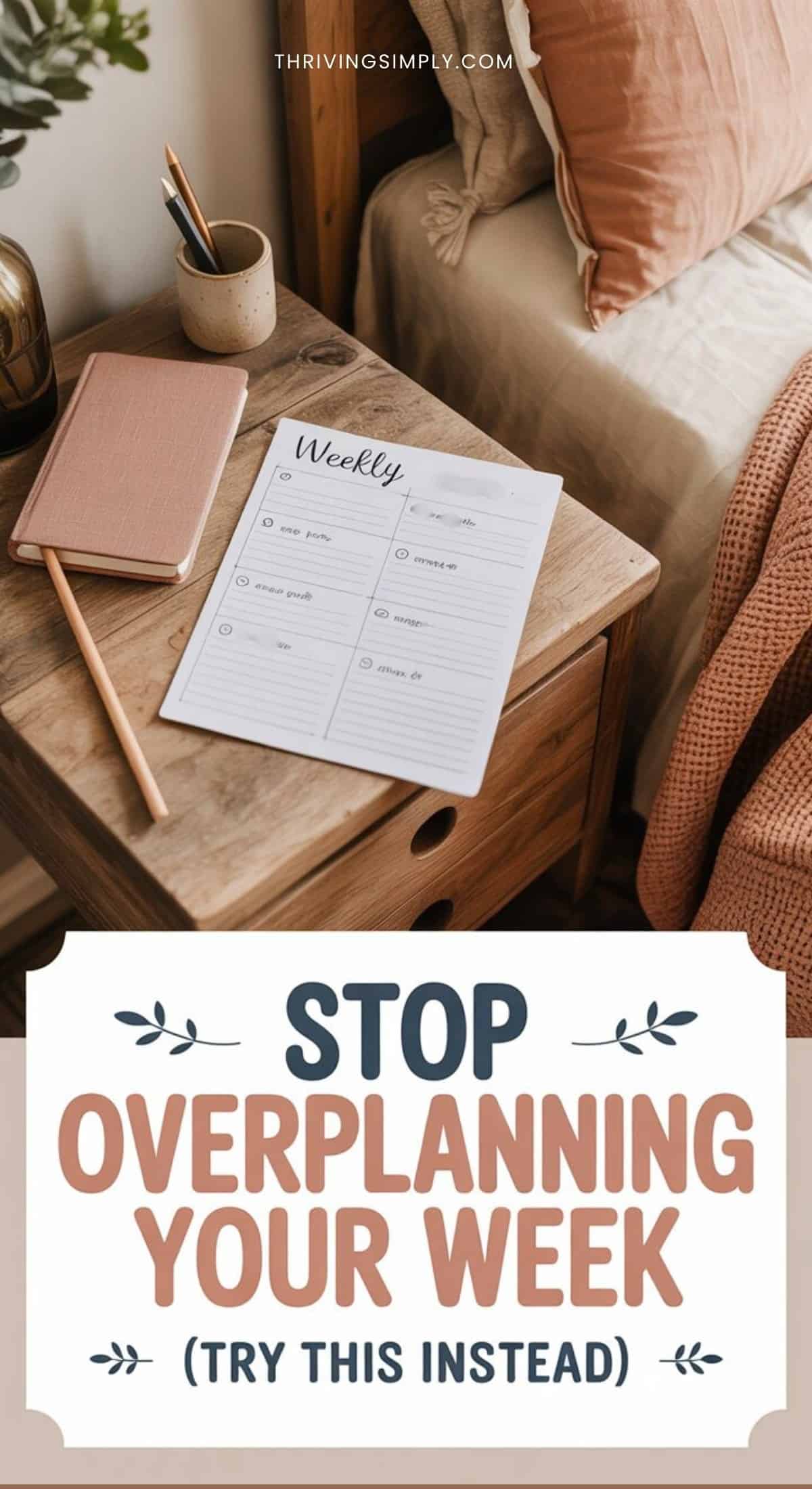
How to Plan Your Week Without Overplanning
Somewhere between color-coded planners, endless to-do lists, and “perfect” weekly routines, planning stopped feeling supportive and started feeling… heavy.
I hear this from so many people (and I’ve lived it myself):
You sit down to plan your week with the best intentions. You map everything out. You feel organized for about five minutes. And then real life shows up — low energy, interruptions, unexpected tasks — and suddenly the plan feels like something you’re failing at instead of something helping you.
This is where gentle planning comes in.
Planning your week doesn’t need to mean filling every hour or predicting exactly how your energy will show up. It can be calm. Flexible. Supportive. And yes — still effective.
This is how to plan your week without overplanning, so your plan works with your life, not against it.
What You’ll Learn
- Why overplanning often leads to burnout and frustration
- How to plan your week based on energy, not perfection
- A gentle weekly planning rhythm that adapts to real life
- Simple systems that reduce decision fatigue
- How to leave space for rest, flexibility, and change
Why Overplanning Feels So Exhausting
Overplanning usually comes from a good place. We want to feel prepared. In control. Less scattered.
But overplanning assumes a few things that rarely hold up:
- That your energy will stay consistent all week
- That nothing unexpected will come up
- That motivation will always match your schedule
When every task is scheduled and every hour is accounted for, even small disruptions can make the whole plan feel “ruined.” That’s when planning turns into pressure — and pressure leads to guilt, not productivity.
A helpful plan should reduce mental load, not add to it.
The Difference Between Planning and Overplanning
This small shift in perspective makes a big difference.
Planning supports you.
It creates clarity. It reduces decision fatigue. It gives you a loose framework to return to when your mind feels scattered.
Overplanning controls you.
It fills every gap. It assumes unlimited energy. It leaves no room for rest, emotion, or real life.
The goal isn’t to plan less — it’s to plan more gently.
A Simple Way to Plan Your Week (Without Filling Every Hour)
Instead of starting with tasks, start with how you want the week to feel.
Start With Energy, Not Your To-Do List
Before writing anything down, pause and ask:
- Does this feel like a high-energy week or a quieter one?
- Are there emotionally heavy days coming up?
- Where might I naturally need more rest?
This step alone helps your plan feel humane instead of demanding.
Choose Three Weekly Priorities
Instead of a long list, choose three priorities for the week.
These aren’t daily tasks — they’re anchors.
Ask:
- What truly needs my attention this week?
- What would make this week feel successful when I look back?
Everything else becomes flexible, optional, or supportive.
Use Loose Time Blocks
Rather than scheduling every hour, use broad blocks like:
- Focus time
- Home care
- Admin
- Rest
- Connection
This creates structure without rigidity — and allows you to adapt based on how you’re feeling each day.
A Soft Weekly Planning Rhythm You Can Return To
Think of this as a rhythm, not a rule.
Step One: Clear Mental Clutter
Do a gentle brain dump. Write everything down without organizing or judging it. This step alone can feel incredibly calming.
Step Two: Identify What’s Already Fixed
Appointments, deadlines, obligations — these are the immovable pieces. Everything else can flow around them.
Step Three: Define “Enough” for the Week
Instead of asking what you should do, ask:
- What feels like enough this week?
- What would support me, not stretch me?
Step Four: Leave Intentional White Space
This is important. White space isn’t wasted time — it’s what allows your plan to breathe.
Leave room for:
- Rest
- Slower mornings
- Unexpected needs
- Changing your mind
Simple Planning Tools That Encourage Flexibility
You don’t need a complicated system.
Some gentle options:
- A single notebook page for the week
- A soft weekly overview sheet
- A notes app with a short list
- A planner with open space instead of rigid grids
The tool matters far less than the approach. If it makes you feel calmer when you look at it, it’s doing its job.
What to Do When the Week Doesn’t Go as Planned
Because it won’t — and that’s okay.
When things shift:
- Adjust without self-criticism
- Choose one small anchor for the day
- Let go of the idea that you need to “start over”
Planning is a guide, not a contract. You’re allowed to respond to your life as it unfolds.
Signs You’re Planning in a Healthier Way
You’ll know this approach is working when:
- Looking at your plan feels grounding instead of stressful
- You stop constantly re-planning
- You feel permission to rest without guilt
- You trust yourself to adjust as needed
That’s the goal — not perfection, but steadiness.
A Gentle Reminder About Productivity
You don’t need to earn rest.
You don’t need to maximize every day.
You don’t need a perfectly executed plan to be doing enough.
Planning is meant to support your life — not run it.
If your plan feels kind, flexible, and calming, you’re doing it right.
Frequently Asked Questions
Do I need to plan every single week?
Not at all. Some weeks benefit from planning more than others. You can return to this rhythm whenever you need clarity.
What if I need structure but hate schedules?
Loose time blocks and weekly priorities offer structure without strict schedules.
How many tasks should I plan per day?
Fewer than you think. One to three meaningful tasks is often more sustainable.
Can this work during busy or overwhelming seasons?
Yes — and that’s often when gentle planning helps the most.
You may also like:
- Feeling Overwhelmed? How to Reset Your Nervous System and Calm Your Body
- Calming Evening Rituals for Better Sleep
- 8 Easy Morning Habits That Bring Instant Calm