Eco-Friendly Habits That Save You Money (Without Sacrificing Comfort)
For the longest time, I assumed sustainable living was only for people with big budgets — the ones who bought organic everything, lived in perfectly styled minimal homes, and had matching sets of bamboo containers. Meanwhile, I was over here reusing old spaghetti jars and quietly wondering if I was “doing it wrong.”
Then something shifted.
I started paying attention to how often I was buying new things I didn’t really need, how quickly everyday household items turned into trash, and how much money I was spending on single-use anything. That’s when it finally clicked: the most eco-friendly habits are usually the cheapest ones.
Not the curated, influencer version of sustainability — but the real, practical, everyday kind. The version where you buy less, reuse more, and simplify what you already have. And once I leaned into that approach, living greener didn’t feel restrictive at all.
It started saving me money.
Like… noticeably saving me money.
TL;DR
Sustainable living doesn’t require expensive products or lifestyle overhauls. In fact, the most eco-friendly habits are often the cheapest ones — buying less, reusing what you already own, and simplifying everyday routines in ways that save money and reduce stress.
What You’ll Learn
- Why sustainability is often cheaper than traditional living
- How overconsumption quietly drains your bank account
- Simple eco-friendly habits that cost nothing
- Low-cost sustainable swaps that pay for themselves
- How sustainable living naturally supports your wellbeing
- How to start gently and realistically — without guilt
Why Sustainability Isn’t Expensive — Overconsumption Is
The Hidden Cost of Constant “New”
I used to think, “It’s just $20.” But a few $20 purchases add up fast. Fast décor, fast fashion, fast everything — they’re rarely built to last, which means we replace them again… and again.
When I shifted my mindset, I realized the problem wasn’t that eco-friendly living was expensive. It was that I was buying too much stuff in general.
Sustainable living is, at its core, about wanting and needing less. And “less” is wonderfully inexpensive.
The Marketing Myth of “Eco Products”
This part matters, so I’ll say it clearly: you do not need a $50 zero-waste starter kit, a bamboo everything set, or a color-coordinated pantry to live sustainably.
You can start by reusing jars you already own, finishing the products you’ve already bought, repairing what you can, and choosing fewer, better-quality items when replacements are truly needed.
Sustainability isn’t something you purchase. It’s something you practice.
The Cheapest Sustainable Habits (That Also Simplify Your Life)
Buy Less — the Most Sustainable Habit of All
This one shift changed everything for me. You don’t buy your way into an eco-friendly home — you buy less.
Less clutter.
Less decision fatigue.
Less visual noise.
Less money leaving your wallet.
There’s a surprising amount of peace that comes from choosing simplicity.
A quick comfort check: none of this is about making life harder or less enjoyable. It’s about removing friction — fewer errands, fewer impulse purchases, fewer decisions, and less stuff demanding your attention.
Use What You Already Have
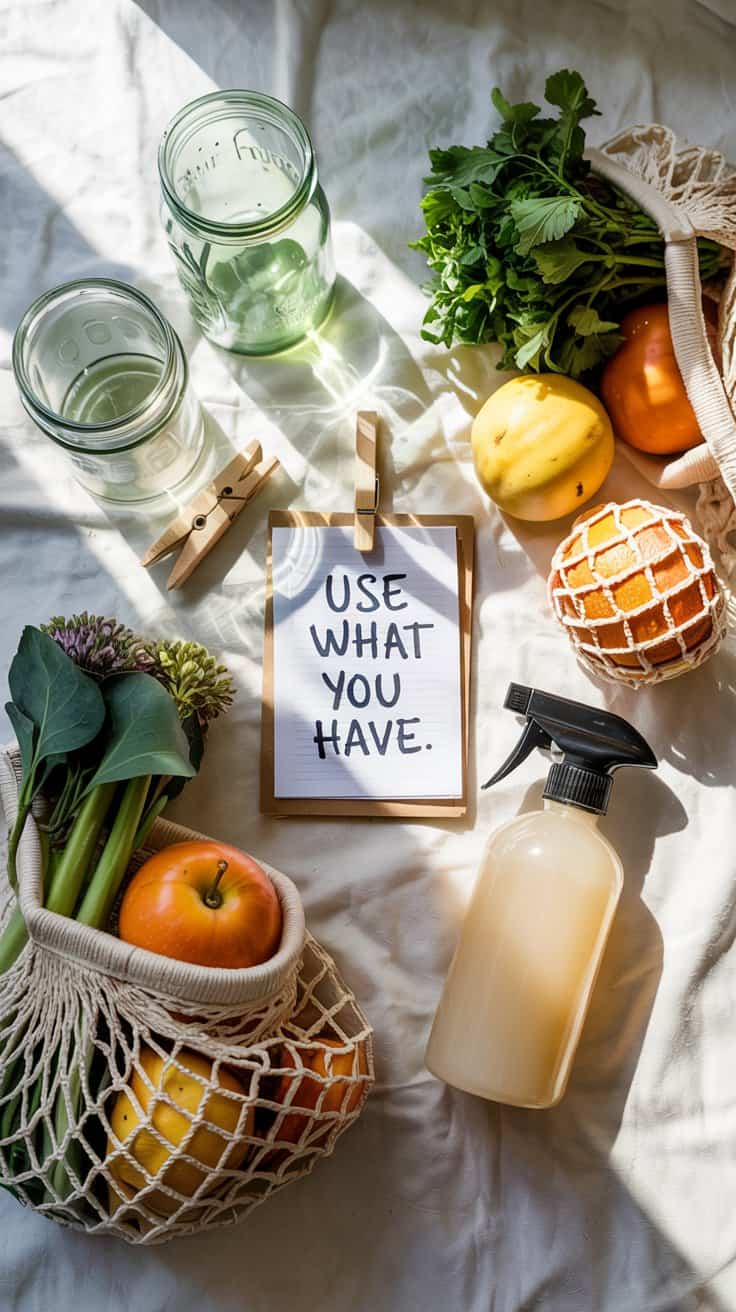
Here’s a fun truth: the most sustainable storage container is the jar already sitting in your pantry.
I reuse jars for homemade dressings, leftovers, dry goods, overnight oats, and random odds and ends. Old towels become cleaning rags. Scarves become gift wrap. Leftover meals become tomorrow’s lunch.
“Sustainable” isn’t a product — it’s a mindset shift.
Repair, Mend, and Refresh Before Replacing
I used to replace things the moment they weren’t perfect. Now I pause and ask: can this be fixed, mended, repainted, or repurposed?
Nine times out of ten, the answer is yes.
I’ve saved hundreds of dollars simply by tightening screws, touching up furniture, sewing small tears, and giving items a second life instead of tossing them.
Reduce Food Waste (Your Budget Will Thank You)
This one surprised me the most. The average household throws away around $1,500 worth of food each year — most of it forgotten leftovers or produce that never quite got used.
A few small habits that save me money every single week:
- “Eat from the fridge first” dinners
- Freezing leftovers in portions
- Cutting produce as soon as I get home
- Saving veggie scraps for broth
- Planning just 2–3 meals instead of seven
Reducing food waste is one of the fastest ways to save $50–$100 per month — and it’s one of the most eco-friendly changes you can make.
Cut Back on Single-Use Items
Paper towels, disposable wipes, plastic bags, cotton pads — the cost sneaks up fast.
Small swaps that pay for themselves quickly:
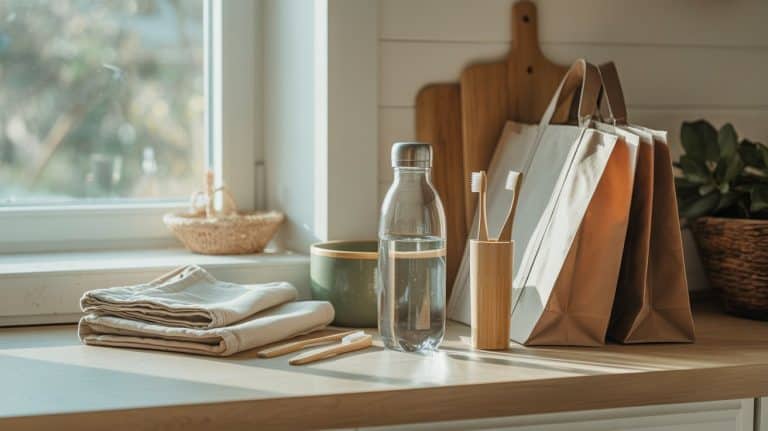
- Washable cloth napkins
- A reusable water bottle
- Mason jars instead of disposable containers
- Microfiber cloths instead of endless wipes
The savings are immediate, and honestly, so is the convenience.
Sustainable Swaps That Pay for Themselves Fast
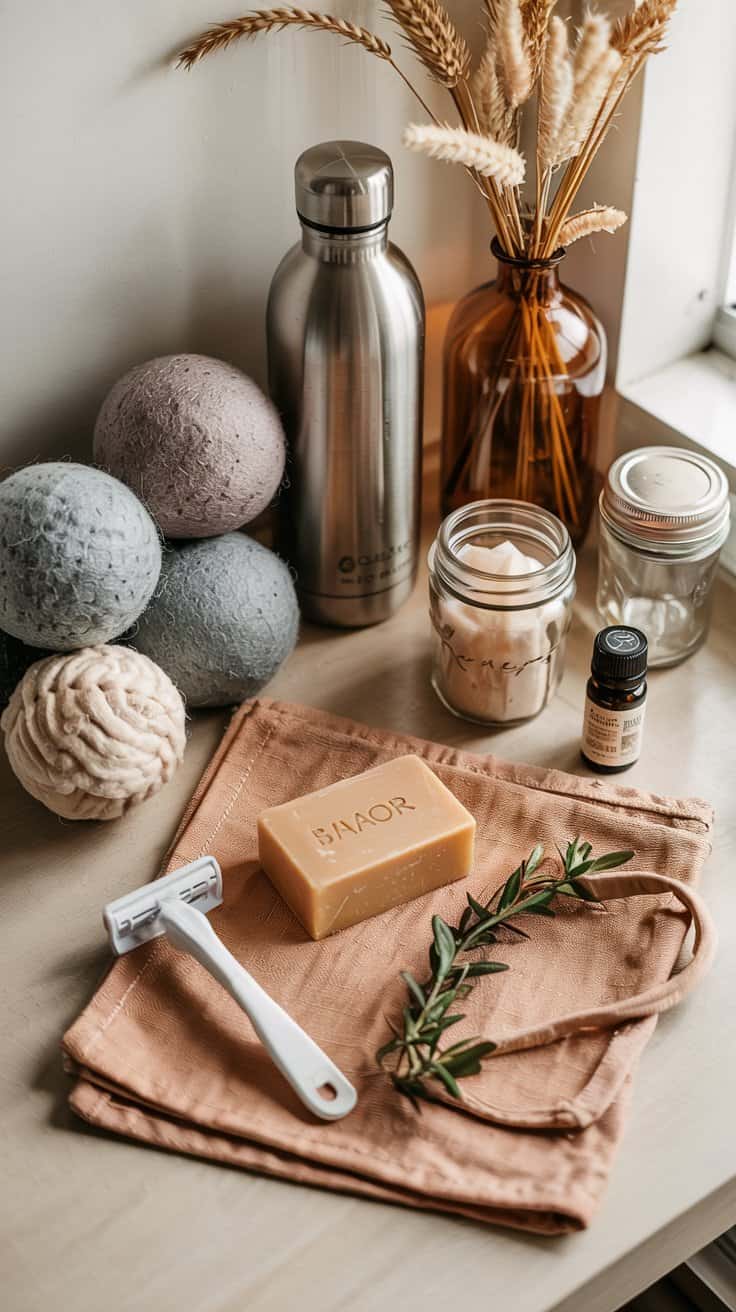
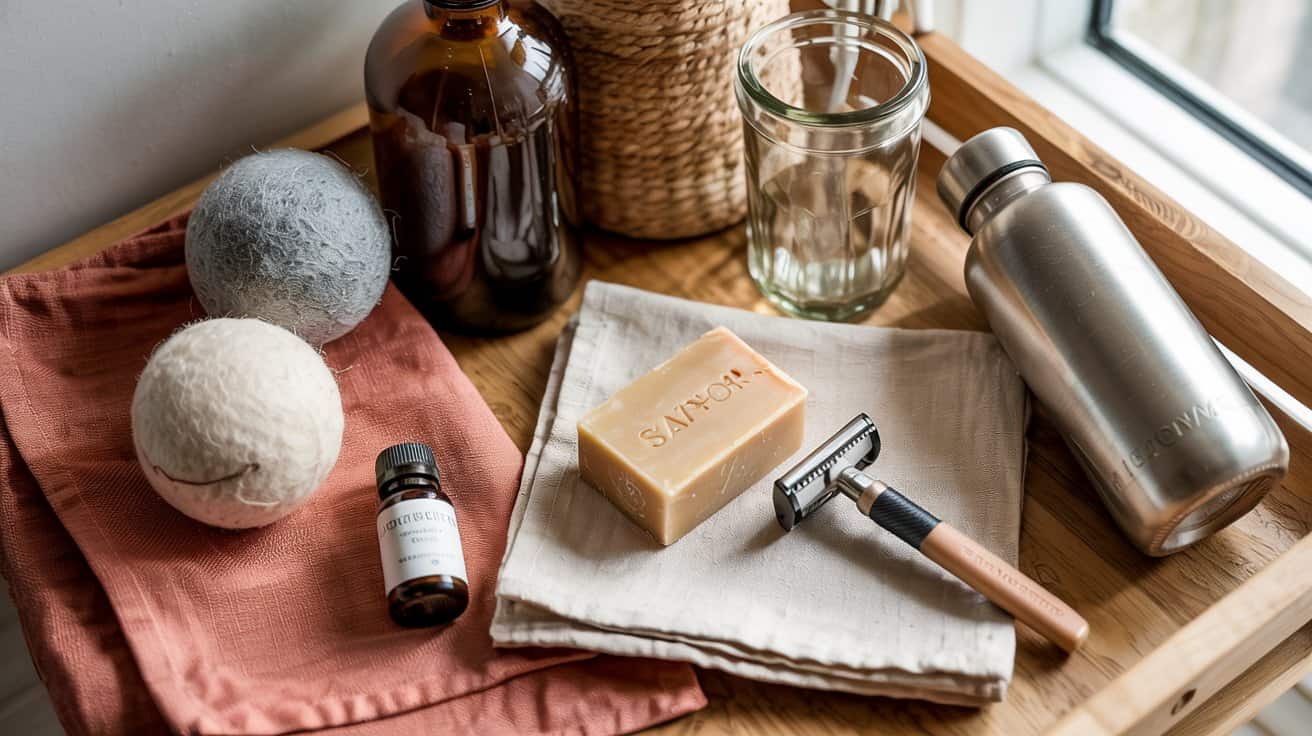
Reusable Water Bottle
Switching from bottled water eliminated constant impulse buys at gas stations and airports. The savings show up faster than you expect.
Wool Dryer Balls
They reduce drying time and replace dryer sheets. Mine have lasted for years, and my energy bill thanks me.
Cloth Napkins
One pack of cotton napkins replaced countless rolls of paper towels and disposable napkins. It’s easily a $100+ yearly savings.
Safety Razor
The handle lasts forever, and blade refills cost pennies. This swap alone saved me more than I realized.
DIY Cleaning Sprays
Vinegar, water, and citrus peels make the cheapest and cleanest cleaning spray I’ve ever used — often costing just cents per bottle.
Sustainable swaps should save money, not drain it.
Why Sustainable Living Supports Your Wellbeing
As I simplified my habits, I noticed something unexpected: my home felt calmer, and so did I.
Less clutter meant less stress.
Fewer impulse buys meant fewer regrets.
Buying intentionally meant more money saved.
Natural materials meant fewer toxins.
Living slower meant my body could finally exhale.
When you stop constantly buying, replacing, and managing “stuff,” your mind gets a break. Fewer decisions. Fewer distractions. Fewer things asking for your attention.
Sustainable living isn’t just about the planet. It’s about supporting you.
How to Start (Without Spending Anything)
If this feels like a lot, here’s the good news: you don’t need to do all of this. You just need one place to begin — whichever feels easiest right now.
Start With a “Use What You Have” Week
Try one week of no duplicate purchases, using up what you already own, and cooking from what’s in your pantry. You’ll save money immediately and reduce waste without changing much at all.
Pick One Room and Simplify
Choose a single space and ask: what can I use up, repurpose, donate, or repair? A simplified room almost always feels calmer.
One Habit at a Time
Sustainability that sticks is slow, gentle, and intentional. Start with one small shift. Then another. Before you know it, life feels lighter.
Eco-Friendly Living FAQs
Do I need to buy eco-friendly products to get started?
No. Start by using what you already have — that’s the most sustainable step.
Is sustainable living more time-consuming?
Usually the opposite. Buying less means less cleaning, less shopping, and less maintenance.
What’s the cheapest sustainable swap?
Reusable water bottles or cloth napkins eliminate ongoing costs immediately.
What if my family isn’t on board?
Lead gently. Start with habits that don’t affect others, like reducing your own waste.
Do I need to live zero-waste?
Not at all. Sustainability is a spectrum, not a finish line.
What habits save the most money fastest?
Reducing food waste, cutting paper products, and buying less overall.
Final Thoughts
The beautiful secret of sustainable living is this: you don’t need to buy anything new. You simply shift how you use what you already have — and suddenly your home feels lighter, your spending drops, and your life becomes more intentional.
Sustainability isn’t perfection. It’s presence. It’s awareness. It’s choosing small habits that support both your wellbeing and the planet.
You don’t have to change everything at once. Just one tiny habit is enough to start.
Your wallet will feel it.
Your home will feel it.
And yes — Mother Earth will feel it too.