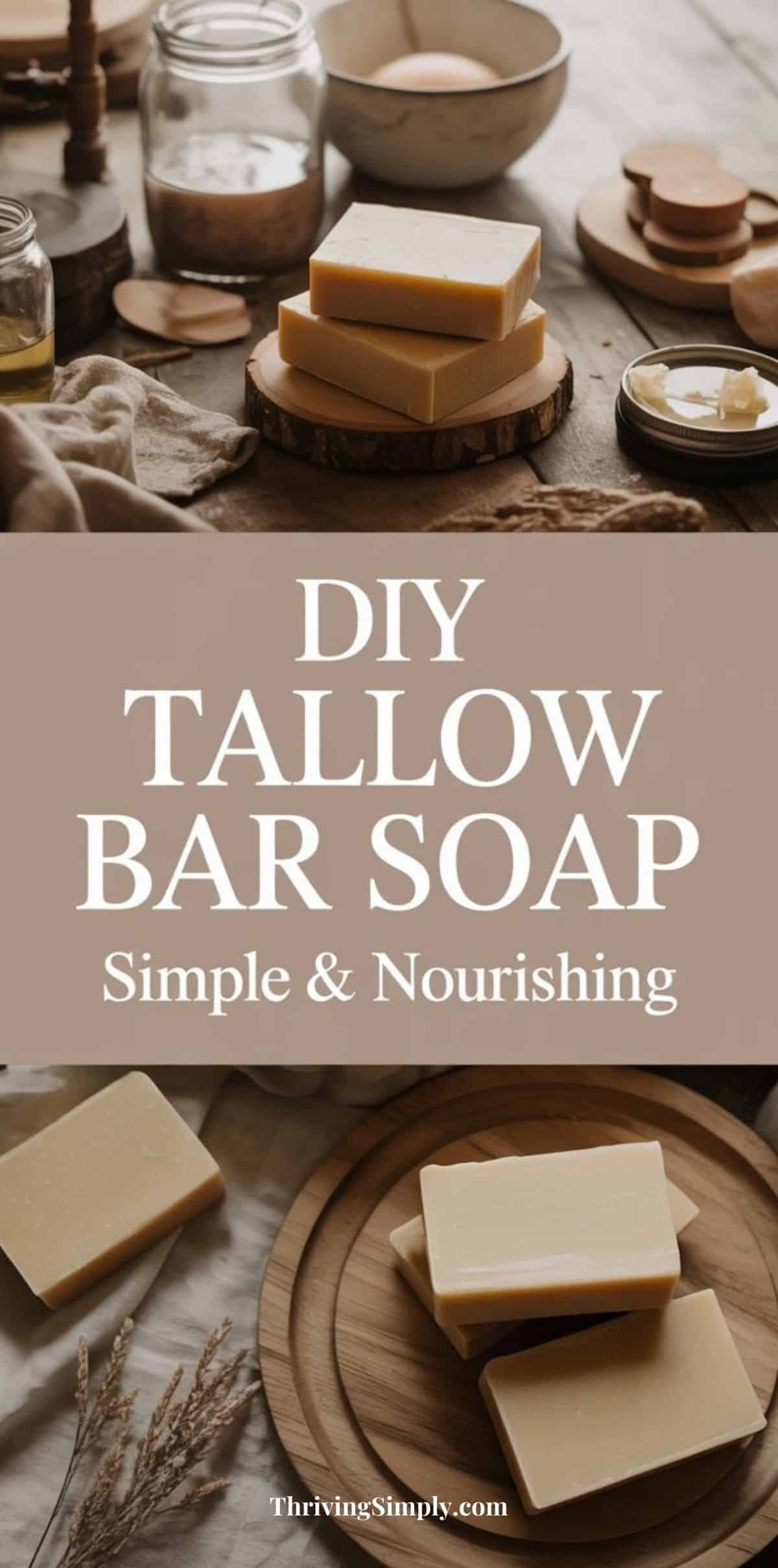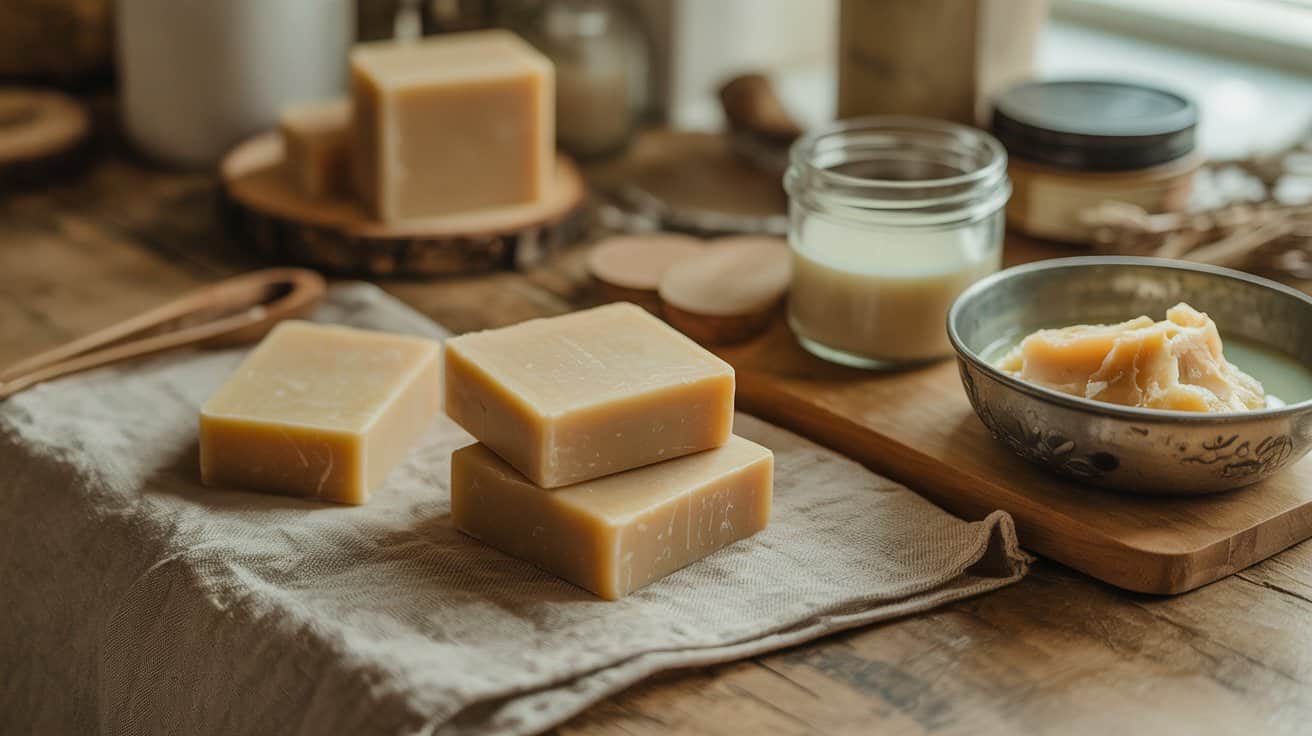
How to Make DIY Tallow Bar Soap
Simple, Old-Fashioned & Nourishing.
Have you been curious about making your own soap but felt intimidated by lye, measurements, or complicated recipes?
DIY soap can sound overwhelming, but tallow soap is actually one of the most forgiving, beginner-friendly soaps you can make.
Tallow soap has been used for generations because it’s simple, deeply nourishing, and made with just a few real ingredients. No synthetic fragrances. No mystery additives. Just a slow, intentional process that creates a bar of soap that’s gentle on skin and practical for everyday use.
This recipe is ideal if you’re looking to simplify your home, reduce toxins, and reconnect with traditional, sustainable living — without making things complicated.
What You’ll Learn
- Why tallow is such a nourishing ingredient for soap
- The exact ingredients needed to make tallow bar soap
- Step-by-step instructions for cold process soapmaking
- Tips to make soap safely and confidently as a beginner
- How to cure, store, and use your homemade soap
Why Tallow Soap Is Making a Comeback
Tallow (rendered beef fat) closely mimics the natural oils found in our skin, which makes it especially gentle and moisturizing. Unlike many modern soaps that strip the skin, tallow soap cleans while supporting your skin barrier.
Why people love tallow soap:
- Rich, creamy lather
- Long-lasting bars
- Minimal ingredients
- Great for sensitive or dry skin
- Sustainable when sourced responsibly
Slow living isn’t about going backward — it’s about choosing what works better. Tallow soap is a perfect example of that.
🧼 DIY Tallow Bar Soap Ingredients
This recipe makes approximately 8–10 bars, depending on mold size.
You’ll Need:
- 16 oz rendered beef tallow (fully melted and strained)
- 6 oz distilled water
- 2.2 oz lye (sodium hydroxide)
- Optional:
- 0.5–1 oz essential oils (lavender, cedarwood, or eucalyptus work well)
⚠️ Soap Safety Notes (Important but Simple)
Lye is safe when handled properly. A few basics:
- Wear gloves and eye protection
- Work in a well-ventilated area
- Always add lye to water, never water to lye
- Keep kids and pets away during soapmaking
Once the soap cures, no lye remains in the finished bars.
🧼 How to Make Tallow Bar Soap (Step-by-Step)
Step 1: Prepare Your Lye Water
- Slowly sprinkle the lye into the distilled water (never the other way around).
- Stir gently until dissolved.
- Set aside to cool (it will heat up quickly).
Step 2: Melt the Tallow
- Gently melt the rendered tallow over low heat.
- Allow it to cool slightly — both the tallow and lye water should be around 90–110°F before mixing.
Step 3: Combine Lye Water & Tallow
- Slowly pour the lye water into the melted tallow.
- Use an immersion blender to mix.
Step 4: Blend to Trace
- Blend until the mixture thickens to “trace” — similar to pudding or thin custard.
- If using essential oils, add them now and stir gently.
Step 5: Pour Into Mold
- Pour the soap batter into your mold.
- Tap gently to release air bubbles.
- Cover lightly and let sit undisturbed.
Step 6: Unmold & Cut
- After 24–48 hours, remove soap from the mold.
- Cut into bars.
Step 7: Cure the Soap
- Place bars in a cool, dry area with airflow.
- Cure for 4–6 weeks before use.
This curing time allows excess moisture to evaporate and creates a harder, longer-lasting bar.
🌿 Helpful Tips for First-Time Soapmakers
- Start simple — one oil is easier than many
- Use a kitchen scale (soapmaking requires precision)
- Don’t rush curing — the final bar is worth the wait
- Label your soap with the cure date
Cost Breakdown (Approximate)
Making your own tallow soap can be surprisingly affordable:
- Beef tallow: often free or very inexpensive
- Lye: ~$5–8 (makes multiple batches)
- Essential oils: optional
Cost per bar: often $0.75–$1.25, depending on ingredients
Compared to $6–$10 natural soap bars, this adds up fast.
Frequently Asked Questions
Is tallow soap good for sensitive skin?
Yes — many people with sensitive or dry skin find tallow soap very gentle because it closely resembles skin’s natural oils.
Does tallow soap smell like beef?
No. Properly rendered tallow has a neutral scent. Essential oils can be added for fragrance if desired.
Can I use store-bought tallow?
Yes, as long as it’s clean and fully rendered. Grass-fed tallow is often preferred.
Is lye dangerous in finished soap?
No. When soap is made correctly and cured fully, there is no lye left in the finished bars.
How long does homemade tallow soap last?
Cured bars can last 12 months or longer when stored in a dry place.
Conclusion: Why Tallow Soap Fits a Slower, Healthier Way of Living
Making your own tallow bar soap isn’t just about soap — it’s about reconnecting with simple, time-tested ways of caring for your home and your body. There’s something grounding about using just a few real ingredients and creating something useful with your own hands.
If you’re trying to reduce toxins, simplify your routines, or be more intentional about what you bring into your home, this is one of those small projects that makes a big impact. And the best part? You don’t have to do it perfectly. One batch, a little patience, and a willingness to try is more than enough.
Slow living doesn’t mean complicated living. Sometimes it looks like a quiet afternoon, a wooden spoon, and a few bars of soap curing on the counter — proof that simpler really can be better.