DIY Natural Bathroom Odor Absorbers (That Actually Work)
Bathrooms tend to hold onto smells more than any other space in the home. Moisture from showers, limited airflow, and damp towels all contribute to that musty feeling that sprays only cover up temporarily.
Natural bathroom odor absorbers work differently. Instead of masking smells, they absorb moisture and neutralize odors at the source, helping the space feel fresher over time — quietly and naturally.
The options below are simple, affordable, and easy to maintain. And this time, I’ll tell you exactly how much to use and what to put everything in.
What You’ll Learn
- Why bathrooms get musty so easily
- The difference between odor absorbers and air fresheners
- Exactly how much to use for each DIY option
- Where to place each absorber for best results
- How often to refresh or replace them
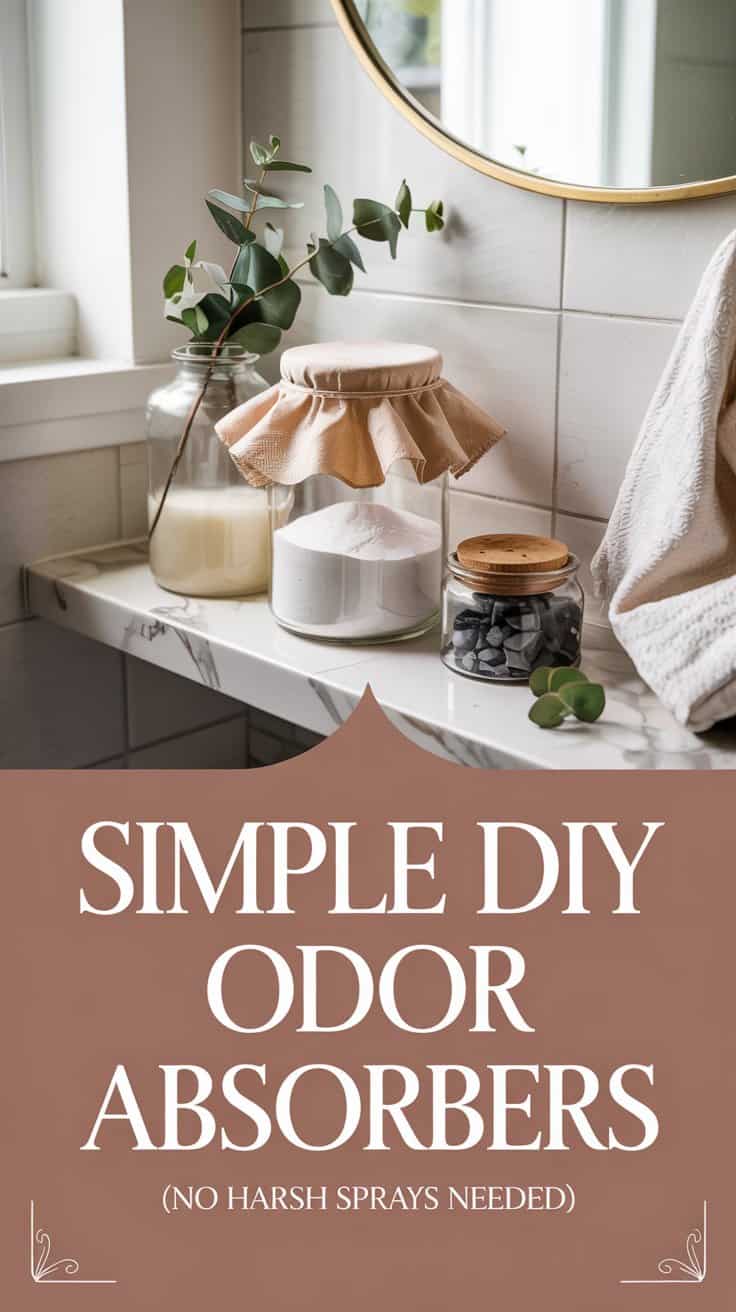
Why Bathrooms Hold Onto Odors
Bathrooms are uniquely good at trapping smells — even when they look clean.
They tend to be warm, humid, and enclosed, which creates the perfect environment for odors to linger. Steam from showers raises moisture levels in the air, and that moisture holds onto odor particles instead of letting them dissipate. Limited ventilation, closed doors, and damp towels only add to the problem.
Over time, this combination can lead to that familiar “musty” bathroom smell that keeps returning no matter how often you clean.
That’s why true odor control isn’t about adding fragrance. It’s about reducing moisture and absorbing odors at the source so they don’t have a chance to build up in the first place.
Odor Absorbers vs. Air Fresheners: What’s the Difference?
Air fresheners and odor absorbers work in very different ways.
Air fresheners:
- Add fragrance to the air
- Temporarily mask odors
- Don’t remove moisture or odor particles
They can make a space smell better for a moment, but the underlying issue often remains.
Odor absorbers, on the other hand:
- Trap or neutralize odor particles
- Reduce moisture that causes musty smells
- Work quietly over time
Instead of adding something new to the air, odor absorbers focus on removing what doesn’t belong. That’s why they’re especially helpful in bathrooms, where moisture is often the root cause of lingering smells.
Natural Bathroom Odor Absorbers You Can Make at Home
The good news is that you don’t need special products or expensive solutions to make a bathroom smell fresher. Many common household ingredients naturally absorb odors and moisture — they just aren’t marketed the way sprays and plugins are.
The DIY options below are simple, affordable, and easy to maintain. Each one works a little differently, so you can choose what makes the most sense for your space — whether you’re dealing with everyday bathroom odors, excess moisture, or that stubborn musty smell that won’t quite go away.
You don’t need to make all of them. Even adding one can make a noticeable difference over time.
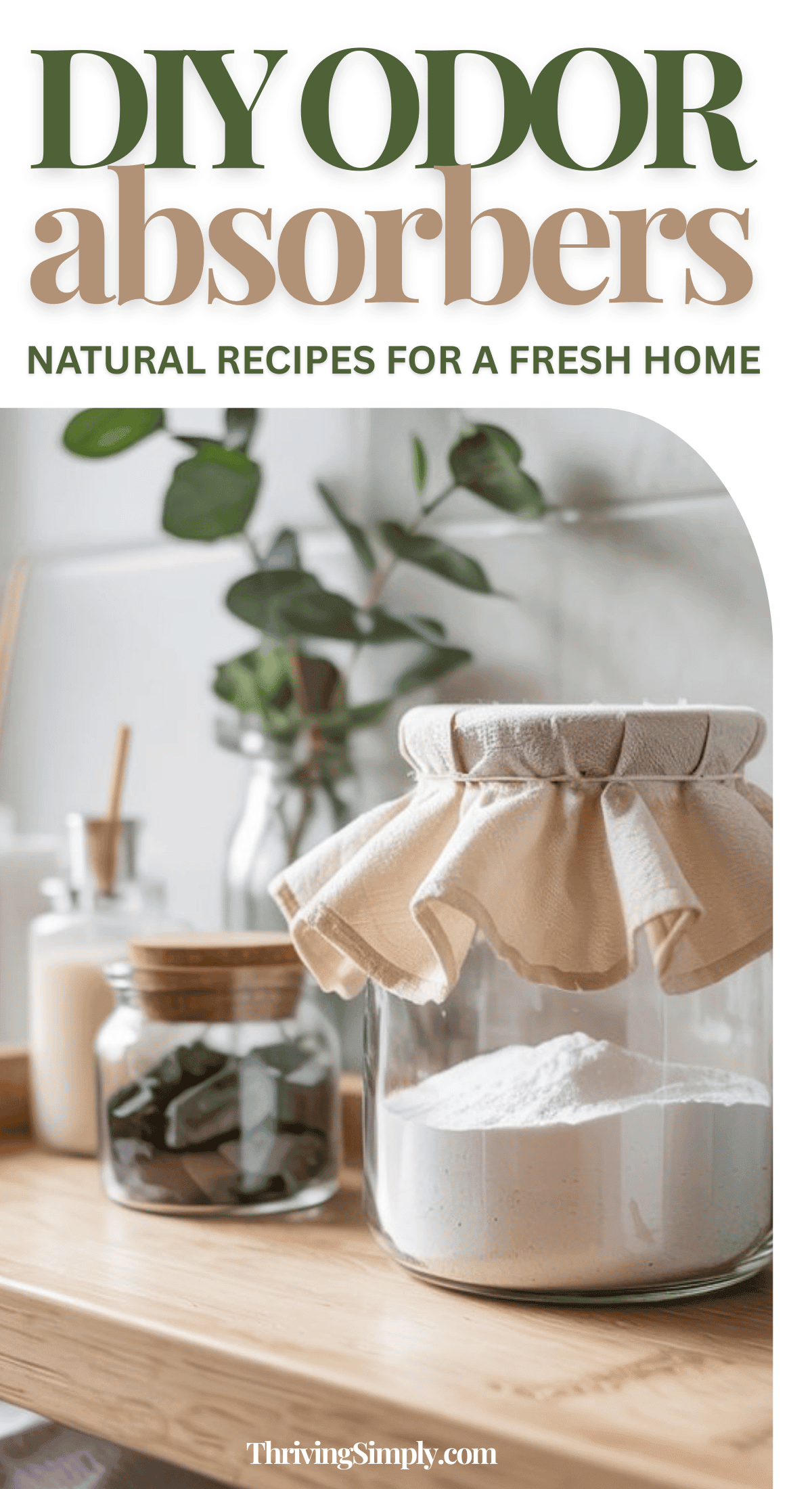
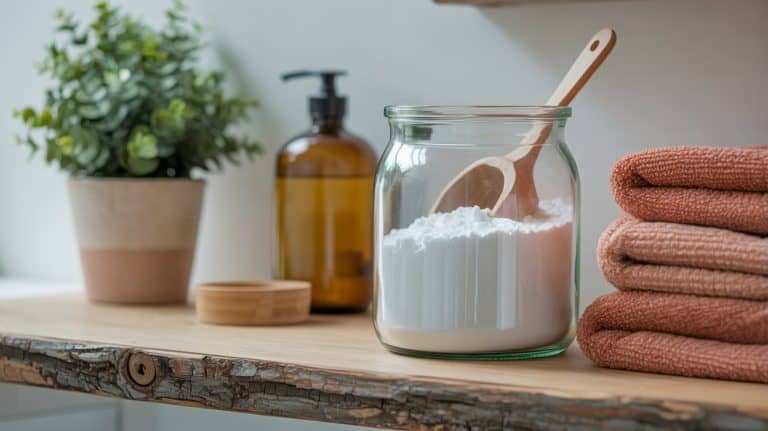
1. Baking Soda Odor Absorber (Best Everyday Option)
Best for: everyday bathroom odors
Absorbs: odor (not moisture)
What You’ll Need
- ½ to 1 cup baking soda
- Small jar or bowl (8–12 ounces works well)
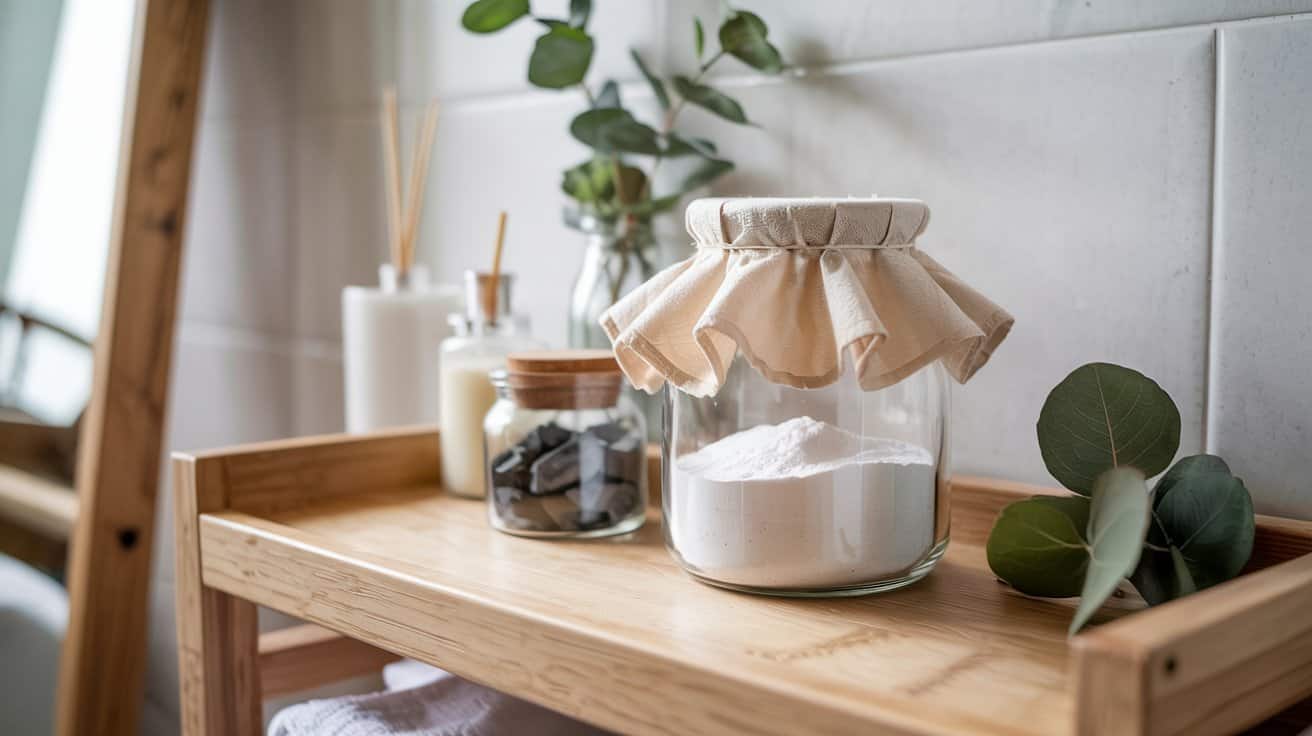
- Coffee filter or breathable fabric
- Rubber band or jar ring
How to Make It
- Pour ½–1 cup of baking soda into the jar or bowl.
- Cover with a coffee filter or fabric so air can circulate.
- Secure with a rubber band or the jar’s ring.
Optional scent: Add 5–10 drops of essential oil (lavender, eucalyptus, lemon).
Where to Place It
- Behind the toilet
- On a bathroom shelf
- Under the sink
When to Replace
Every 3–4 weeks, or sooner if odors return.
2. Activated Charcoal Odor Absorbers (Odor + Moisture)
Best for: musty bathrooms, small enclosed spaces
Absorbs: odors and moisture
What You’ll Need
- 1–2 cups activated charcoal (granules or chunks)
- Breathable cotton or linen bag (or thin fabric pouch)
How to Make It
- Fill the bag with 1–2 cups of charcoal.
- Tie or sew the opening closed.
Where to Place It
- Under the sink
- Inside a cabinet
- Near the toilet base
How Long It Lasts
- Works for 1–2 months
- Refresh by placing in direct sunlight for 2–3 hours once a month
3. Rock Salt Moisture Absorber (Musty Smell Fix)
Best for: damp bathrooms, poor ventilation
Absorbs: moisture
What You’ll Need
- 1–2 cups coarse rock salt or sea salt
- Open bowl or wide-mouth jar (12–16 ounces)
How to Make It
- Pour 1–2 cups of salt into the container.
- Leave uncovered so moisture can be absorbed.
Where to Place It
- Near the shower
- On a windowsill
- In a damp corner of the bathroom
When to Replace
When the salt becomes:
- Damp
- Clumpy
- Partially dissolved
Usually every 2–4 weeks, depending on humidity.
4. Baking Soda & Dried Herb Sachets (Light Odor Control)
Best for: cabinets, shelves, linen storage
Absorbs: light odors
What You’ll Need
- ½ cup baking soda
- 2–3 tablespoons dried herbs (lavender, eucalyptus, rosemary)
- Small fabric sachet or breathable pouch
How to Make It
- Mix baking soda and herbs in a bowl.
- Spoon into the sachet and close tightly.
Where to Place It
- Towel cabinets
- Bathroom drawers
- Linen closets
When to Replace
Every 3–4 weeks.
5. Air-Dry Clay Odor & Moisture Disks (Decor-Friendly)
Best for: visible areas
Absorbs: light moisture + adds soft scent
What You’ll Need
- Air-dry clay
- Essential oil (optional)
How to Make It
- Roll clay about ¼–½ inch thick.
- Cut into small disks or shapes.
- Let dry completely (24–48 hours).
- Add 2–3 drops of essential oil once dry.
Where to Place It
- Bathroom shelf
- Counter tray
- Near the sink
Reapply essential oil every 1–2 weeks.
Choosing the Right Option for Your Bathroom
- Strong odors: Baking soda or charcoal
- Damp, musty smell: Rock salt or charcoal
- Small spaces: Charcoal bags
- Visible areas: Clay disks or sachets
You can also combine methods for better results.
Troubleshooting: What to Do If Your DIY Odor Absorbers Aren’t Working
If you’ve tried one of these DIY odor absorbers and your bathroom still doesn’t feel fresh, it doesn’t mean they aren’t effective — it usually means something else needs adjusting.
Here are a few things to check:
1. The source of the odor
Odor absorbers work best when paired with regular cleaning. If there’s mold, mildew, or buildup hiding in drains, grout, or around the toilet base, address that first.
2. Moisture levels are too high
If your bathroom stays damp for long periods, you may need:
- More than one absorber
- A larger container
- Or a moisture-focused option like charcoal or rock salt
Sometimes one small jar just isn’t enough for the space.
3. Placement matters
Odor absorbers work best near:
- The toilet
- Damp corners
- Under the sink
- Near the shower or tub
If it’s tucked too far away from the problem area, it won’t be as effective.
4. It’s time to refresh or replace it
Most DIY absorbers need refreshing every few weeks. Baking soda and salt lose effectiveness over time, and charcoal needs occasional reactivation in sunlight.
5. Airflow still matters
Odor absorbers support freshness — they don’t replace ventilation. Opening a window, running a fan, or leaving the door cracked after showers can make a big difference.
Sometimes the most effective solution is a combination of absorption, airflow, and simple maintenance. In some cases, you may need to call a professional company to come in, run some tests, and make additional recommendations.
REMEMBER: A fresh bathroom doesn’t come from overpowering scents. It comes from reducing moisture, addressing odor at the source, and letting the space breathe again.
Frequently Asked Questions
Do amounts need to be exact?
No — these are forgiving. The ranges above are enough to be effective without overthinking it.
Will these replace cleaning?
They help prevent odor buildup, but regular cleaning and ventilation still matter.
Are essential oils required?
Not at all. These work even without added scent.
A Reminder
Freshness doesn’t always come from adding more. Sometimes it comes from quietly removing what doesn’t belong — excess moisture, trapped air, lingering smells.
Simple solutions can make a noticeable difference.
You may also like:
Why People Hang Eucalyptus in the Shower (A Simple Spa-Like Upgrade)
Everything Shower for Overthinkers (coming soon!)