Amish Amoxicillin: The 3-Ingredient Natural Remedy Everyone’s Talking About
For generations, people have turned to simple, natural remedies to support their health, and one of the most beloved in traditional Amish communities is the soothing blend often called Amish Amoxicillin.
Made from humble, everyday ingredients, this garlic-and-honey mixture has earned a reputation for its gentle yet powerful immune-supporting properties.
It’s not the same as a pharmaceutical antibiotic, of course, but it is a beautifully simple remedy packed with naturally antibacterial and soothing qualities.
So what is this old-fashioned wellness staple, why does it work, and how can you make your own at home? Let’s walk through it together.
We’ll Cover:
- What Amish Amoxicillin actually is (and what it isn’t)
- Why garlic + honey are such powerful natural wellness tools
- How to make this soothing remedy at home
- How to use it for immune support, sore throats, and minor concerns
- Safety tips, storage tips, and whether it’s right for children
- Why this old-fashioned remedy suddenly went viral online
- Scientific Support & Reputable Sources (further reading if you’re interested)

What Is Amish Amoxicillin?
Amish Amoxicillin is a simple, natural remedy traditionally used within Amish communities for supporting immune health, especially during the cold and flu seasons. It combines raw garlic and raw honey, sometimes with a splash of apple cider vinegar, creating a gentle, immune-supportive mixture you can take by the spoonful.
It’s not a replacement for real antibiotics — and it’s not meant to be — but many people use it as a first line of support when they feel run-down or sense a cold coming on.
Key Ingredients & Why They Matter
Garlic (Nature’s Antimicrobial Powerhouse)
Garlic contains allicin, a compound known for its antibacterial, antiviral, and antifungal properties. Crushing garlic releases allicin and activates its potency.
Raw Honey (Soothing & Naturally Antimicrobial)
Raw honey helps fight bacteria while coating and calming the throat. It’s also a natural preservative, which helps this remedy last for weeks.
Apple Cider Vinegar (Optional Support)
A small splash adds acidity that may help with immune support and overall wellness.
Why it works:
Garlic brings the antimicrobial benefits, honey soothes and preserves, and together they create a simple natural remedy that feels comforting and supportive.
Potential Benefits of Amish Amoxicillin
A Gentle Boost for Your Immune System
Garlic and honey work together to support the body’s natural defenses, especially during seasonal shifts.
Naturally Antibacterial & Antiviral
This remedy may help soothe sore throats, support the body during a cold, and offer comfort when you feel something coming on.
Gut-Friendly Alternative
Unlike pharmaceutical antibiotics, this natural remedy doesn’t strip away good gut bacteria.
Simple & Accessible
Everything comes from your kitchen — no prescription needed, no complicated steps.
Can Be Used Preventatively
Many people take a teaspoon a day during cold season for added support.
Important: This remedy is wonderful for minor discomforts, but it should never replace professional medical care for serious infections.
How to Make Amish Amoxicillin at Home
Ingredients
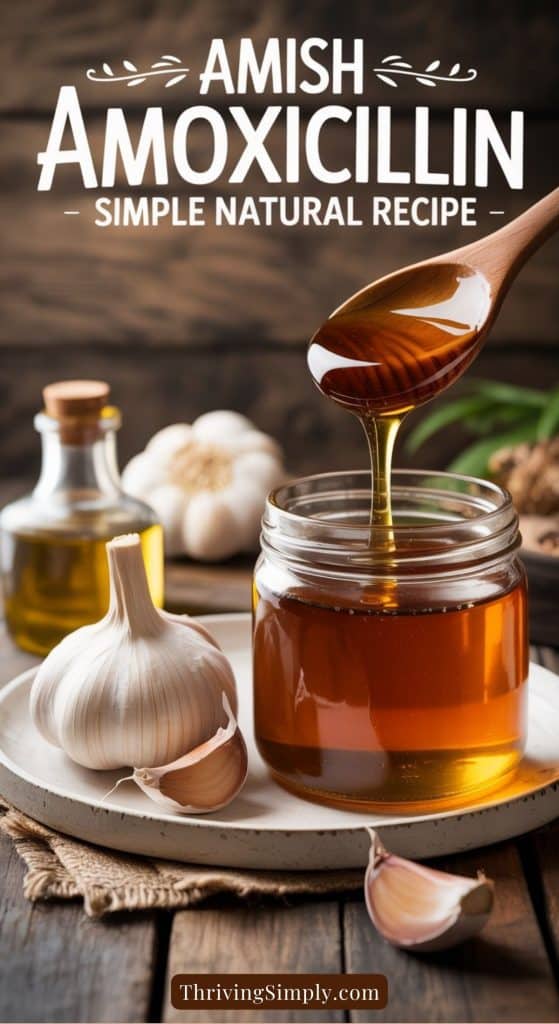
- 1 head of garlic (about 10 cloves), crushed or minced
- ½ cup raw, unpasteurized honey
- 1 tablespoon apple cider vinegar (optional)
Instructions
- Prepare the garlic.
Peel and crush the cloves. Crushing releases allicin — the “active” compound. - Let it rest.
Allow the garlic to sit for 10–15 minutes so the allicin can fully activate. - Combine with honey.
Add garlic to a clean jar and stir in the raw honey until fully coated. - Add vinegar (optional).
This gives the remedy a little extra immune-boosting oomph. - Let it sit.
Leave the jar at room temperature for 24–48 hours to let the flavors meld. - Store.
Move it to the refrigerator — it will keep for several weeks thanks to honey’s natural preserving qualities.
How to Use This Natural Remedy
For Immune Support
Take 1 teaspoon daily during cold and flu season.
At the First Sign of Being Run-Down
Take 1 teaspoon every 3–4 hours until you begin to feel better.
For Sore Throats or Coughs
Take from a spoon or stir into warm lemon water or herbal tea.
For Minor Skin Irritations
Some people apply a small amount to minor cuts or blemishes due to its natural antiseptic qualities.
A gentle taste tip:
If you’re sensitive to the flavor, mix it with warm tea, lemon water, or even swirl it into a bit of warm broth.
How Did “Amish Amoxicillin” Become Popular Again?

It’s always interesting how old remedies make their way back into the spotlight. This one resurfaced after a viral TikTok video by a former Amish creator, Milo, who shared the traditional recipe and its history within Amish communities.
The video reached millions (and millions!) of viewers and stirred up a huge wave of curiosity about natural remedies.
People are hungry for simple, grounded wellness practices — and this one feels both nostalgic and accessible.
FAQs
Does Amish Amoxicillin work like real antibiotics?
No. It may help with mild symptoms, but it cannot replace prescription antibiotics for serious bacterial infections.
Is it safe to use instead of real antibiotics?
Not for serious or worsening infections. Always consult a healthcare provider.
How long does it last?
Stored in the fridge, it can last several weeks, sometimes longer. For best potency, use within 3–4 weeks.
Can children take it?
Never give honey to children under 1 year old. For older children, check with their doctor first.
Can I use pre-minced garlic?
Fresh garlic is best — pre-minced often lacks allicin and potency.
Can I cook with it?
You can add it to dressings or drizzle over veggies, but heating it will destroy many beneficial compounds. For immune support, it’s best raw.
Is there a vegan version?
Yes — replace honey with maple syrup, though maple syrup doesn’t have the same antimicrobial properties.
Can it be used topically?
Some people use it on minor cuts or irritations, but avoid open wounds and consult a doctor when needed.
Scientific Support & Reputable Sources
While Amish Amoxicillin is a traditional home remedy, many of its individual ingredients — especially garlic and raw honey — do have scientific research supporting their natural antimicrobial and immune-supportive properties. Here are several credible sources you can reference if you’d like to explore the science behind these ingredients a little deeper:
Research on Garlic (Allicin)
- A 2020 review on garlic’s health benefits found that allicin and other sulfur compounds in garlic show antioxidant, anti-inflammatory, antibacterial, and antiviral activity in human, animal, and laboratory studies.
Source: “Health Benefits of Garlic” – National Institutes of Health (PMC7402177) - A classic 1999 study demonstrated that purified allicin has strong antibacterial and antifungal effects, including against several well-known bacterial strains.
Source: “Antimicrobial Properties of Allicin” – PubMed (10594976) - A 2025 food science study confirmed that both raw and fermented garlic maintain significant antimicrobial and antioxidant activity.
Source: Food Science & Nutrition Journal – Wiley Online Library (fsn3.70743)
Research on Honey
- Honey has been widely studied for its natural antibacterial, antiviral, and wound-healing properties. It works by drawing moisture out of bacteria and producing hydrogen peroxide.
Source: Cleveland Clinic – “Garlic & Honey Benefits”
Combined Garlic + Honey Effects
- A 2015 laboratory study found that mixtures of garlic and honey inhibited the growth of several bacterial pathogens and fungi, suggesting a synergistic antimicrobial effect.
Source: “Antibacterial Effect of Garlic and Honey” – National Institutes of Health (PMC4458355) - A 2022 study showed that extracts containing garlic + honey + ginger demonstrated antiviral activity against influenza A in lab settings.
Source: NIH Research on Natural Antiviral Compounds (PMC7672575)
Important Note From Medical Professionals
Healthcare institutions still emphasize that while garlic and honey have proven antimicrobial properties, these natural remedies are not a replacement for prescribed antibiotics when dealing with serious infections. They can be helpful for soothing mild symptoms, supporting the immune system, and offering comfort, but they should complement — not replace — medical care.
Source: Cleveland Clinic & Medical News Today
Final Thoughts
One of the things I love most about natural living is how it reconnects us with simple traditions — the little things that our great-grandparents relied on long before supplements and syrups lined our shelves. Amish Amoxicillin is one of those remedies that feels humble and comforting, like something you’d mix up on a quiet afternoon when you’re trying to take better care of yourself.
It won’t replace modern medicine, but it can be a beautiful part of your home wellness routine — especially when you’re craving slow, natural ways to support your body.
MEDICAL DISCLAIMER: The content on this website is for educational and entertainment purposes only and should not be considered a substitute for professional medical advice, diagnosis, or treatment. Always consult a licensed healthcare provider before making any changes to your medications, treatments, diet, exercise regimen, or supplementation. The Thriving Simply team are not licensed medical professionals.